
Opening Vibe-Setter:
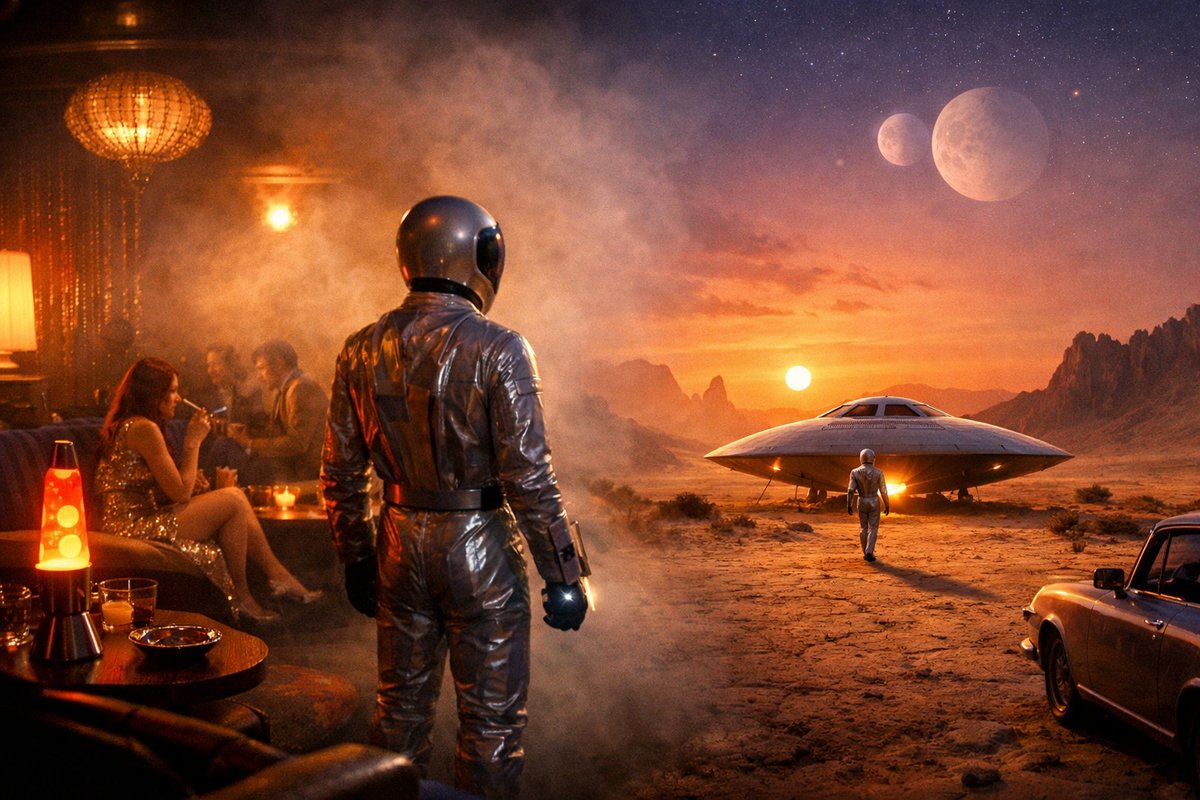
Immerse yourself in a midnight haze of neon glow and deserted highways stretching into a violet sky. A lone silver orb descends amidst wisps of lavender smoke, greeted by the pulsing drone of analog synthesizers. Plush cushions, lava lamps, and the soft murmur of friends settling into velvet sofas transport you to a world where reality and spectacle entwine. The air is thick with anticipation-tonight, you’re not just watching a movie; you’re embarking on a cosmic journey bathed in 70s style and dreamlike wonder. Let the slow-burning visuals and haunting melodies wash over you. Close your eyes and feel the electric buzz of possibilities crackling beneath the film’s surface. It’s an invitation to drift, to wonder, to feel the thrill of an encounter too strange for any other era.
Synopsis (No Spoilers):
The Man Who Fell to Earth is a hypnotic science fiction drama that charts the arrival of an enigmatic alien named Thomas Jerome Newton on Earth. Under the guise of a suave outsider in tailored suits, he navigates smoky lounges, corporate boardrooms, and sunbaked deserts. His mission: to harvest water and technology that could save his home world from drought. His chameleonic performance blurs the line between human longing and extraterrestrial alienation, setting a tone that is as beautiful as it is melancholic.
John Phillips’s dreamy soundtrack laces every scene with wistful nostalgia, and the softly lit cinematography bathes each frame in an otherworldly glow. Watching Newton adapt to human customs with childlike curiosity and detached mystery feels like slipping through a cosmic looking glass-one that offers haunting reflections on isolation, ambition, and the fragile pulse of our own planet.
At its core, the film is a sensory voyage-murky industrial interiors merged with sun-drenched vistas, confessional dialogue against electronic hum. There are no fast-paced chase sequences or explosive set pieces. Instead, every moment unfolds with meditative slowness, inviting you to savor subtle gestures: a glazed-over gaze, a trembling hand, the flicker of neon reflected in water. The Man Who Fell to Earth places mood and atmosphere above action, crafting an experience that feels less like watching a story and more like living inside a lucid dream.
Why This Movie Is Perfect for a Movie Night:
Gathering friends for this film feels like planning an intimate stargazing ritual. The slow burn and reflective tempo open space for whispered commentary, shared laughter over Newton’s awkward learnings, and collective awe at the ethereal presence on screen. Every scene invites group reactions-someone will mention the retro styling, another will hum along to the eerie score, and soon you’ll be exchanging theories about what lies beyond the final frame. It’s a movie night that thrives on communal curiosity rather than edge-of-the-seat thrills.
One of the most seductive draws is the soundtrack itself. It melds folk-rock melodies with ambient electronic textures, wrapping around each shot like fog over the desert floor. Crank up the volume when those haunting chords drift in, and watch heads nod in unison as the melody swells. The music becomes another guest in the room-a character whose melancholic theme sparks conversation about the decade’s experimental spirit.
Visually, the film is drenched in contrasting palettes. Neon blues and pinks flicker across industrial hallways, while sunlit expanses and rust-orange sands offer grounding warmth. Sharp shadows carve silhouettes that feel equal parts elegant and ominous. Watching these frames on a big screen turns your living room into a retro art installation, making every scene a feast for the eyes.
The central performance radiates a Zen-like stillness that draws everyone closer. Minimal dialogue and controlled physicality combine to create an alien whose every gesture feels deliberate yet deeply emotive. Friends will lean in to catch each microreaction, replaying moments of silent wonder. It’s a performance that invites interpretation and conversation long after the credits roll.
Beyond style, the film’s themes resonate deeply. The visitor’s longing for home mirrors our own quests for belonging, and his interaction with Earth’s technology raises questions about human hubris and ecological fragility. Post-credits discussions can wander from existential musings to surprisingly prescient commentary on consumer culture and isolation.
Despite its grand premise, much of the magic comes from handcrafted sets and practical effects. Oversized projectors, smoky glass lenses, and optical illusions give every shot a tactile quality you don’t see in today’s CGI-driven blockbusters. Point out these ‘flaws’ as charms-celebrations of 70s ingenuity rather than distractions.
Interspersed between cosmic wonder and corporate intrigue are quietly heartbreaking moments. A whispered confession at a roadside diner, long walks beneath starlit skies-each beat stirs empathy. You might find someone drawn to the film’s bittersweet core, ready to share personal anecdotes about feeling out of place or chasing dreams across unfamiliar terrain.
The deliberate pacing rewards patience. Early skeptics may drift, but once the mood settles, it hypnotizes everyone in its spell. Occasional bursts of off-beat humor-like awkward small talk or mismatched dance moves-spark genuine laughter even at the film’s slowest moments. This is a movie night that advances in deliberate rhythms, giving your group time to breathe, bond, and marvel together.
Optional Extras:
Snack Pairings:
– Galactic Popcorn Blend: Toss air-popped popcorn with a swirl of edible glitter or neon-colored seasoning for a cosmic crunch that matches the film’s vibrant hues.
– Desert Dust Churros: Warm cinnamon-sugar churros served with a side of chocolate sauce-an homage to the dusty landscapes Newton treks across, perfect for dipping and sharing.
– Atomic Citrus Punch: A tangy mix of orange-lemonade, sparkling water, and a hint of mint-bright, effervescent, and tangy enough to jolt energy back into your viewers.
What to Look For:
– Practical Effects: Spot the oversized lenses and mirrored rigs that create the film’s signature optical flares.
– Costume Details: Notice the subtle shifts in Newton’s wardrobe-from crisp white suits to mirrored shades-that mark his assimilation into human life.
– Symbolic Imagery: Keep an eye on recurring water motifs, broken glass fragments, and reflective surfaces that underscore themes of fragility and alienation.
How to Theme the Room or Night:
– Lighting: Line walls with LED strips set to soft pinks and blues, and scatter tabletop lava lamps to build that unmistakable 70s ambiance.
– Dress Code: Encourage guests to don vintage-inspired outfits-high-waisted trousers, suede jackets, oversized sunglasses, or psychedelic scarves-to fully step into the era.
– Playlist Warm-Up: Curate a pre-show mix of 70s folk-rock, ambient cosmic tracks, and era-adjacent tunes to set the mood as everyone arrives and settles in.
Let it roll and sink into the hypnotic glow of a 70s sci-fi dreamscape.