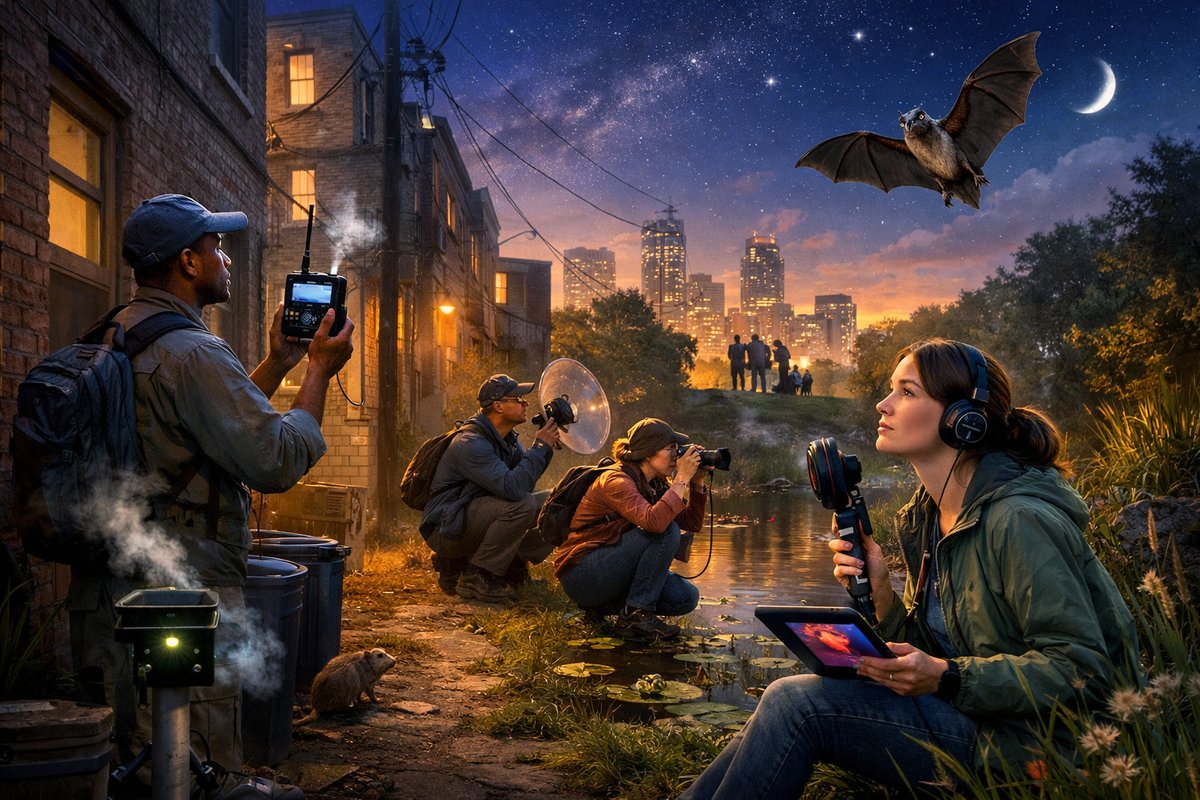

In recent years, a quiet revolution has taken shape: everyday explorers armed with smartphones, pocket sensors, and boundless curiosity are contributing real data to serious research projects. Citizen science, once relegated to organized clubs or academic outreach programs, now thrives in sidewalks, backyards, and schoolyards. Powered by easy-to-use tools and open data platforms, individuals can monitor environmental health, map wildlife movements, and even spot celestial events without stepping into a formal laboratory. This movement embraces sustainability by encouraging low-impact sampling and privacy by anonymizing location details when necessary. It also weaves emotional intelligence into scientific practice, reminding us that compassion for ecosystems goes hand in hand with data collection.
One of the most accessible entry points is air quality mapping. Portable air quality monitors fit in a bag or clip to a belt loop, measuring fine particulate matter (PM2.5) and common gases. Curious observers can stroll along busy streets, bike lanes, and parks to record fluctuations in pollution levels. By uploading anonymized readings to community-driven maps, they reveal pollution hotspots and advocate for greener transit corridors. Urban planners and health researchers increasingly mine these crowdsourced datasets to inform policy, while school groups turn the exercise into real-world science projects. Each inhaled breath carries a story when you become the storyteller.
Water explorers dive into streams, ponds, and rain barrels with affordable water testing kits that measure pH, nitrates, phosphates, and more. Sample bottles, colorimetric strips, and simple electronic probes introduce novices to fundamental principles of chemistry and environmental stewardship. A single afternoon sampling local waterways can reveal the fingerprints of fertilizers, road runoff, or natural mineral springs. Contributing results to online portals helps track seasonal trends, identify pollution sources, and support habitat restoration efforts. Beyond raw numbers, participants gain a visceral sense of how human activities ripple through freshwater ecosystems-and how small conservation actions can have outsized benefits.
When dusk falls, nocturnal listening sessions transform quiet parks into open-air laboratories. Bat detectors-devices that convert ultrasonic echolocation pulses into audible chirps-unlock a hidden soundtrack of insectivorous hunters flitting above tree canopies. Smartphone-connected acoustic sensors can record high-frequency calls, which are then compared against online libraries to identify species. Enthusiastic volunteers contribute recordings that help biologists monitor bat population health, migration patterns, and responses to habitat loss. These after-dark adventures foster patience, imagination, and respect for creatures that navigate the night sky in ways we’re only beginning to understand.
Stargazers and haze-busting amateurs join forces during meteor showers and eclipse events, turning celestial phenomena into crowdsourced science. Simple star-mapping apps overlay constellations on live camera feeds, enabling users to log sightings of shooting stars or subtle changes in sky brightness. By sharing timestamps and precise locations-while respecting privacy settings-observers create large-scale meteor trajectory plots and refine predictions for future displays. Schools host “dark sky” evenings, inviting city-dwellers to journey to low-light sites and record subtle color shifts in lunar eclipses. This blend of artistry and data collection reminds us that science can be as poetic as it is quantitative.
Soil sleuths probe beneath our feet with compact testing kits that analyze pH, moisture, and key nutrients. Gardeners, park volunteers, and aspiring agronomists learn to map soil health across public greenspaces or community gardens. By charting variations in acidity or nitrogen content, participants support urban tree planting campaigns, community farm plots, and native wildflower restoration projects. Simple protocols-mixed soil samples, color-coded reaction chambers, handheld moisture gauges-teach the importance of soil as a living ecosystem. The tactile process of scooping, mixing, and interpreting results fosters a deeper bond with the ground that sustains us.
Biodiversity trackers embrace smartphones to photograph plants, insects, and birds on daily walks. Free identification apps analyze shapes, patterns, and sounds to suggest species matches, while community forums invite feedback from field-seasoned naturalists. Each logged observation strengthens global databases that monitor shifts in species ranges, invasive species incursions, and seasonal migrations. Teachers use these tools to coax curiosity out of reluctant readers and math-phobic students, showing how biology, geometry, and geography intertwine. Beyond checklists, this practice cultivates empathy for living beings and underscores the delicate interdependence of ecosystems.
At the heart of citizen science lies data sharing through online platforms. Portals host datasets on everything from glacier melt rates to urban noise pollution. Contributors upload formatted files or use mobile apps that standardize entries in the background, ensuring quality control. Open APIs invite developers to build innovative visualizations, while privacy filters let individuals mask precise coordinates to protect sensitive habitats or personal privacy. Researchers access these ever-growing archives to spot patterns across continents, launch follow-up studies, and refine environmental models. This democratization of data empowers anyone to explore grand scientific questions from their own neighborhood.
Community connections amplify individual efforts. Local meetups organize water sampling days, bio-blitz challenges, and stargazing picnics. Libraries host sensor-building workshops where participants solder simple electronics to create DIY air monitors. Neighborhood associations partner with conservation NGOs to map urban heat islands or catalog street tree diversity. These gatherings blend social bonding with scientific training, fostering inclusive spaces where veterans mentor newcomers. Emotional intelligence shines here-organizers encourage mindful reflection on both human and ecological wellbeing, ensuring that data collection never becomes a mechanical drill but remains grounded in care and curiosity.
Schools and universities increasingly integrate citizen science into curricula, inviting students to design experiments, collect real-world data, and present findings to municipal councils. Educators leverage existing projects-monitoring plastic microfibers on beaches or gauging light pollution in dormitory windows-to teach experimental design, statistical analysis, and environmental ethics. Students navigate consent forms, learn to anonymize personal details, and reflect on how research can impact communities. This approach transforms abstract textbook lessons into tangible contributions, nurturing the next generation of researchers, activists, and informed citizens.
Nonprofits and industry partners provide resources and mentorship. Conservation groups lend professional-grade sensors for short-term deployments, while tech companies sponsor data-visualization hackathons. Grants fund community science coordinators who bridge the gap between grassroots volunteers and academic labs. These collaborations underscore a shared ethos: science thrives when it opens doors instead of erecting barriers. By emphasizing privacy safeguards, data transparency, and sustainable practices-like reusable sampling kits and biodegradable labels-stakeholders ensure this movement honors both people and the planet.
Skeptics sometimes question the reliability of citizen-collected data. Reality shows that rigorous protocols, simplified training materials, and digital validation checks can yield surprisingly robust datasets. A well-designed public science project includes clear instructions, control samples, and user-friendly troubleshooting guides. Automated algorithms flag outlier readings for review, and community moderators help newcomers refine their methods. When scientists and volunteers work side by side, quality control becomes a collaborative endeavor rather than a gatekeeping hurdle. The result is a tapestry of observations that no single research team could compile alone.
As you consider joining the citizen science movement, remember that you don’t need a degree or a kit full of expensive gadgets. A curious mind, a smartphone, and a willingness to learn can open doors to discoveries in your own neighborhood. Whether you track pollen levels to understand allergy patterns, log spider webs after a storm, or scan rooftops for moss growth, your observations matter. The data you collect today will feed into research that shapes tomorrow’s conversations on climate resilience, biodiversity conservation, and public health interventions.
The path from casual curiosity to community-driven research is paved with simple steps: pick a local project, acquire a basic sensor or sampling kit, and start exploring. Share your findings, ask questions in online forums, and celebrate each small insight. In doing so, you join a global chorus of voices amplifying scientific discovery with compassion and creativity. Citizen science isn’t just about data points; it’s about forging connections-between people, between disciplines, and between humanity and the natural world that sustains us all. Step outside, keep your senses alert, and let the wonders of your immediate environment become catalysts for knowledge and change.
-
Amazon Best Sellers: Best Mini Computers
... Monitor Support, WiFi, Bluetooth, HDMI, DisplayPort, Windows 11 64-bit (Renewed) · #16 · BOSGAME ... -
Walmart customer surveys
No information is available for this page. -
Amazon.com Movers & Shakers
Amazon.com Movers & Shakers: The biggest gainers in Amazon sales rank over the past 24 hours. -
Amazon Simple Storage Service endpoints and quotas
To connect programmatically to an AWS service, you use an endpoint. you can use the virtual-hosted style and path-style methods. virtual-hosted–style URL ...