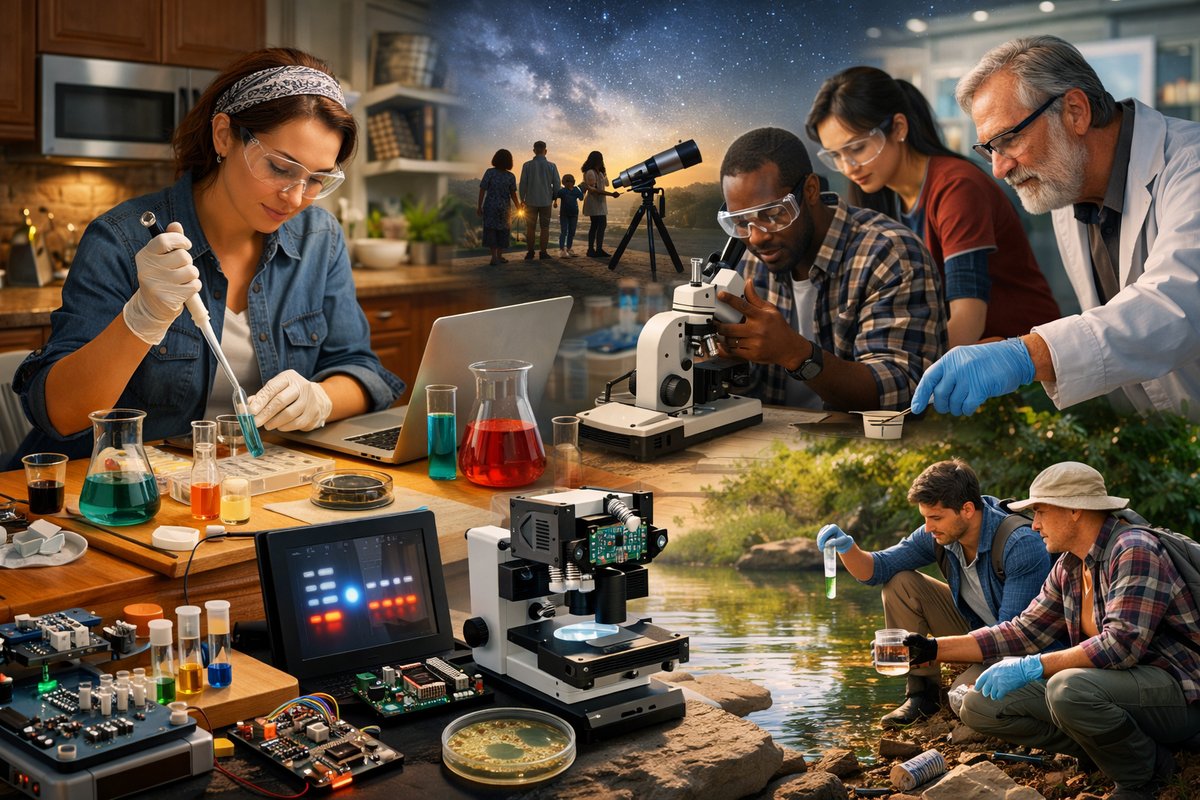

Science used to be a realm reserved for specialized facilities, high ceilings and sophisticated instruments. Yet any curious mind knows that inspiration can strike at the grocery store, on a hiking trail or in a home workshop. Today’s explorers are harnessing everyday materials, open-source electronics and cloud-based platforms to turn living rooms into micro-laboratories, backyards into sensor fields and neighborhoods into mapping expeditions.
The rise of citizen science platforms has blurred the line between expert and amateur, inviting volunteers to log bird calls, measure water quality or classify distant galaxies. Instead of memoirs of paleontologists dusting off fossils in faraway digs, we now read stories of commuters using smartphone spectrometer attachments to record air pollution on their way to work. Small, affordable gadgets built around optics, microcontrollers and simple 3D-printed housings are empowering people to ask questions, gather data and contribute to global research initiatives.
Look at microfluidic devices: once bulky and complex, they’ve been reimagined as kitchen-friendly chips built from laser-cut acrylic or even breadboard-style plastic sheets. Homebrewers and amateur chefs can inoculate tiny channels with cultured microbes to observe fermentation dynamics. High-school students have used the same approach to test local water for heavy metals, comparing clear liquids flowing through etched pathways under a handheld fluorescent lamp.
In educational outreach programs, folding paper microscopes offer surprising resolution. A single droplet of water on a folded piece of cardstock can magnify pond life to reveal rotifers wriggling between algae strands. These DIY microscopes, often inspired by origami design, slip into a pocket and attach to a phone camera lens. They’ve traveled to remote villages where schools lack microscopes, sparking fascination among children who had never seen living cells up close.
For breath analysis, portable spectrometers now slip into backpacks and backpacks slip into back pockets. By shining near-infrared light through exhaled air, these devices provide a rudimentary profile of volatile organic compounds. Participants in wellness studies can track how diet, environment or exercise affect what they breathe out and share anonymized data through secure apps. Researchers sift patterns to detect early markers of respiratory stress or environmental contaminants.
At the heart of many of these tools is open-source electronics. A programmable microcontroller board can log temperature, humidity and light intensity for under fifty dollars. Stack multiple sensor shields, snap on Wi-Fi or cellular modules, and you’ve built a weather station that broadcasts live data to a web dashboard. Enthusiasts have deployed dozens of such nodes across city blocks, creating high-resolution microclimate maps that pinpoint heat islands and guide urban planners.
Three-dimensional printing has also scaled down prototyping cycles. Custom lens holders, calibration jigs and fluidic connectors emerge overnight from desktop printers. Inventors refine their designs on the fly and share STL files on collaborative repositories. In some neighborhoods, a group of makers without formal labs has printed components for a low-cost gene sequencer, traded online troubleshooting tips and organized weekend build-days in coworking spaces.
Meanwhile, artificial intelligence weaves through every stage of research, from hypothesis generation to data interpretation. Open-source machine learning frameworks detect subtle patterns in plant growth images, forecasting drought stress days before visible symptoms. Citizen ecologists upload snapshots of tree canopy color, and cloud-based neural networks identify species or signpost emerging fungal infections, alerting conservation teams to intervene.
Unmanned aerial vehicles have become another frontier of hands-on science. Lightweight drones equipped with multispectral cameras skim fields and wetlands, collecting imagery that reveals chlorophyll levels, soil moisture and plant health. DIY pilots mount inexpensive LiDAR sensors to map forest understories in three dimensions. Beyond academic studies, local conservation groups use these cost-effective surveys to track reforestation projects and protect vulnerable habitats.
The community lab movement completes the picture, providing shared workspaces stocked with centrifuges, autoclaves and PCR machines. Neighborhood biotech hubs invite researchers of all backgrounds to rent bench time, mentor newcomers and spin off novel experiments. By lowering the barrier to entry, these spaces foster diversity in research questions, challenge traditional gatekeeping and attract collaborators who bring fresh perspectives.
This transformation of science into a more inclusive, modular practice speaks to deeper values: openness, sustainability and emotional intelligence. Researchers and hobbyists alike document their failures as candidly as their successes, posting raw data and methods to public repositories. Repair cafes and spare-parts libraries promote reuse over disposal. Workshops on accessible design ensure that equipment is safe, affordable and culturally relevant.
Look ahead and you’ll see a future where disciplines converge like never before. Materials scientists collaborate with ceramic artists to develop eco-friendly pigments. Climate modelers co-author simulations with indigenous communities to integrate traditional knowledge into predictive frameworks. Textile engineers embed sensors into wearable fabrics, enabling real-time health monitoring that respects privacy and autonomy.
As scientific exploration inches off the lab bench and onto kitchen counters, grassy lawns and neighborhood garages, it reminds us that curiosity is a universal trait. Everyone carries the potential to observe, question and innovate. The next breakthrough might emerge not from a multimillion-dollar facility, but from a curious individual tinker- ing with everyday objects, guided by open-source designs and a global network of collaborators. Science, it turns out, thrives wherever imagination meets a willing pair of hands.