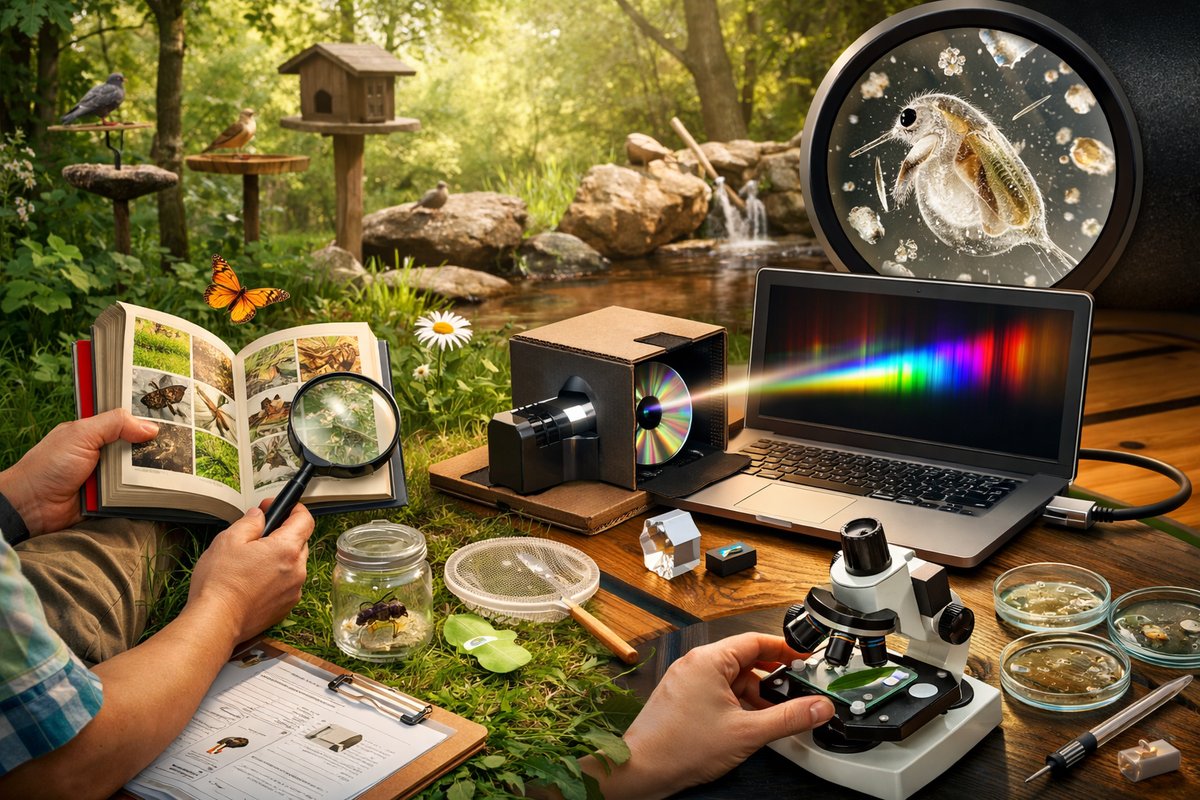

Whether you’re curious about the soil beneath your feet or the invisible world of microbes swirling in a drop of water, everyday science invites you to step outside the confines of a lab and dive into hands-on discovery. Science thrives on curiosity, and the world around us is full of hidden processes waiting to be uncovered. This article takes you on a journey through environmental sensing, DIY investigations, citizen science projects, and microscopic explorations you can tackle with budget-friendly tools and a sense of wonder.
Imagine transforming your backyard into a living laboratory. A basic soil moisture sensor can reveal how different spots respond to sun, shade, or seasonal changes, informing your gardening efforts or simply sparking questions about plant ecology. Pair that with a portable water quality test kit, and you’ll be tracking pH levels and dissolved oxygen in a nearby stream to see how urban runoff or rainfall influences aquatic health. These simple measurements let you engage directly with environmental data and contribute valuable observations to community databases.
Citizen science platforms connect lay observers with professional projects. You might photograph pollinators in your garden and upload the images to a biodiversity portal, helping biologists map species distributions. A smartphone macro lens attachment magnifies petals, insects, or mineral grains, turning your device into a field microscope. Through regular uploads, you’ll witness seasonal changes in your region’s wildlife and contribute to long-term ecological studies, all from your own backyard or local park.
For those captivated by light and color, building a DIY spectroscope is surprisingly straightforward. Using a small diffraction grating and a cardboard tube, you can split sunlight into its rainbow spectrum, observe emission lines from household light sources, and compare how LED, incandescent, and fluorescent bulbs differ. This tactile approach brings atomic physics into your hands and offers a gateway to exploring the electromagnetic spectrum.
On foggy mornings or still evenings, you can become an amateur meteorologist. A homemade hygrometer crafted from human hair or a strand of natural fiber reveals humidity shifts as it expands and contracts. Combine it with a simple anemometer-built from plastic cups on a rotating axis-to track wind speed. Logging these readings over weeks helps you identify local microclimates and unpredictable weather patterns, fostering an appreciation for atmospheric dynamics.
Peering into the microscopic realm has never been more accessible. A digital USB microscope lets you scrutinize the structure of leaves, insect legs, or the crystalline patterns in rock salt. Observing pond water under high magnification reveals protozoa, algae, and tiny worms darting through the fluid world. Each session uncovers a miniature ecosystem and underscores how life thrives at every scale.
Microbiology experiments can also be done safely at home. With a basic agar plate kit and sterile swabs, you can sample surfaces throughout your living space, kitchen utensils, or even your phone screen. Over a few days, colonies emerge in different shapes, colors, and textures-visual proof of the microbial communities that inhabit our everyday environment. Documenting which surfaces harbor more growth provides insights into hygiene, material properties, and microbial resilience.
For those intrigued by energy flow, building a small solar panel rig with clear connectors and a voltmeter brings renewable energy concepts to life. You’ll see voltage and current change as you adjust light angles or add shading materials. It’s a powerful way to grasp photovoltaic principles and spark conversations about sustainable technologies and grid integration.
Mapping vibrations unlocks another layer of unseen phenomena. Attach a low-cost accelerometer sensor to a tabletop or bicycle frame and record data on movement and oscillations. Plotting vibrations when you tap or drive over gravel reveals unique signatures for different activities. Analyzing those waveforms gives you a taste of signal processing and the physics of sound and motion.
Through these explorations, you’ll accumulate data that speaks volumes-not just about physical measurements but about patterns, anomalies, and long-term trends. Whether it’s charting daily soil moisture cycles or tracking microbial diversity on public benches, each data set becomes a story about the world we inhabit. Sharing your findings on community science platforms amplifies their value and fosters collaboration between enthusiasts and experts.
Beyond the practical skills, these experiments cultivate emotional intelligence and sustainability awareness. Observing the fragility of pond ecosystems or the impact of temperature on garden plants builds empathy for other living things and highlights environmental stewardship. Engaging with the scientific process also nurtures curiosity, critical thinking, and resilience-qualities that translate to solving challenges in daily life.
Science at home doesn’t require expensive equipment or advanced degrees-just creativity and a willingness to explore. Start small with one experiment that sparks your interest, document your results in a simple lab notebook or digital log, and gradually build your toolkit. Online communities and open-source resources offer protocols, troubleshooting tips, and inspiration, making every step an opportunity to learn and connect with like-minded explorers.
The spirit of discovery thrives when you break down the barriers between scientist and citizen. By embracing DIY environmental sensing, microscopic investigations, and citizen research projects, you become part of a global movement that values data, curiosity, and collective knowledge. The tools are within reach, the questions are endless, and the world is waiting for your observations-one experiment at a time.