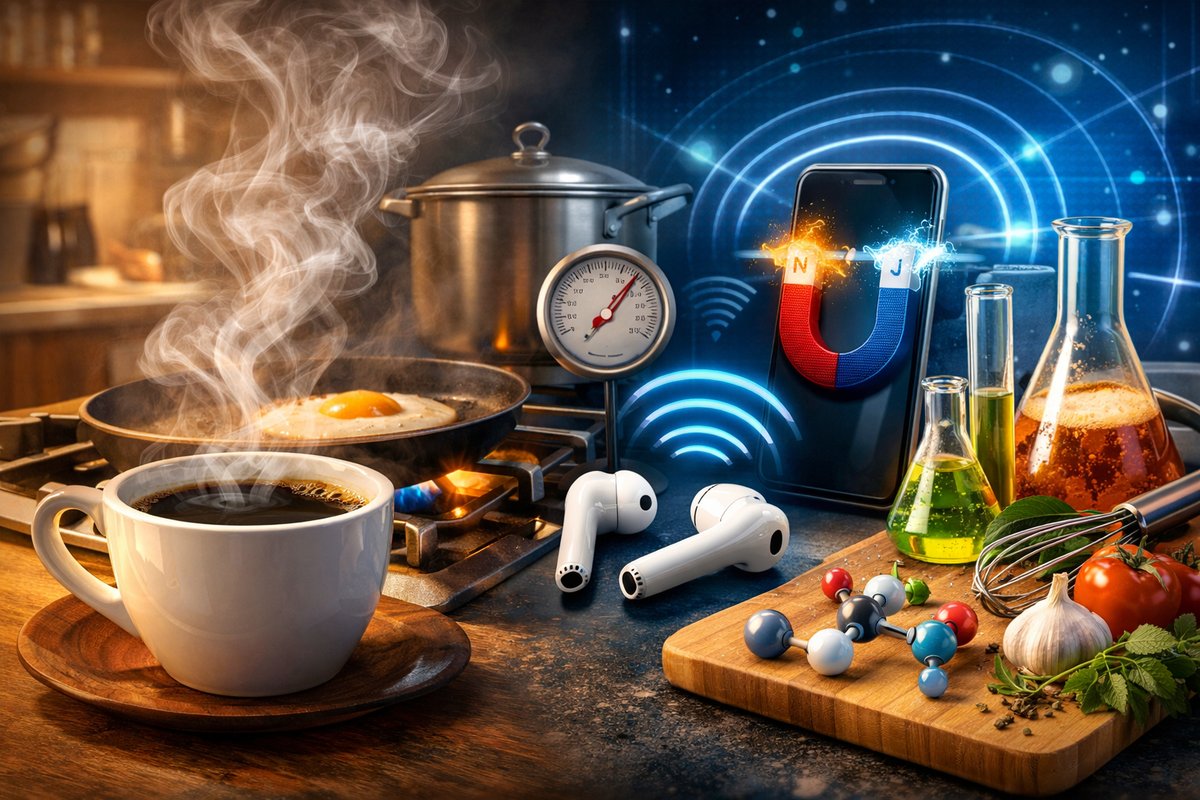

A Morning Cup as a Thermodynamic Lesson
Imagine pouring hot water over coffee grounds. The swirling steam, the rising aroma-this simple ritual reflects core ideas in thermodynamics. Heat flows from the water to the grounds, drawing oils and flavors out. That transfer of energy follows the same laws governing engines, power plants, and even the sun’s fusion processes. Next time you cradle a warm mug, consider the dance of molecules bumping into each other, releasing energy that ultimately tickles your taste buds.
Invisible Connections: Electromagnetism in Your Pocket
Your smartphone, wireless earbuds, and Bluetooth speaker all rely on electromagnetic forces. Inside each device, tiny antennas convert electrical signals into radio waves and back again. Those same principles power the world’s power grids and light up skyscrapers. When you adjust volume or switch songs, you’re tapping into Maxwell’s equations-the century-old pillars describing how electric and magnetic fields interact. Even the bar magnet that holds your notes on the fridge whispers stories of aligned electron spins and microscopic magnetic domains.
Kitchen Chemistry: Reactions You Can Taste
Baking bread, pickling vegetables, or emulsifying vinaigrette-every home cook is a chemist. Yeast cells ferment sugars into carbon dioxide and alcohol, making dough expand into fluffy loaves. Acid and salt in a brine disrupt bacterial cell walls, preserving crisp cucumbers. Oil, vinegar, and mustard seeds form an emulsion stabilized by natural surfactants. Under your hands, complex reactions unfold with tangible results: a rise in volume, a tangy bite, or a glossy sauce. Cooking becomes a sensory laboratory where pH, temperature, and molecular shape shape flavor and texture.
A Microbial World Inside Your Fridge
Open the refrigerator door and you unveil an ecosystem. Fruits and leftovers harbor yeasts and bacteria that multiply or slow growth depending on temperature and moisture. In a week-old lettuce leaf, you can find dozens of microbial species interacting in competition and cooperation. A quick temperature shift or a change in humidity alters growth rates dramatically. Understanding those patterns explains why leftovers last longer in airtight containers or why certain cheeses ripen into pungent delights. Microbiology is not confined to Petri dishes; it thrives in every crisper drawer.
Light, Color, and Optics in Everyday Looks
Every glance at a computer screen or smartphone camera involves optics. Pixel arrays emit red, green, and blue light that your eye’s cones combine into vibrant images. Sunglasses filter ultraviolet rays and reduce glare through specialized coatings. Even the rainbows you see in a car’s windshield or in a soap bubble demonstrate light refraction and thin-film interference. Those rainbow patterns follow precise calculations in wave optics-the same math used to design telescopes and fiber-optic networks.
DIY Explorations: Tools to Reveal Hidden Science
With modest gear, you can explore these phenomena in your own space. A digital thermometer uncovers real-time temperature changes in the coffee pot. A pocket spectrometer attached to a smartphone splits light into its spectral colors, revealing the chemical makeup of LEDs or stains. A portable pH probe brings clarity to fermentation batches or aquarium water quality. Even a simple magnet and a coil of wire let you generate currents and witness Faraday’s law in action. By turning everyday items into experimental setups, you deepen your curiosity and gain hands-on insights.
The world around you is not just a backdrop for daily routines-it’s a tapestry woven from fundamental scientific concepts. By paying closer attention to steaming mugs, glowing screens, and sizzling pans, you transform ordinary moments into gateways of discovery. Whether you’re a lifelong learner or a curious newcomer, embracing these hidden patterns enriches your understanding of how nature and technology intertwine.
As you move through your day, ask yourself: What principles underlie the next device you touch? Which reactions are shaping the food you eat? Where do electromagnetic fields and light converge in the spaces you inhabit? Each question invites a mini expedition, a chance to observe, measure, and marvel at the science in plain sight. The universe isn’t locked away in giant laboratories-it exists all around you, waiting to be revealed by the same curiosity that once led us from ancient stargazing to modern quantum leaps.