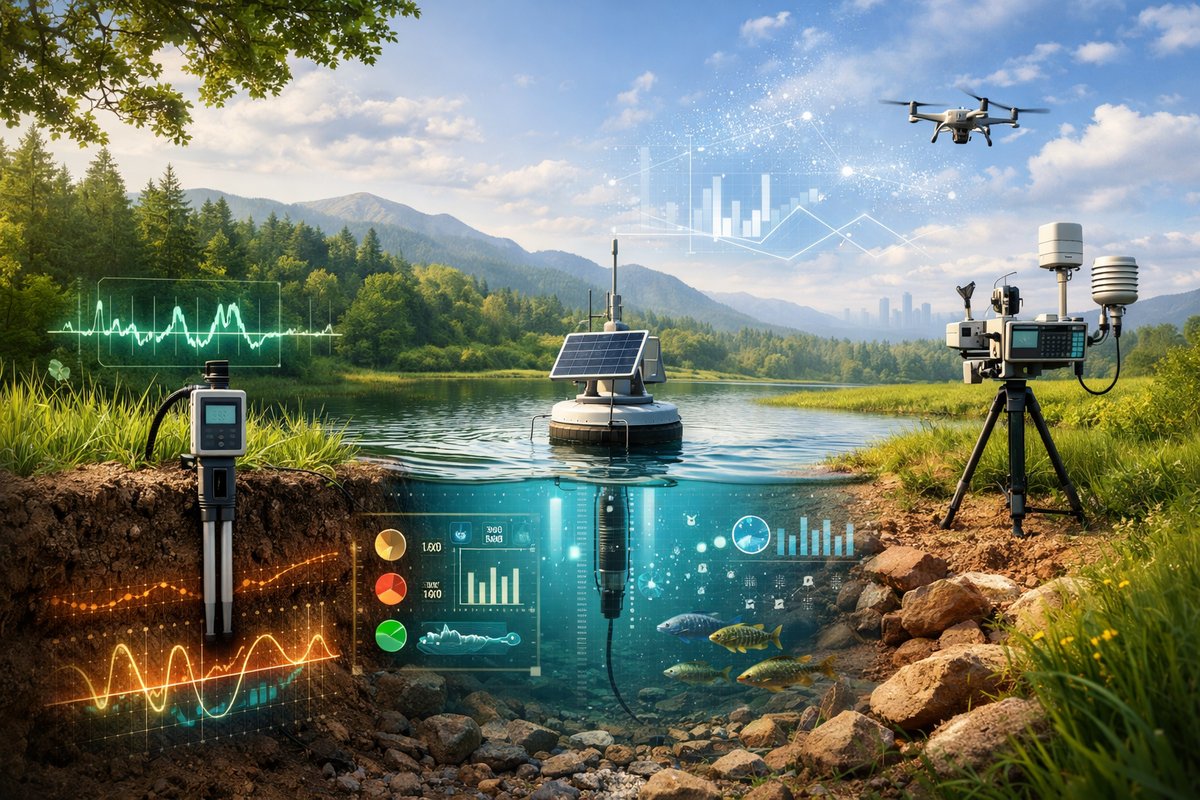

A quiet revolution is unfolding across fields, rivers and rooftops: the rise of environmental sensing. This emerging science transforms landscapes into living laboratories, capturing subtle shifts in soil humidity, water purity, atmospheric particles and spectral signatures. For lifelong learners and novice researchers alike, these data streams illuminate hidden patterns and invite fresh collaborations between citizen scientists and professionals.
Beneath our feet, soil moisture sensors reveal the dance of water through pores and capillaries. Simple probes measure volumetric water content at different depths, guiding gardeners to optimize watering schedules and helping researchers track drought progression. By logging hourly readings, enthusiasts build time-lapse histories of wet-and-dry cycles, uncovering relationships between rainfall, evaporation and root uptake. These insights lead to more sustainable irrigation and revived urban green spaces.
Flowing onward, water quality test kits translate color changes and conductivity readings into chemical concentrations. With affordable sensors, students can detect nitrates, phosphates and pH swings in local streams. Portable probes measure dissolved oxygen levels, indicating ecosystem health in real time. These compact kits turn backyard sampling into rigorous fieldwork, enabling comparisons across neighborhoods and sparking conversations about stormwater runoff, pollution sources and habitat restoration.
High above, air quality monitors sample fine particulate matter and volatile organic compounds. Compact sensors mounted on windowsills or balcony railings stream data on PM2.5, PM10 and ozone concentration. Graphs generated on open dashboards show pollution peaks at rush hour or during wildfires. Residents gain actionable knowledge: when to close windows, limit outdoor sports or support local clean-air policies. Suddenly, invisible smog yields to measurable signals.
Taking flight, unmanned aerial vehicles equipped with multispectral cameras capture light reflected in near-infrared bands. This technology uncovers plant health, soil fertility and water stress across farm fields or forest canopies. By comparing red, green, blue and infrared channels, users pinpoint areas in need of fertilizer or irrigation. Small drones transform remote sensing from specialized agencies into community projects and classroom demonstrations of ecosystem dynamics.
For those without drones, smartphone spectrometer attachments offer pocket-sized optics linked to custom apps. Diffraction gratings mounted over camera lenses split light into spectra, revealing pigment composition in leaves or dyes in water samples. Hobbyists measure chlorophyll peaks, track seasonal changes and even detect counterfeit dyes in consumer goods. The simplicity of this tool invites playful exploration and sparks deeper questions about wavelength, absorption and chemical bonds.
At the heart of many DIY projects lies the microcontroller. Easy-to-program boards with wireless modules host networks of sensors-temperature, humidity, barometric pressure-to form mini weather stations. Students learn coding by scripting data-logging routines, powering displays and uploading readings to cloud platforms. This modular approach fosters creativity: one day the station measures wind speed and direction, the next it tracks soil temperature under mulch.
Once gathered, data flows into open-source dashboards and mapping services. Interactive graphs chart trends over days, weeks and months; heat maps overlay readings across neighborhoods. Collaborative platforms enable multiple contributors to upload streams, creating communal archives of environmental change. Analysis tools support custom alerts: when soil dryness exceeds thresholds, phones ping reminders. When water turbidity spikes, communities can safely restrict swimming. Data thus becomes a shared resource for action.
While professional laboratories still drive much research, citizen science projects have embraced environmental sensing. Volunteers monitor air quality near schools, measure noise pollution in urban centers or record flooding levels after storms. These distributed networks augment official monitoring stations and produce hyper-local insights. Research papers now cite citizen-generated data, cementing the role of grassroots observers in global environmental science.
In classrooms, teachers integrate sensor kits into science curricula. Students design hypotheses-“Does grass retain more moisture than mulch?”-then collect data to test them. Hands on, they troubleshoot sensor calibration and learn the importance of replicates. Through these projects, abstract lessons on diffusion, photosynthesis or chemical cycles become tangible investigations. Educational leaders report increased engagement when lessons bridge theory with real world measurements.
Farmers exploring precision agriculture lean on environmental sensing too. Soil probes inform variable-rate irrigation systems, limiting water waste and preventing crop stress. Weather stations forecast frost risks, triggering protective measures for delicate seedlings. By analyzing yield data alongside soil and aerial metrics, growers fine-tune planting density, fertilizer application and harvest timing. The result: higher yields, reduced chemical inputs and stronger resilience against climate variability.
In urban environments, smart-city initiatives deploy networks of air and noise sensors. Data streams feed into traffic management systems, encouraging alternate routes during peak pollution events. Street-level measurements guide tree-planting efforts, improving air circulation around hotspots. Community planners consult sensor data when upgrading public spaces, ensuring playgrounds and bike lanes surround healthier microclimates.
Neighborhood associations use environmental sensing to spotlight local concerns. Residents set up water quality monitors at drainage outflows to detect illegal dumping or accidental spills. Noise sensors near construction sites record exceedances and support permit reviews. Thermometers on rooftops document heat island effects, prompting tree canopy projects. When citizens generate the data, they also gain the evidence needed for policy conversations and grassroots advocacy.
Throughout this unfolding ecosystem of tools and insights, questions of privacy and ethics arise. Who controls the data streams? How are personal property rights balanced against communal benefits? Sustainable projects embed transparency standards, declaring sensor locations and data uses in advance. Shared repositories anonymize submissions, protecting individual privacy while fueling collective discovery.
Anyone can start small. A single soil moisture meter in a potted plant signals when to water. A handheld water quality tester at a local creek verifies whether fish populations might thrive. A simple air sensor in a car reveals interior pollution when traffic stalls. By combining analog notes-field notebooks, sketches-and digital logs, users craft richer narratives of place and change.
As technology advances, the horizon of environmental sensing expands. Low-cost LiDAR modules promise backyard topographic surveys. Miniaturized spectrometers could detect airborne chemicals at trace levels. Machine learning pipelines will identify ecological anomalies in real time. These tools will continue blurring the line between professional researchers and passionate learners.
Beyond data points and charts lies a deeper promise: emotional connection. Watching soil moisture swell after rain, feeling relief at cleaner air readings, witnessing riparian recovery through water quality improvements-these experiences transform raw numbers into relationships with place. Environmental sensing becomes not just a scientific pursuit, but a pathway to empathy, stewardship and wonder.
Whether you’re a novice admin, a curious reader or an aspiring field scientist, the call is clear: don’t wait for laboratories to unlock nature’s secrets. Strap a sensor to a fence post, pair a spectrometer with your phone or code a weather station in your backyard. Each data stream opens a window into processes that shape our world, inviting you to become both an observer and a guardian of the living planet.