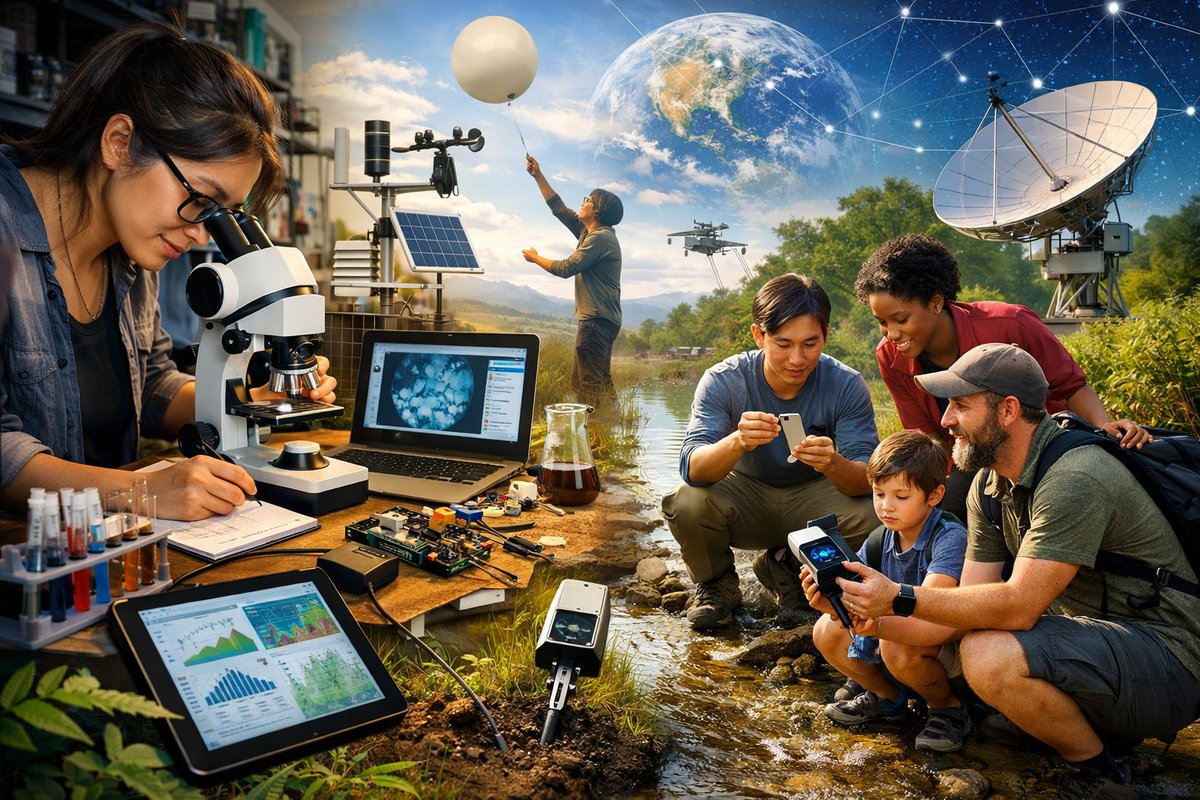

Science used to conjure images of distant laboratories and inaccessible equipment. Today, a revolution is unfolding at kitchen tables, in backyard workshops, and on neighborhood walks. By blending digital ingenuity with tangible instruments, modern science is more inclusive, adaptable, and emotionally attuned than ever. Whether you’re a student scribbling notes in a spiral-bound lab journal, a hobbyist setting up a sensor network to track local air quality, or part of a grassroots group analyzing water samples, the barriers between professional and amateur research are dissolving.
At the heart of this shift lies a simple idea: curiosity is the greatest tool of all. When coupled with affordable hardware and open-source platforms, it unlocks possibilities once confined to major institutions. A foldable, plastic microscope costing under twenty dollars can reveal pond life in vivid detail. A single-board computer paired with a light sensor and GPS module turns any park bench into a microclimate monitoring station. Low-cost 3D printers churn out custom lab adapters, while smartphone apps transform your camera into a spectrometer. These once-niche tools have spilled into everyday settings, empowering learners and citizen scientists to explore phenomena that once sat beyond reach.
This new toolkit also embraces sustainability and privacy. Open-source designs allow makers to repair and adapt devices indefinitely, reducing electronic waste. Community forums share methods for sourcing recycled parts or using biodegradable plastics in 3D prints. At the same time, local dataloggers and mesh networks keep raw measurements under your control, sharing only summary findings with wider databases. By combining ecological responsibility with ethical data practices, grassroots science communities forge a path that values both knowledge and stewardship.
interdisciplinary collaboration finds fertile ground in these open environments. A biology teacher can co-design an aquaponics sensor array with an electronics enthusiast. An urban planner and a school art club collaborate on a solar-powered air quality station that doubles as a public sculpture. These hybrid projects foster emotional intelligence alongside technical skills-teams learn empathy, active listening, and conflict resolution as they tinker and test in real time. The result is not just richer data but deeper community ties and a shared sense of wonder.
Technology alone doesn’t drive progress. Tutorials and digital simulations make complex concepts approachable, but hands-on experimentation cements understanding. Virtual lab environments let users explore molecular models or simulate orbital mechanics, yet nothing replaces the tactile thrill of cranking a microscope’s focus knob or soldering sensors to a circuit board. These embodied experiences spark creativity, uncover unexpected patterns, and build confidence. As learners shift between screen and bench, they develop intuition that guides fresh questions and novel tests.
Field expeditions illustrate this synergy beautifully. Imagine a group of volunteers mapping insect populations along a greenway. Each carries a portable spectrometer clipped to a selfie-stick, measuring plant reflectance under different light conditions. Meanwhile, handheld microscopes examine microfauna on leaves, and a mesh-networked multimeter records soil moisture and temperature. Data streams into a shared dashboard where participants tag anomalies and propose hypotheses on the spot. By the end of the day, the team has generated a public dataset, drafted preliminary graphs, and sketched plans for a follow-up study. They did it with tools accessible enough for anyone to acquire, adapt, and deploy.
Back in the workshop, 3D printing turns digital designs into experimental fixtures: custom flow cells for water analysis, microscope adapters for phones, even modular enclosures for Arduino-driven sensor boards. This agile hardware pipeline collapses design cycles from months to hours. Need a new sample holder? Design it on the computer, print it on demand, and test it in the afternoon. Want to iterate on a microfluidic channel? Swap a CAD file and run the pump again. Rapid prototyping elevates science from theory talk to embodied problem solving.
Yet it’s not just about making devices-it’s about making connections. Online repositories host tutorials, design files, and troubleshooting advice. Virtual meet-ups pair novices with veteran hobbyists. Local maker spaces and school clubs become incubators for collaborative experiments. These networks cultivate not only technical knowledge but emotional support: sharing mistakes, celebrating small victories, and welcoming questions without judgment. In this nurturing ecosystem, learners gain scientific literacy and the resilience to navigate uncertainty.
For professional researchers, the landscape is shifting too. Lab budgets now allocate for open-source platforms alongside proprietary equipment. Collaborative grants encourage integration of citizen-science data. University outreach programs send students into communities equipped with sensor packs and portable microscopes, fostering two-way learning: academics gain rich, real-world data while volunteers learn research methods firsthand. This cross-pollination enriches both camps-resulting in more diverse questions, creative protocols, and socially impactful findings.
Looking ahead, augmented reality (AR) and virtual reality (VR) hold promise for bridging gaps between screen-based models and bench work. Imagine AR glasses overlaying reagent volumes and step-by-step instructions as you pipette, or VR simulations that let you rehearse complex dissections before touching a scalpel. Paired with 3D-printed tactile feedback devices, these immersive tools could lower the barrier for hands-on skills. But the spirit of accessibility remains central: software and hardware must be open, adaptable, and repairable, honoring the sustainability and privacy values at modern science’s core.
Ultimately, the true revolution lies not in any single device but in the mindset it fosters. Science is becoming more collaborative, more creative, and more human-centered. It thrives on questioning assumptions, sharing openly, repairing relentlessly, and celebrating the messy process of discovery. Whether you’re analyzing soil bacteria, designing a neural network, or simply peering at salt crystals through a budget microscope, you’re part of an expanding tapestry of curious minds. And that hands-on spirit-rooted in empathy, ethical practice, and boundless curiosity-is the defining tool of all.