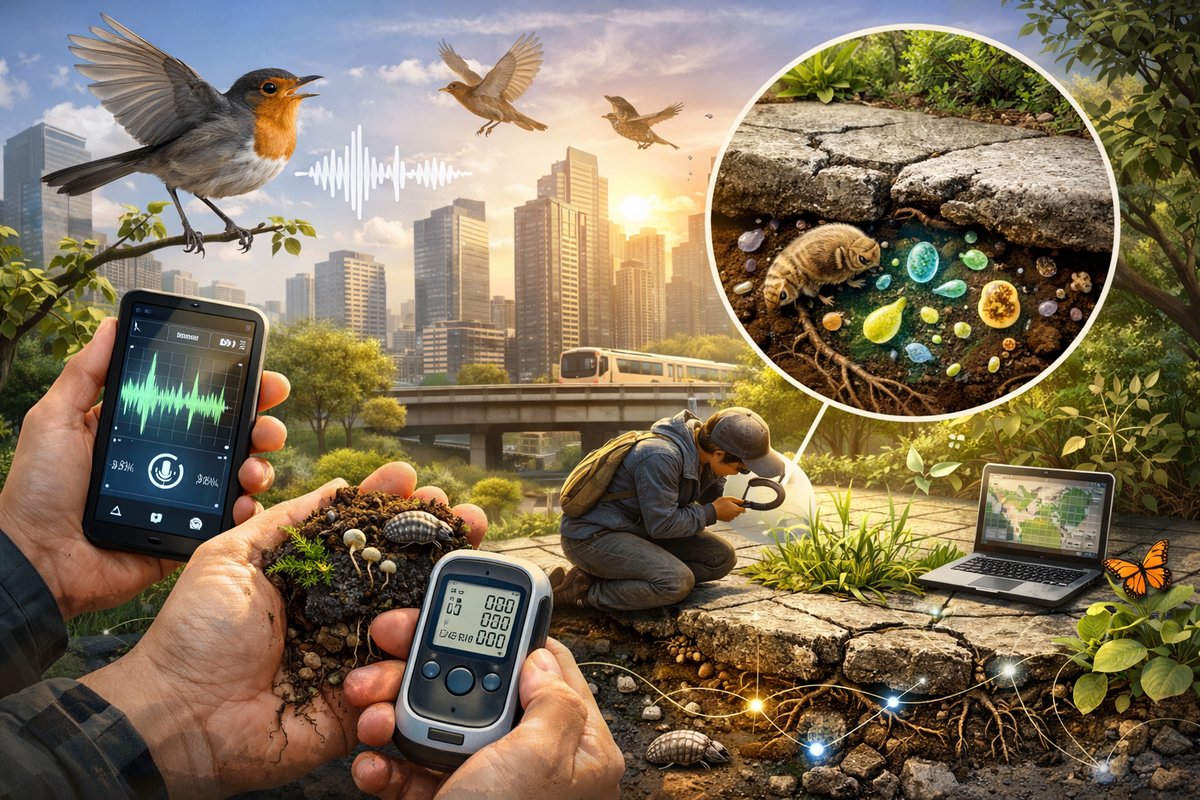

City streets hum with life beyond the visible flow of people and vehicles. Early in the morning, a resident might pause to listen to the layered chorus of sparrows, pigeons, and distant traffic. The same pavement that seems inert to a casual glance harbors bacteria breaking down pollutants and seeds sprouting in shadowed gaps. Urban environments bristle with scientific clues waiting to be decoded by those with open eyes and simple tools.
Walking along a tree-lined boulevard, most of us notice the shade or appreciate the green backdrop. Beneath that canopy, air quality fluctuates block by block. Tiny particles released by bus exhaust settle on leaves, altering gas exchanges in plant tissues. With a portable handheld air quality monitor in hand, you can map out pollution hotspots in real time-revealing how a single delivery truck idling at a corner can raise particulate levels in a radius of several dozen meters.
Meanwhile, a clip-on smartphone microscope lens transforms your phone camera into a window into microbial realms. Scrape a small swatch of moss growing on a lamppost, mount it over the lens, and your screen springs to life with tiny hyphae from fungi or clusters of green algae. These living snapshots remind us that cities are not sterile; they are a palimpsest of evolving microhabitats.
Soundscapes, too, carry a scientific record. A handheld field audio recorder captures the shifting chorus of dawn, midday sirens, and evening cicada calls. By comparing recordings from different city districts and times of day, you can track habitat fragmentation or measure the impact of new construction on local wildlife behavior. Curious observers have even used these recordings to train machine-learning models that identify bird species based on their songs alone.
Beyond observation, mapping these phenomena highlights how people shape-and are shaped by-urban ecosystems. Uploading air quality data, sound recordings, and microscopic images to an open citizen-science platform fosters collective insight. Neighbors can compare notes on the healthiest blocks for jogging, parents can identify quiet pockets for toddlers, and local groups can advocate for tree-planting initiatives in the most polluted zones.
A waterproof field notebook completes the explorer’s kit, ensuring that every note, sketch, and hypothesis withstands sudden downpours or accidental spills. Scribbling down GPS coordinates alongside visual observations creates a robust record that bridges analog intuition with digital precision. When paired with a handheld GPS unit, informal walks evolve into systematic surveys, uncovering correlations between green spaces, water runoff, and temperature variations-crucial data points in the face of urban heat islands.
The story of wastewater treatment plants underscores how cities engineer living systems at scale. Microbes within aeration tanks are coaxed into breaking down household and industrial waste, showcasing how biological communities can be harnessed for public health. A field trip to a treatment plant, guided by public-sector scientists, reveals the delicate balance between oxygen levels, nutrient inputs, and biomass growth-insights that echo in microenvironments we pass every day.
Turning our attention to rooftops, the rise of urban gardens demonstrates how simple additions can alter an ecosystem’s thermodynamics. Soil trays installed on high-rise terraces host pollinators and local flora, while rooftop sensors track humidity, temperature, and sunlight hours. By sharing this data online, resident gardeners discover supply chains of beneficial insects, optimizing plant choices to boost yield and biodiversity.
Stormwater management offers another example of city science in action. Permeable pavement patches and bio-retention cells planted along sidewalks filter runoff before it can overload sewers. Citizens armed with moisture meters can compare how different materials perform during heavy rains, supporting neighborhood councils in choosing the most eco-effective designs for new sidewalks or bike lanes.
Even the simplest acts of observation yield surprises. A commuter noting the seasonal shift in pollen counts by collecting pollen samples from car grilles can collaborate with allergy researchers to predict outbreaks. Similarly, tallying the number of hives in backyard beehives or pollinator boxes contributes to regional databases on insect decline-a phenomenon with massive implications for food security and ecosystem resilience.
Science in the city thrives on curiosity and low-barrier tools. A budding urban ecologist needs little more than a smartphone equipped with sensor attachments, a reliable pocket notebook, and an eagerness to share findings. Whether you’re charting soundscapes, air quality gradients, or microbial pockets in park soil, each data point enriches our collective understanding of how life persists in seemingly inhospitable places.
Beyond individual discoveries, the true power of this approach lies in networks. Neighborhood groups exchanging environmental readings spark community action-planting trees where air is poorest, lobbying for green roofs atop municipal buildings, or organizing clean-up drives in polluted waterways. As more voices join the conversation, city planners and policymakers gain richer datasets to craft interventions that enhance urban resilience and public health.
The urban jungle is alive, and its echoes reverberate through every sidewalk crack and rooftops’ green oasis. By embracing hands-on exploration and simple yet powerful gadgets, you can become a catalyst for scientific discovery and environmental stewardship. Cities may feel dominated by concrete and glass, but underneath lies a living tapestry of interactions waiting for curious minds to unravel and celebrate.