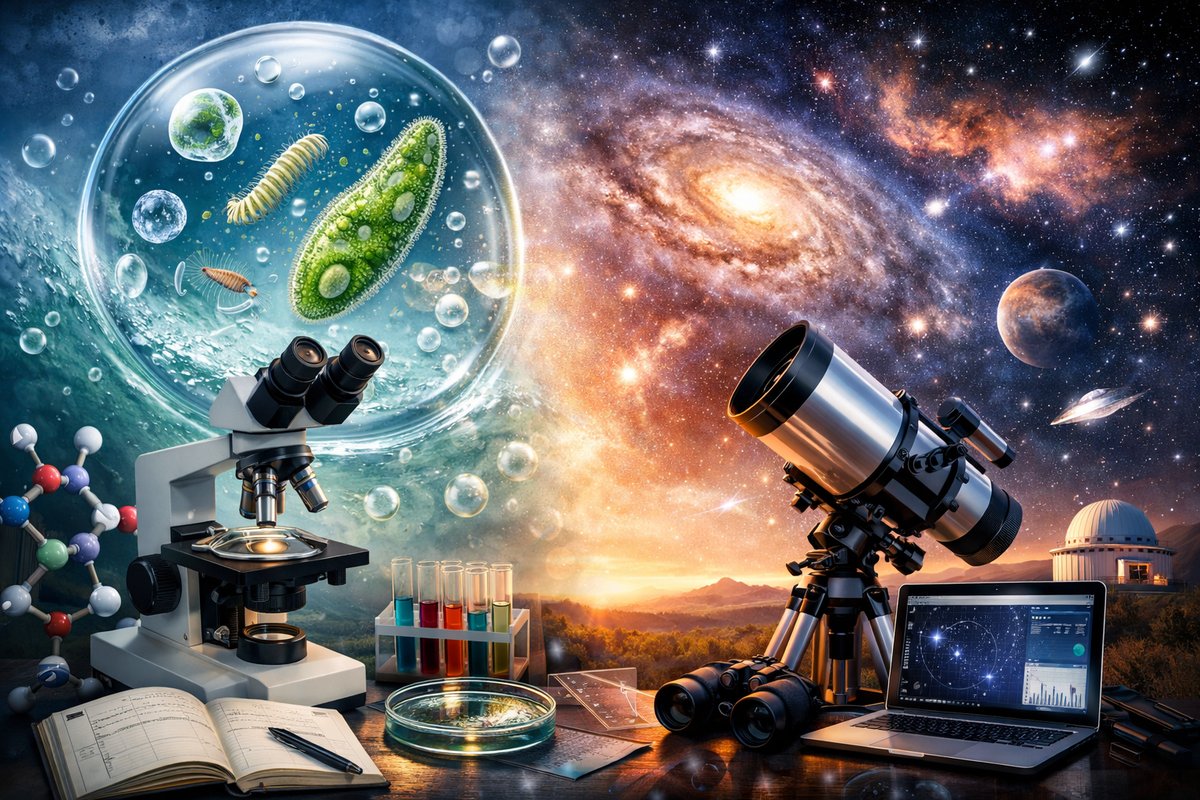

Every day, countless questions flicker through our minds: What secrets lie within a grain of sand? How did that distant nebula form? What patterns hide in the ebb and flow of environmental data? Science, at its core, is the art of asking these questions and crafting reliable answers. Yet our unaided senses only scratch the surface of reality. To delve deeper, we enlist an array of instruments that amplify our perception and sharpen our insights. These tools-built on decades of innovation and ethical reflection-are extensions of our curiosity, rendering the invisible visible, the unknown knowable.
A microscope transforms a simple glass slide into a bustling metropolis of cells, bacteria, and subcellular structures. In classrooms, community labs, and field stations, digital microscopes capture high-resolution images of pond water samples, pollen grains, or textile fibers, revealing intricate landscapes invisible to the naked eye. Modern devices incorporate adjustable LED illumination, USB connectivity, and onboard cameras, enabling students and citizen scientists to archive discoveries and share them online. Beyond magnification, these instruments remind us that sustainability extends to the way we source and dispose of lab equipment-opting for energy-efficient lighting, recyclable plastics, and modular parts that can be replaced rather than discarded.
But molecular mysteries lie beyond even the tiniest speck of life. A molecular modeling kit invites learners to assemble atoms and bonds, constructing proteins, nucleic acids, or organic frameworks in three dimensions. Holding a representation of DNA’s famous double helix or visualizing the tetrahedral geometry of carbon atoms sparks an intuitive grasp of chemical principles. These tactile explorations complement computer simulations, providing a bridge between abstract equations and tangible structures. Whether used by high schoolers exploring chemistry or by hobbyists experimenting with new materials, modeling kits cultivate spatial reasoning and a mindful appreciation for the building blocks of matter.
Journals and data logs form the backbone of any rigorous scientific inquiry. A sturdy lab notebook with numbered, acid-free pages isn’t a mere accessory; it’s a record of hypotheses, observations, calculations, and reflections. Detailed entries ensure experiments can be reproduced, methods refined, and errors traced back. In an era of open science, digital privacy remains paramount-researchers balance transparent data-sharing with safeguards for sensitive information. Cloud-based lab notebooks now offer encrypted backups and permission controls, granting collaborators access while protecting proprietary or personal data. This fusion of analog reliability and digital convenience reinforces ethical practice and nurtures a culture of trust.
Investigations don’t unfold in pristine laboratories alone. A STEM electronics kit equips enthusiasts of all ages with breadboards, microcontrollers, and a suite of sensors-measuring air quality, tracking temperature shifts, or monitoring soil moisture in community gardens. Building a particulate matter sensor to map urban pollution empowers grassroots campaigns and informs policy. Designing a water pH monitor for local streams fosters environmental stewardship and data-driven conservation. By repurposing electronic modules and open-source software, makers cultivate sustainable habits: salvaging components, 3D-printing enclosures from biodegradable filament, and sharing project plans under open hardware licenses.
When eyes turn skyward, a telescope becomes a time machine. Even a modest amateur telescope reveals lunar craters, the rings of Saturn, or the wispy glow of a nearby nebula. Portable designs, equipped with adjustable mounts and user-friendly eyepieces, encourage backyard stargazing and lifelong fascination with astronomy. Paired with a fold-out star chart or a digital sky map on a tablet, observers learn constellations, trace the path of planets, or witness meteor showers. These celestial encounters connect individuals to a legacy of explorers who mapped the heavens, reminding us of our shared place in a vast, ancient cosmos.
Behind every scientific breakthrough lies a network of collaboration, mentorship, and emotional intelligence. Instruments alone don’t decode the fabric of reality; empathy, curiosity, and respectful dialogue drive progress. Community labs, science clubs, and online forums cultivate inclusive spaces where newcomers and experts alike exchange questions, troubleshoot setbacks, and celebrate discoveries. Workshops on research ethics, data privacy, and sustainable design raise awareness of the social impact of science. In classrooms, educators balance technical instruction with lessons in communication: how to present findings clearly, how to listen to peer feedback, and how to navigate disagreements with integrity.
The path from raw curiosity to polished insight is ongoing. As new materials emerge, sensors shrink, and algorithms grow more sophisticated, our toolkit for exploration expands. Yet at its heart, science remains a deeply human endeavor-rooted in wonder, guided by values, and propelled by the desire to understand ourselves and our world. By integrating sustainable practices, ethical data stewardship, and collaborative spirit, we ensure that every microscopic glimpse and every cosmic survey contributes to a more equitable and informed future.
Whether you’re peering into a drop of pond water or scanning the sky for distant galaxies, the right instruments transform questions into answers and spark new lines of inquiry. From detailed lab notebooks to precision optics, each tool plays a role in illuminating hidden realms and driving sustainable innovation. As you chart your own scientific journey, remember that the most powerful instrument is curiosity itself-a compass that guides us through the unseen landscapes of nature and beyond.