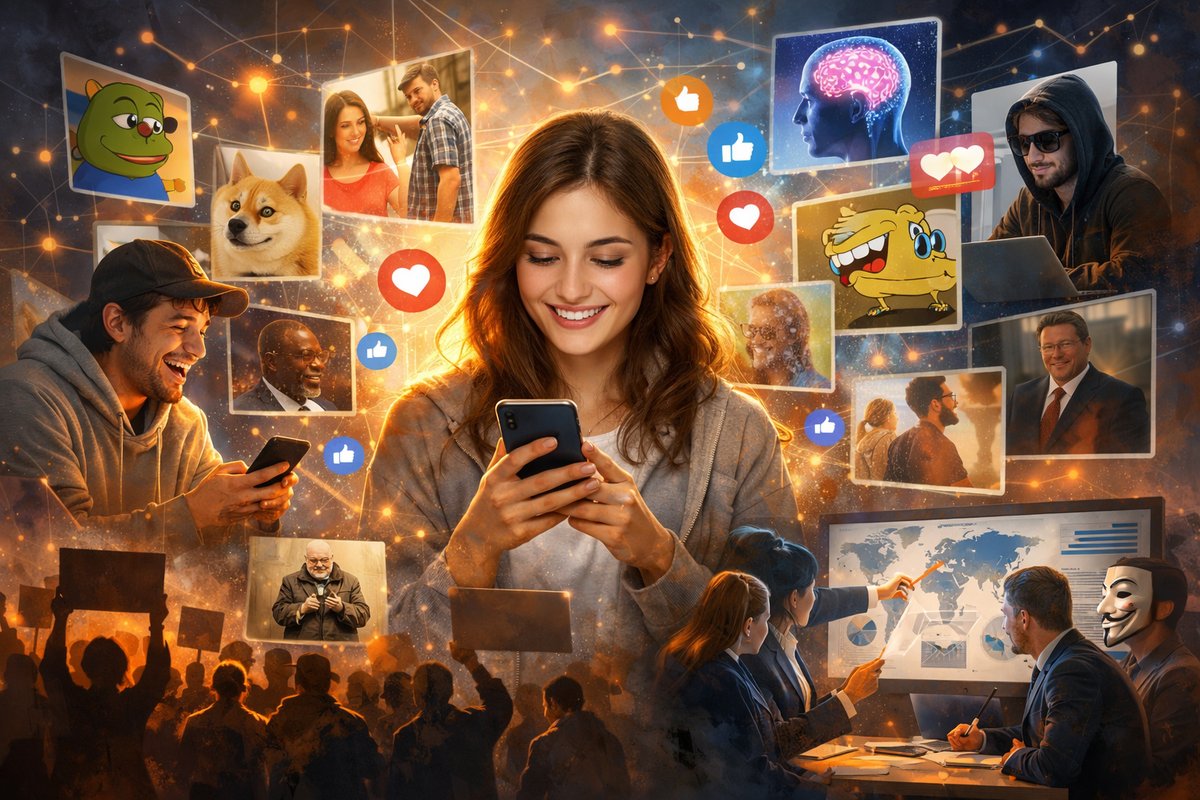

In the digital age, memes have transcended their original role as simple humorous images to become influential cultural artifacts that shape how people communicate, connect, and perceive the world around them. Far from being fleeting internet jokes, memes now serve as lenses through which individuals and communities interpret social realities, express emotions, and engage in collective storytelling.
At their core, memes are units of cultural information that replicate and evolve as they spread from person to person. This replication is accelerated by social media platforms, where memes can reach millions within hours. Their viral nature allows them to capture and distill complex ideas, feelings, and events into easily digestible and relatable formats. This accessibility has made memes an essential part of daily communication, especially among younger generations who often rely on them to navigate social interactions.
One of the most profound impacts of memes is their ability to foster a sense of belonging and identity. Online communities often rally around shared memes that reflect their values, humor, and experiences. These digital artifacts become badges of membership, signaling insider knowledge and cultural alignment. For example, niche memes related to specific hobbies, professions, or fandoms create microcultures where members feel understood and connected. This phenomenon highlights how memes contribute to social cohesion in virtual spaces.
Memes also serve as tools for social commentary and political expression. They can succinctly critique societal issues, challenge authority, or mobilize support for causes. Because memes rely on humor and satire, they can bypass traditional gatekeepers of information, allowing marginalized voices to participate in public discourse. This democratization of communication empowers individuals to shape narratives and influence opinions in ways that were previously difficult to achieve.
However, the impact of memes is not without complexity. Their rapid spread can sometimes lead to the dissemination of misinformation or reinforce stereotypes. Memes that rely on oversimplification may obscure nuanced issues, and their humor can sometimes perpetuate harmful biases. Furthermore, the ephemeral nature of memes means that their meanings can shift quickly, leading to misunderstandings or unintended consequences.
In daily life, memes influence how people express emotions and cope with challenges. During times of crisis or uncertainty, memes often provide a shared language of resilience and humor that helps individuals process difficult experiences. For instance, during global events such as pandemics or social movements, memes have emerged as collective coping mechanisms that blend levity with reflection.
The commercial and artistic realms have also embraced memes. Brands increasingly incorporate meme culture into marketing strategies to engage audiences authentically. Artists and creators experiment with memes as a form of contemporary art, pushing boundaries and exploring new modes of storytelling. This integration underscores the cultural significance of memes as both creative expressions and economic forces.
Looking ahead, the evolution of memes will likely continue to intersect with emerging technologies such as augmented reality, artificial intelligence, and virtual communities. These advancements may transform how memes are created, experienced, and shared, further embedding them into the social fabric. As memes evolve, their role as cultural catalysts will persist, reflecting and shaping the values, humor, and identities of societies worldwide.
In essence, memes are more than digital curiosities; they are dynamic cultural phenomena that influence daily life and societal structures. Their power lies in their ability to connect individuals through shared understanding, provoke thought through humor, and adapt rapidly to changing contexts. Recognizing the multifaceted impact of memes invites a deeper appreciation of how digital culture molds human interaction and collective meaning in the modern world.
-
TOZO A1 Wireless Earbuds Bluetooth 5.3 Light Weight in Ear ...
[Ultra-Lightweight Ear Buds Designed for Small Ears] Each earbud weighs only 3.7g and features a compact, ergonomic in-ear design made especially for small ... -
onn. True Wireless Earbuds, White - Walmart.com
All-day Audio Power. Up to 15 total hours playtime: 3 hours per earbud charge, 4 case recharges. High-definition Audio. High-definition Audio. -
Cloud Nine C989M Ergonomic Mechanical Keyboard for PC - Kailh ...
Built-in tenting and palm support ensures your hands stay comfortable all day. With 7 degrees of angle built into the wrist rests, this full-sized keyboard ... -
60% Mechanical Keyboard, Ergonomic Gaming ... - Walmart Business
Buy 60% Mechanical Keyboard, Ergonomic Gaming Keyboard with Detachable Type C Cable, 18 Color Rainbow Backlit Gaming Keyboard, Full Anti-Ghosting 61 Key for ... -
Amazon.com: Ring Light [3 Color, 5 Brightness & Timer] 3.5'' Small ...
Buy Ring Light [3 Color, 5 Brightness & Timer] 3.5'' Small Video Conference Lighting Clip On Monitor Laptop iPad Phone, USB Plug Dimmable Selfie Light for ... -
Handheld LED Ring Light for Smartphones - Portable 8500K Selfie ...
... Adjustable Brightness for Live Streaming, Makeup, Selfies & Party Lighting. 1 ... Portable LED Ring Light for Selfie Photography Live Stream, Adjustable.