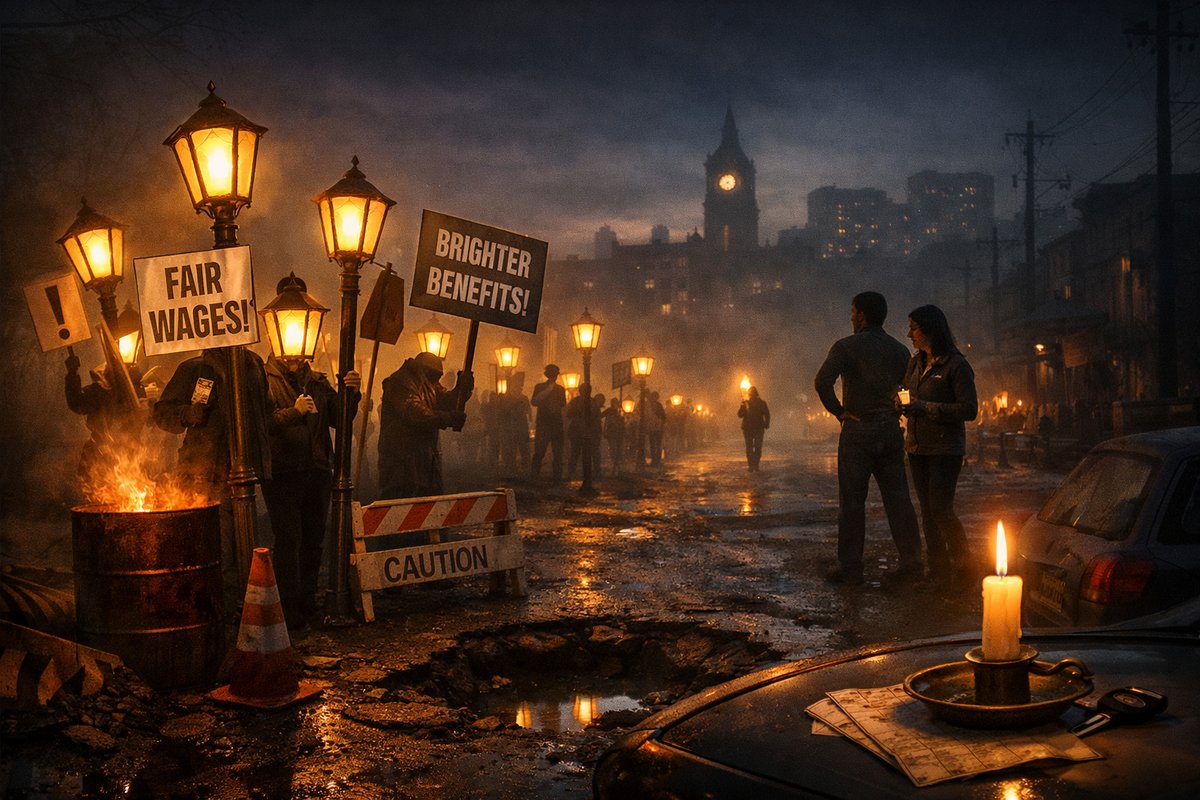

Riverton awoke to an unexpected blackout-not from a storm or a power surge, but from the city’s very own streetlamps downing tools in protest. At precisely 10:07 PM, every lamp along Main Avenue went dark, plunging pedestrians, joggers, and late-night food delivery couriers into a transient state of pitch-gray confusion. Reports flooded the municipal hotline: one jogger claimed he stubbed five toes in thirty seconds; another insisted she sighted glowing red eyes in an alley that turned out to be a discarded reflector vest.
By dawn, chalked slogans appeared beneath every silent lamp post: “Light Workers Deserve Brighter Days,” “End Dark Labor Practices,” and the mysterious “#ShineOnOrWeSignOff.” The city’s public works department scrambled technicians only to find inspection notes taped to each base, signed with the acronym L.U.C.E. (Lamp Union of Curbside Employees). That note listed three demands: standardized brightness schedules, overtime compensation for nights exceeding twelve hours, and a seat for a lamp representative on the zoning commission.
Local news captured the mayor scratching his head in the municipal garage, flashlight in hand. “I’ve dealt with snowstorms, budget deficits, even a runaway parade float,” he admitted, “but never confronted a lamp labor action.” As smoke from his morning coffee spiraled upward, he vowed to reopen talks with the lamps immediately-though officials admitted they weren’t sure whom exactly to meet. A meeting requisition from L.U.C.E. demanded an eight-lumen ambassador and a sconce liaison, leaving city staff reaching for performance art training manuals.
Meanwhile, the lamps themselves remained on the picket lines. Neighborhood streetlamps assembled at the intersection of Elm and Maple, their glass globes glittering with determination. A lamppost identified by union organizers as Stella Bulb delivered an impassioned speech via a small amplifier: “We illuminate your path, chase away darkness, and keep late-night joggers from becoming unintended street cuisine. We deserve schedules that respect our need for cooldown periods and fair compensation for glaring public service.” Her broadcast looped on local FM as if stolen from a rogue radio station.
As negotiations stalled, tensions rose. The activist lamps threatened to dim emergency streetlights and bypass crosswalk signals at rush hour. Commuters reported sudden Broadway-style halts as lamps flickered to orange in solidarity. Public transit routes were delayed by station platforms cloaked in dim moonglow, prompting subway riders to debate whether the gloom was oppressive or merely atmospheric. Fashion influencers seized the moment, promoting “duskcore” outfits suited to a half-lit world, though critics labeled it “hipster resistance chic.”
In the suburbs, the quiet of empty streets felt-strangely-peaceful to some. Early-risers lingered over coffee on porches, listening to birdsong unmasked by lamplight. But by midweek, bicycle-sharing stations became liabilities as handlebars lurched into curbs. Neighborhood watch groups formed “walking brigades” armed with flashlights and candles. Parents with strollers started carrying glow sticks adorned with motivational slogans like “Parenthood Glo-Ups” while discussing child safety in impromptu lantern-lit seminars.
A local business owner reported an unintended tourism bump. Visitors trekked downtown at night hoping to witness the “lightless thrill.” Hip nightclubs marketed dance events called Blackout Boulevards, with tinted walls and neon body paint supplying the luminous flair once dispensed by curbside lights. A food truck parked by City Hall boasted “Midnight Tacos: Darkness Edition,” serving glow-in-the-dark salsa that critics called “the most photoluminescent microgreens you’ll ever ingest.”
Art collective Midnight Palette took advantage of the blackout by curating an impromptu street gallery. With colored projectors and portable fog machines, they showcased surreal vignettes-dancers in reflective outfits, karaoke sessions projected onto walls, and a solitary poet reciting odes to municipal infrastructure. The event drew cheers from lamps in protest-recorded as rhythmic humming captured by local podcasters. Curators claimed to receive direct messages from the union via Morse code pulses of lamp flicker.
Back at City Hall, the mayor’s patience started to fade. He convened a high-stakes summit inviting union negotiators, lighting engineers, and a certified circus negotiator known for pacifying giant puppets. The lamps arrived in force, flanked by decorative string lights stolen from nearby cafes to symbolize solidarity. Negotiations descended into bizarre tactics: the lamps demanded a contract clause guaranteeing a daily “Sunset Salute,” wherein each lamp post would bask in the actual sunset for ten minutes before lighting up, while the city insisted on a cap of three thousand lumens to prevent art installations from blinding drivers.
Union leaders insisted on an overtime rate of “double lumens” for seasonal shifts when nights lengthen. City negotiators countered with proposals for solar panels on poles to offset energy costs, only to have the lamps reply that harvesting sunlight would expose their private meeting schedules to paparazzi drones. Tensions peaked when a delegation of floodlights arrived without warning, demanding to be included in talks, claiming they’d been neglected for stadium events. At that moment, a biologist from City Labs piped in that some lamps might be hosting insect colonies inside the fixtures, complicating any repair work.
Amid the chaos, civic reactions split into factions: the “Lamplighters Party,” championing immediate concessions, and the “Darkness Defenders,” urging sacrifice of familiar glow for new perspectives. Street musicians composed anthems with lyrics like “No More Flicker, No More Fear” and “Shine On, But Fair Wage For All.” Social media polls saw over 62 percent of Rivertonites expressing solidarity with the lamps-though 48 percent admitted they simply missed their porch lights.
Late into the weekend, negotiators finally hammered out a provisional accord: streetlamps would stagger activation times by two-minute intervals to avoid mass blackouts, receive performance bonuses during holiday seasons, and trial solar assist mounts on ten pilot poles. The city would form a joint oversight committee with two lamp representatives and one emergency generator. To seal the deal, the mayor promised a commemorative plaque reading “In Light We Trust,” though union leaders insisted it be polished quarterly.
As dusk settled Monday, Riverton citizens watched with bated breath. At precisely 6:02 PM, the lamps glowed back to life in a perfect wave from north district to south. Cheers erupted as joggers extended their stride, and cyclists resumed their dashboard-lit rides. Yet in the applause rose a solitary whisper: candles in windows flickered in solidarity. Several neighborhood bakeries reported brisk sales of decorative taper candles, and rumor has it that next week the town’s candelabras may launch their own movement.
The saga of the streetlamps has shed unexpected light on labor, artistry, and the unspoken bond between infrastructure and community. What began as a simple protest over brightness levels became a citywide reflection on cooperation, shared darkness, and finding brilliance even when the lights go out. Riverton has entered a new era where every lamppost counts, every watt has worth, and even a blackout can illuminate a path to unity.