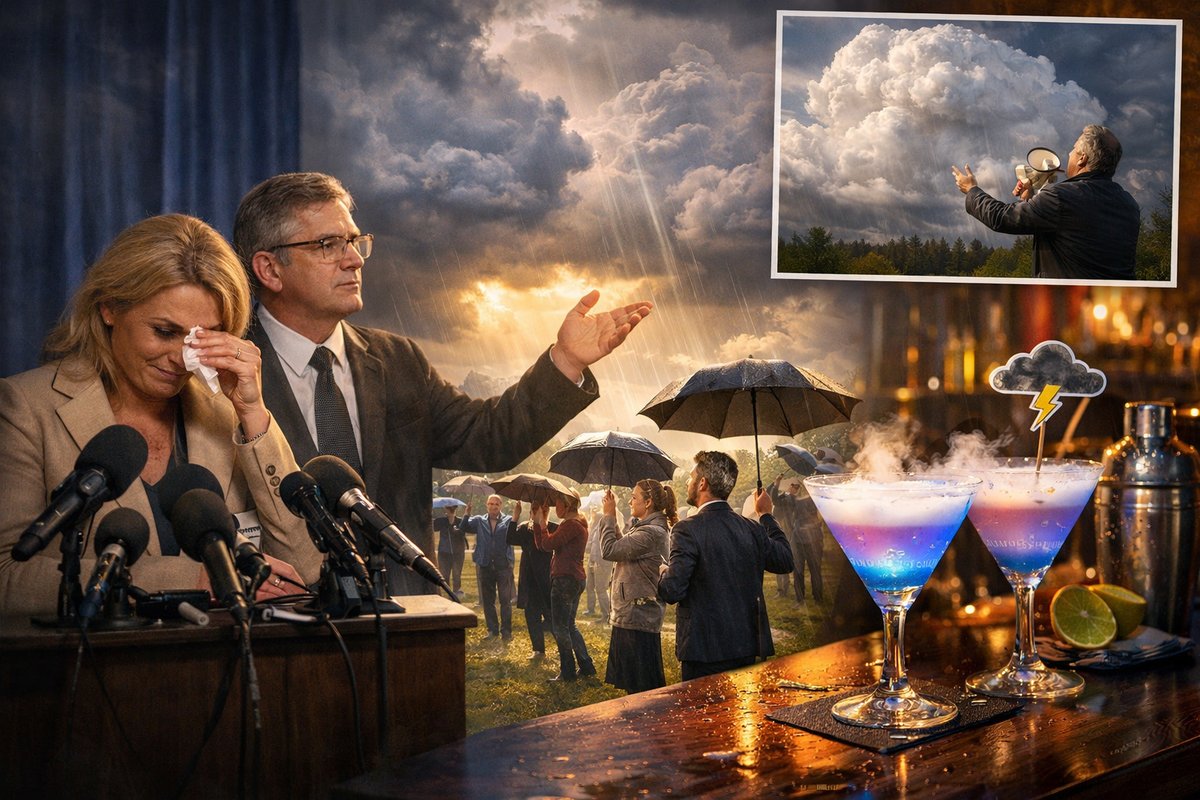

By the second week of June, the usually steady hum of weather updates on the local radio gave way to an eerie silence. That’s when the town’s six full-time meteorologists, clad in their customary windbreaker vests and armed with clipboards, barricaded themselves inside the municipal Weather Forecasting Office. A hastily scrawled banner reading “We Predict, We Deserve Respect” draped over the front window announced their intentions: no more forecasts until the skies came to the negotiating table.
The strike was unilateral and wildcat-no union paperwork, no advance notice-just a sudden refusal to provide temperature highs, radar graphics or morning humidity bulletins. Drivers, startled by the absence of familiar morning warnings about slick roads, resorted to glitchy navigation apps and whispered guesses at Spanish moss hanging off live oaks. Gardeners found themselves arbitrarily watering shrubs in midday downpours or fleeing into greenhouses at the merest hint of cloud cover. A spontaneous community survey revealed that 82 percent of citizens owned at least one single-use umbrella they now considered essentially obsolete.
Inside the Weather Forecasting Office, Lead Forecaster Jordan Mills strode to the microphone at noon, tears in their eyes. “We have endured relentless ridicule when our predictions miss by a fraction of a degree,” Mills declared. “You expect us to tame the free will of moisture, negotiate with migrating birds, and counsel thunderheads through identity crises. We have rights, too!” Colleagues nodded, brandishing cups of cold coffee as evidence of their emotional trauma. Overhead, a wheezing ceiling fan provided the only ambient white noise, completing the scene of a sit-in that could have doubled as a community theater matinee.
Shockwaves rippled through town hall. The mayor, acutely aware that his own reputation hinged on reliable rain-or-shine proclamations for the annual Fourth of July parade, assembled an emergency panel. Local dairy farmers, haunted by unexpected frost warnings, joined forces with landscaping crews who had received last-minute gale alerts. Even the town crier, recently recovering from vocal cord surgery, attended-his muffled bell tolls punctuating debates about “weather responsibility.” Citizens formed an impromptu picket line outside the forecast office, chanting, “Sun or storm, give us form!”
On day three, the meteorologists submitted a six-point list of demands: official recognition of”Forecast Anxiety Disorder,” a weekly supply of ethically sourced coffee, a dedicated nap room for late-night storm watches, professional counseling for traumatic encounters with rogue microbursts, a monthly stipend for meditation apps, and an annual ceremonial handshake with the cumulonimbus masses. The mayor blinked at the list. “We can’t exactly RSVP to a thundercloud,” he muttered, prompting a round of solidarity cheers.
With negotiations stalled, the meteorologists escalated. They broadcast an open letter to the atmosphere via social media, tagging “#CloudsHaveFeelingsToo” and attaching selfies of forecasters hugging thermometers. The letter outlined instances of “systemic atmospheric negligence,” citing three unannounced hailstorms and two sudden heat domes as evidence of prolonged emotional distress. Local teenagers, ever ready to capitalize on the chaos, began merchandizing T-shirts that read, “I Was There When the Weather Negotiated Peace.” Meanwhile, conspiracy theories proliferated online: some claimed the protest was a covert plot to extend siesta hours; others insisted aliens had persuaded the meteorologists to cut ties with earthly barometric pressures.
Just as residents braced for a summer of complete meteorological silence, an unlikely mediator emerged: a group of retired librarians turned amateur conflict-resolution facilitators. Armed with color-coded sticky notes and decades of quiet authority, they invited representatives of the weather and the forecast office to a community reading room. The central objective: draft a “Mother Nature Charter” promoting transparency, empathy, and a no-surprises policy. Over charts of high-pressure ridges and annotated cloud formations, the group debated clauses like “weather shall provide fair warning” and “forecasters commit to humility in the face of unpredictability.” A hush fell whenever someone referenced the Great Hailstorm of ’19, an event still whispered about in local book clubs.
Miraculously, after 48 hours of gentle prodding-coupled with a steady stream of chamomile tea-the librarians brokered a tentative truce. The weather agreed to occasional Instagram updates and respect standard model protocols. In exchange, the meteorologists pledged to preface all forecasts with disclaimers like “Subject to the whims of capricious cumulonimbus.” The agreement culminated in a townwide ceremony at sunrise. Staff from the weather office delivered a heartfelt speech, admitting, “We forecast not because we command the wind, but because we love every raindrop and ray of sun that challenges us.” A solitary cloud drifted overhead, as if offering its own nod of approval.
Back at the Weather Forecasting Office, operations resumed with new rituals. Each morning begins with a group meditation session led by the resident mindfulness coach-formerly the director of the public library-and ends with a short dance party whenever a prediction hits within two degrees of accuracy. The mayor issued a proclamation recognizing June 12th as “National Forecast Solidarity Day,” encouraging citizens to hug a local forecaster and thank them for weathering life’s uncertainties.
While the streets have returned to their usual patterns of complaining about humidity or sunshine overload, the strike left a lasting mark on the community psyche. The town’s guild of amateur photographers now documents every rainbow for posterity. Local cafés offer a “Foggy Forecast” latte special on Mondays. And residents, once guilty of whining about a stray flurry on a mild afternoon, have learned the art of gratitude: come rain or shine, surprises in the sky now feel like invitations to join the cosmic conversation.