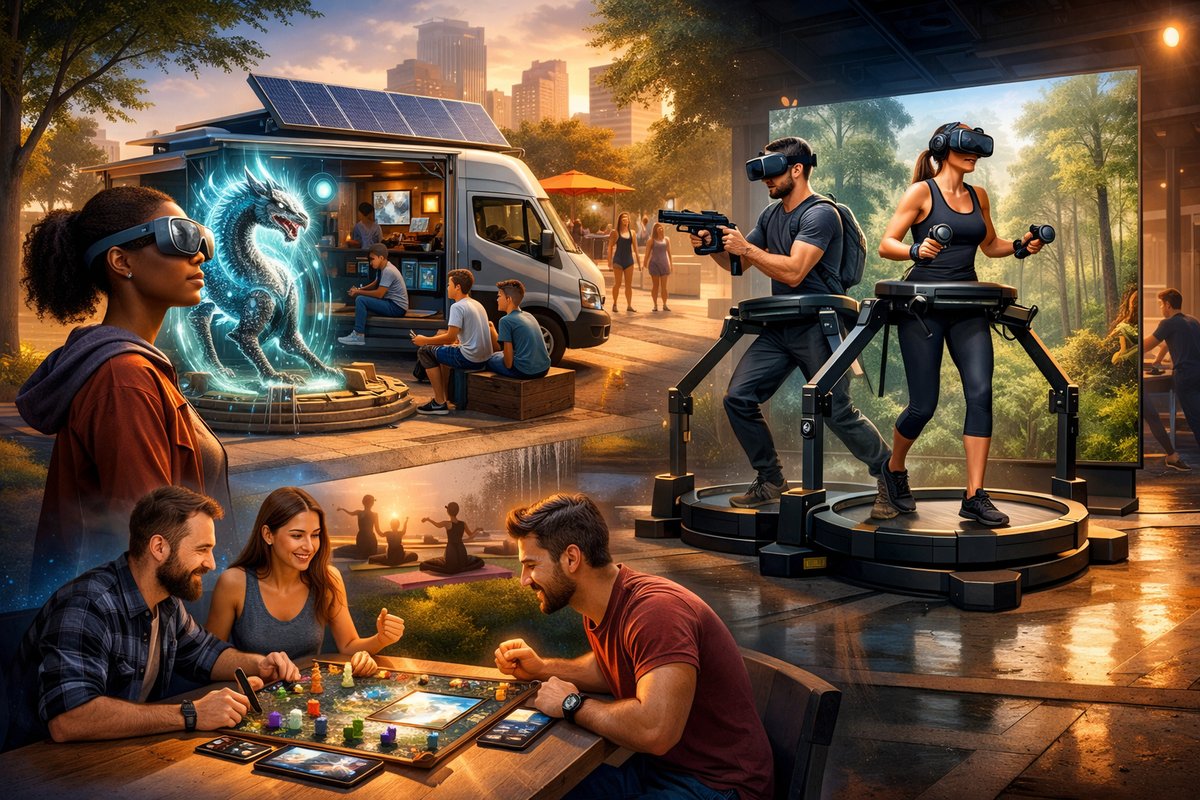

In a riverside park on a crisp Saturday morning, families and hardcore gamers alike gather under string lights for an event that feels part carnival, part LAN party. ARMada Fest, a weekend showcase of augmented reality challenges, pop-up arcades, and fitness-focused virtual reality pods, has drawn hundreds of participants eager to step beyond traditional play. Organizers convert flat greenspaces into interactive game boards visible only through smartphones or AR glasses. Clues hidden in graffiti art lead teams on scavenger hunts that reward real-world fitness goals-tracking footsteps and heart rate-before unlocking the next digital puzzle.
Behind this growing movement is a desire to bridge digital and physical worlds without sacrificing the social joy of both. Indie developers are rolling out experimental board games with embedded NFC chips that sync progress to an app. Players might find themselves strategizing over cardboard tiles one moment, then tapping a smartphone to trigger a holographic battle projection the next. These hybrid prototypes were once confined to niche conventions; now they’re showcased in local libraries, coffee shops, and municipal events planning committees. By situating games in everyday places, organizers hope to reach curious passersby, transforming commuters into collaborators in pixel-powered quests.
Fueling these portable play setups are foldable solar battery arrays that charge laptops, consoles, and mobile devices for hours on end. At one recent micro-festival, dozens of participants plugged into communal power stations that sat atop wheeled carts-no petrol generator needed. Event planners note that a single afternoon of sunshine can sustain dozens of handheld devices or power a high-end laptop for a full evening of streaming and local multiplayer. This green approach aligns with a broader trend toward sustainability in gaming: biodegradable dice, recycled cardboard components, and secondhand console swaps have become staples of pop-up markets.
On the other side of the spectrum, dedicated gamers are transforming living rooms into wellness-centric arenas. VR treadmill gyms-once the province of research labs-are entering boutique fitness studios and even living rooms. These setups combine omnidirectional treadmills with motion controllers and headset tracking, delivering cardio workouts disguised as epic quests. Participants report burning hundreds of calories while exploring alien landscapes, solving ancient puzzles, or reenacting sword duels. Trainers offer class packs that blend high-intensity intervals with mindfulness breaks, guiding players through breathing exercises inside virtual Zen gardens.
Mental health advocates have taken notice. A growing collection of games offers guided meditation, stress-management tips, and biofeedback features that adjust difficulty based on heart rate. One indie studio introduced a title where players nurture a virtual forest that grows in tandem with the player’s calm breathing. When stress levels spike, the game’s soundtrack shifts from orchestral swells to gentle flutes, prompting the player to refocus. Such bioadaptive mechanics are being trialed in university studies to support therapy for anxiety and PTSD, suggesting a future where our entertainment actively monitors and supports emotional well-being.
Community-focused meet-ups continue to thrive alongside these high-tech innovations. Basement LAN parties once limited to retro gamers have morphed into themed evenings with cosplay contests, local food pop-ups, and speedrunning marathons. Tournament organizers stream matches on portable production rigs, complete with multi-angle camera feeds and live commentary. Through mobile broadband bonding kits, commentators and players stay connected in remote locations, from mountain lodges to converted barns. Attendees cheer for friends they met over a shared love of pixel art, forging bonds that last long after the batteries run dry.
For the cinephiles among gamers, pop-up screenings are taking on a new life. Community centers host outdoor film nights featuring seminal gaming documentaries on giant inflatable screens, complete with wireless headphones for immersive sound. One popular feature is The King of Kong: A Fistful of Quarters, which chronicles a fierce battle for the highest Donkey Kong score. Audience members have sent high-score challenges to the big screen, competing live by sending in game replays via local Wi-Fi. These gatherings blend nostalgia and competition, reinforcing the shared heritage of gaming culture.
As hardware evolves, so do demands for customizable home setups. Builders of modular gaming desks now offer clip-on shelves for board games, cable-management trays for VR headsets, and attachable cup holders shaped like potion bottles. Ambient LED lighting kits, synced to in-game events, can wash entire rooms in thematic hues-glowing green during a fantasy raid or pulsing red during a horror title. Ergonomic chairs with adjustable lumbar support and detachable footrests promote posture health during marathon sessions. For players stretching across multiple monitor arrays, curved screens and ultra-wide displays deliver panoramic immersion that makes fantasy realms feel as vast as the real world.
A local indie developer collective recently debuted a title that merges all these elements: a multiplayer scavenger hunt where teams solve riddles, complete fitness challenges, and stage live-action role-play inside a community center. The game board appears on smartphones, while action triggers occur on VR headsets and at physical installations scattered around the venue. Tech coordinators wirelessly sync puzzle updates to wearable wristbands, which vibrate when a clue is nearby. The result is a choreographed dance of players shifting between screens, stages, and real-world props-a seamless spiral of analog and digital play.
Despite the high-tech veneer, many participants emphasize the importance of simple, shared experiences. One organizer describes a “quiet corner” at every festival: a library booth where people swap stories about their first console, trade deck-building tips, or play acoustic tabletop games. This soft space serves as an antidote to sensory overload, letting attendees connect over nostalgic classics and mindful conversation. It’s a reminder that, no matter how advanced the hardware, the heart of play remains human interaction.
With micro-conventions now appearing in suburban gyms, public libraries, and even corporate office parks, the barriers to entry are lower than ever. Municipalities are issuing permits for street-corner play zones, while venture grants support game jams that center on social impact and accessibility. As the line between living room and festival ground continues to blur, one truth stands out: play is evolving into an ecosystem that values creativity, community, and well-being equally.
In this era of hybrid gaming, the most compelling experiences are those that weave together physical movement, emotional depth, and shared narrative. Whether you’re sprinting in place to fend off virtual dragons, hunting AR artifacts in a cityscape, or gathering around a projector for a documentary-inspired throwdown, the future of play is immersive, sustainable, and remarkably human.