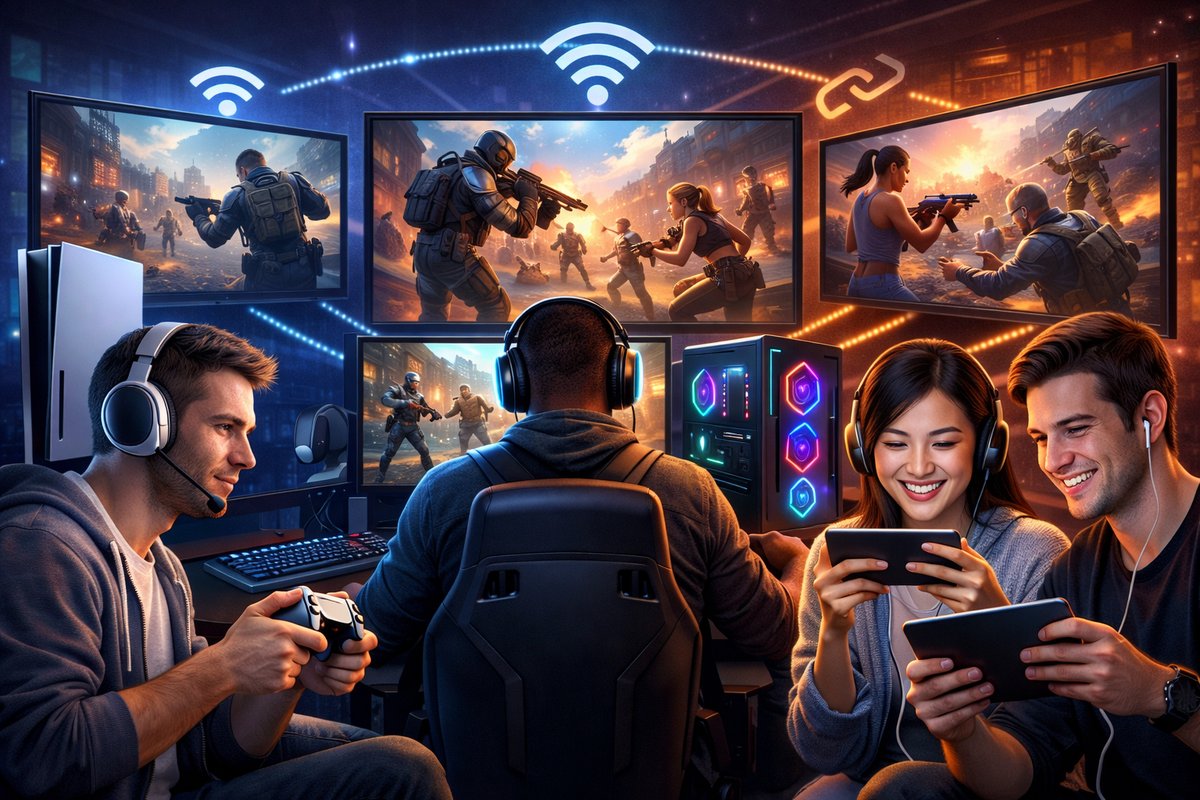

The landscape of gaming and entertainment is undergoing a transformative shift driven by the rise of cross-platform play. Once confined by hardware limitations and exclusive ecosystems, players now enjoy unprecedented freedom to engage with friends and rivals across a variety of devices, from powerful gaming PCs and consoles to smartphones and tablets. This evolution is not merely a technical feat; it is fundamentally altering how communities form, how games are designed, and how the industry approaches inclusivity and longevity.
Cross-platform play-often abbreviated as cross-play-refers to the ability for players using different hardware platforms to interact within the same game environment simultaneously. While the concept is not entirely new, its widespread adoption is a recent phenomenon that has accelerated alongside cloud gaming and advances in network infrastructure. Popular multiplayer titles are increasingly embracing this feature, recognizing that it enhances player engagement and extends the lifespan of their games.
One of the most profound impacts of cross-platform play is the dismantling of traditional barriers that once segmented the gaming community. In the past, owning a particular console or PC configuration could restrict access to certain games or multiplayer groups. Now, a player on a handheld device can team up with a friend using a high-end desktop setup, broadening social connections and democratizing play. This inclusivity nurtures a more diverse player base and encourages developers to craft experiences that are accessible and balanced across different input methods and hardware capabilities.
From a design perspective, the demand for cross-play functionality pushes studios to innovate in areas such as matchmaking, user interface, and gameplay balancing. Ensuring fair competition between players using controllers versus keyboards and mice, or between those with varying internet speeds, requires sophisticated algorithms and thoughtful user experience design. These challenges also prompt new conversations about player identity, moderation, and community management, as unified player pools necessitate cohesive governance across platforms.
Beyond the technical and social aspects, cross-platform play is influencing the business models of game publishers and platform holders. Historically, companies have competed fiercely to secure exclusive titles that lock players into their ecosystems. However, the growing expectation for interoperability is encouraging collaboration and strategic partnerships that prioritize player choice and convenience. This shift can lead to healthier market dynamics, reducing fragmentation and promoting sustainable growth within the industry.
Moreover, the expansion of cross-play aligns with broader trends in entertainment consumption, where audiences seek seamless, on-demand access across devices. Much like how streaming services have revolutionized film and television by removing device-specific constraints, cross-platform gaming is enabling a more fluid, interconnected experience. Players can start a match on a console at home and continue on a mobile device during a commute, blurring the lines between different modes of engagement.
Despite these advancements, challenges remain. Technical hurdles such as synchronizing updates, managing server loads, and ensuring data privacy require ongoing attention. Additionally, not all games or genres lend themselves equally well to cross-play, and some communities express concerns about preserving the unique identity or competitive integrity of their preferred platforms.
Looking ahead, the integration of cross-platform play with emerging technologies like virtual reality (VR) and augmented reality (AR) could further redefine immersion and social interaction in gaming. Imagine a VR adventure where players on different devices share a persistent, evolving world, or AR games that connect users regardless of their hardware. Such possibilities underscore the role of cross-play as a foundational element in the future of interactive entertainment.
In essence, cross-platform play is more than a convenience; it represents a paradigm shift toward inclusivity, flexibility, and community-driven gaming. By breaking down silos and enabling players to unite across devices and borders, it enriches the social fabric of gaming culture and opens new avenues for creative expression and connection.
-
Wireless Gaming Headset for PC PS5 PS4 Mac Switch 7.1 Surround ...
⚡【2.4GHz Wireless & Bluetooth 5.4 & 3.5 mm】 Experience the Valorise Wireless Gaming Headset, designed with wide compatibility for gaming devices like PS5, ... -
Ecomoment Wireless Gaming Headset for PS5, PC,Switch,Mac with ...
Ecomoment wireless gaming headset supports 2.4GHz USB, Bluetooth 5.2, and 3.5mm wired connection, compatible with PS5, PC, Mac, Switch, and more, ... -
Razer BlackWidow Elite Mechanical Gaming Keyboard: Green ...
Controllable Keys to customize lighting and macros. Every single key of the Razer BlackWidow Elite is customizable, so you can rebind it to another key or ... -
Blackmore Gaming Nocturna Mechanical Gaming Keyboard - Walmart
Key item features · Aluminum top cover · 13 RGB lighting modes with a preset recorder · Double shot keycaps · Height-adjusting feet. View all item details ... -
Amazon.com: Hedgehog MMO Gaming Mouse - 16 000 DPI
Switch Modes Instantly: Unique spring-loaded base converts the mouse into a joystick zone for fluid movement. 23 Programmable Buttons: Map macros, hot-keys, ... -
Logitech, Wireless Gaming Mouse, HERO Sensor, 12,000 DPI, White
Experience precision with the Logitech G305 LIGHTSPEED wireless gaming mouse featuring HERO sensor, 12000 DPI, 6 programmable buttons, lightweight design.