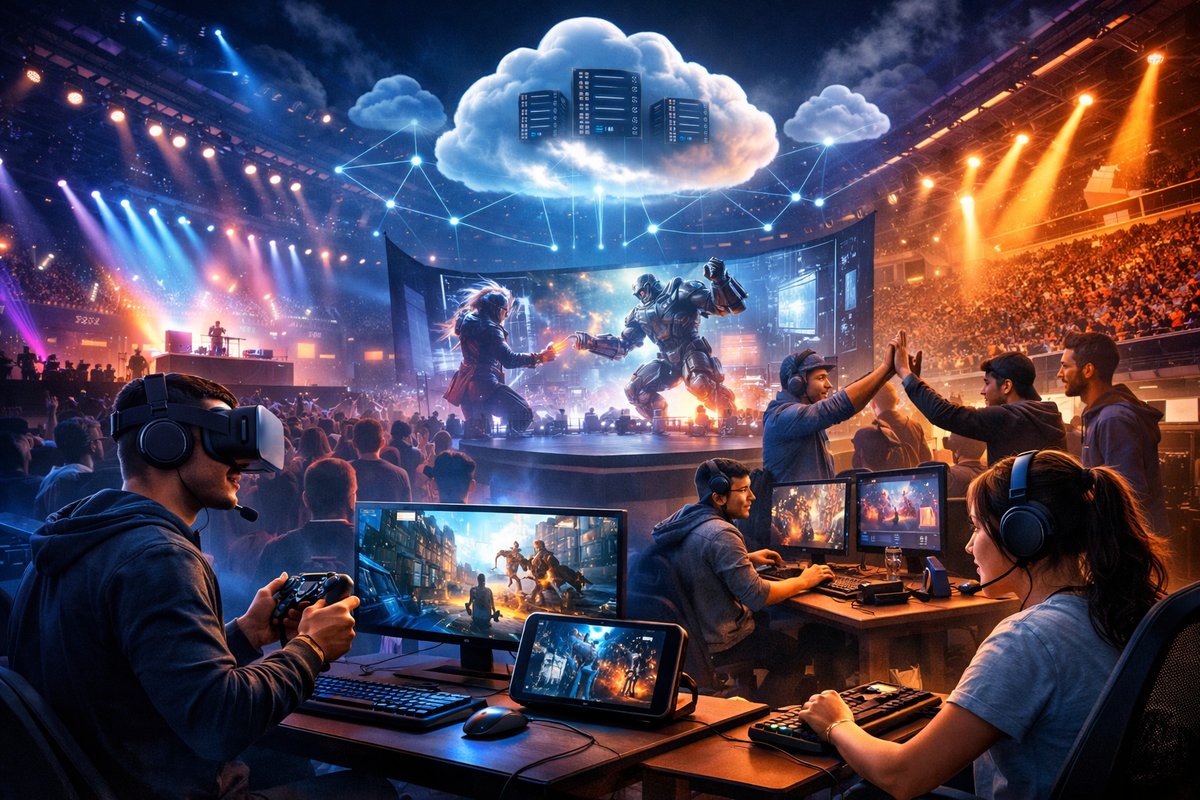

A fresh chapter in gaming and entertainment is unfolding as organizers, developers and technology providers collaborate to deliver hybrid experiences that span continents and living rooms alike. This shift goes beyond simply streaming tournaments on a big screen. It taps into a deeper craving for connection and presence, inviting players to step into shared worlds whether they’re standing on a convention floor, huddled around a friend’s console or tuning in from halfway around the globe.
Cloud streaming platforms have matured dramatically over the past year, finally hitting the low-latency thresholds necessary for fast-paced action titles and competitive esports. In parallel, local gatherings-once overshadowed by massive online events-are staging a comeback, fueled by fans who cherish hands-on demos, face-to-face chats with developers and the communal energy of cheering crowds. Today’s hybrid festivals bridge those realms, offering in-person showcases alongside high-definition live streams that adapt in real time to each viewer’s network conditions and hardware.
One recent test case took place at a European convention, where attendees could play a highly anticipated open-world RPG on site, then continue their progress on a cloud-powered handheld device at home. Spectators at home saw the same high-fidelity visuals and spatial audio mix that visitors experienced amid the bustle of exhibit halls. Developers reported that cross-platform telemetry and integrated voice channels were easier to manage than ever, thanks to modular middleware-a sign that the industry is finally aligning around common standards for hybrid delivery.
On the entertainment front, studios are taking cues from gaming’s hybrid playbook to launch pop-up interactive screenings and virtual lounges. Imagine joining a livestreamed director Q&A in augmented reality, feeling the thrum of a surround soundtrack through your headphones, and then stepping into a Discord studio to debate plot twists with fellow fans. This model transforms passive viewing into an active gathering, and it taps into the emotional intelligence that comes with shared discovery.
We’re also witnessing a surge in hardware innovation designed to glue these elements together. Wireless headsets now pack multi-channel spatial audio engines that adjust automatically to echo in large rooms or to personalize soundstage in a small apartment. Mechanical keyboards boast hot-swappable switches, so gamers can swap to a low-travel option for first-person shooters and then slide in clicky tactile switches for productivity or rhythm games. Ambient LED lighting strips synced to on-screen action enhance immersion whether you’re storming a virtual fortress or marathon-watching a new sci-fi series.
Another catalyst for hybrid play is the rising performance of 5G networks and next-generation Wi-Fi. Tournament organizers in Asia and North America have begun hosting preliminary rounds entirely over wireless mesh backbones, freeing up venue space that was once choked by hundreds of ethernet cables. Meanwhile, players at home are adopting mesh routers with dynamic band steering to reduce jitter and packet loss during peak hours. These upgrades may seem incremental, but they compound, delivering the kind of reliable throughput that makes or breaks real-time multiplayer sessions.
Indie developers are exploiting these trends too. Smaller teams can now host community events-like in-game scavenger hunts and virtual gallery tours-without the barrier of expensive server infrastructure. They partner with regional LAN cafés and coworking spaces to plant live nodes, encouraging players to drop by for a free trial of upcoming titles and localized leaderboard challenges. The result is a richer feedback loop: organizers gather real-time play data, fans enjoy face-to-face camaraderie, and developers refine mechanics in weeks instead of months.
Beyond pure play, hybrid entertainment formats are reshaping how narratives unfold. Episodic game designers collaborate with filmmakers on multi-platform story arcs that kick off at a digital launch party, continue in a VR walkthrough on day two and culminate in a live escape-room finale. Each chapter feeds into the next, rewarding participants for crafting fan art, submitting audio clips for crowd-sourced soundtracks or brainstorming alternate endings. In this environment, emotional intelligence counts: creators must listen to diverse voices, curate thoughtful community guidelines and design mechanics that celebrate personal agency.
This blending of roles-participant, spectator, co-author-echoes a larger cultural craving for authenticity and sustainability. Fans want to know that events minimize waste, that servers run on renewable energy and that organizers respect privacy when collecting data. As a result, hybrid festivals are experimenting with carbon-offset tokens, transparent telemetry dashboards and opt-in telemetry that lets each player decide what to share. These practices may sound bureaucratic, but they build trust, and trust fuels any collaborative play ecosystem.
Of course, challenges remain. Not every region has the connectivity to support ultra-low-latency cloud play, and some players still prefer the tactile certainty of local consoles. Accessibility questions endure: not all venues can retrofit wheelchair-friendly stations or hearing-assisted audio setups. But observers agree that the conversation around inclusive design is more advanced than ever, and that’s a promising sign. The more voices at the table, the richer the shared experiences become.
For the average gamer or viewer, the takeaway is clear: gear choices matter. A reliable controller with snappy triggers, a headset with minimal audio drift, a router that manages congested home networks-each piece contributes to whether you’ll feel genuinely present in a virtual stadium or lost in a pixel soup. Investing in a few key upgrades today pays dividends when the next big hybrid event demands flawless synergy between your hardware and the cloud.
The future of play isn’t confined to any single device or locale. It’s a tapestry woven from streaming codecs, local meet-ups, immersive headsets, dynamic lighting and open channels of communication. As we move forward, curiosity and emotional intelligence will guide the innovations that make games and entertainment not just more realistic, but more human. That’s the ultimate level-up: experiencing stories and competitions that connect us in unexpected, unforgettable ways.