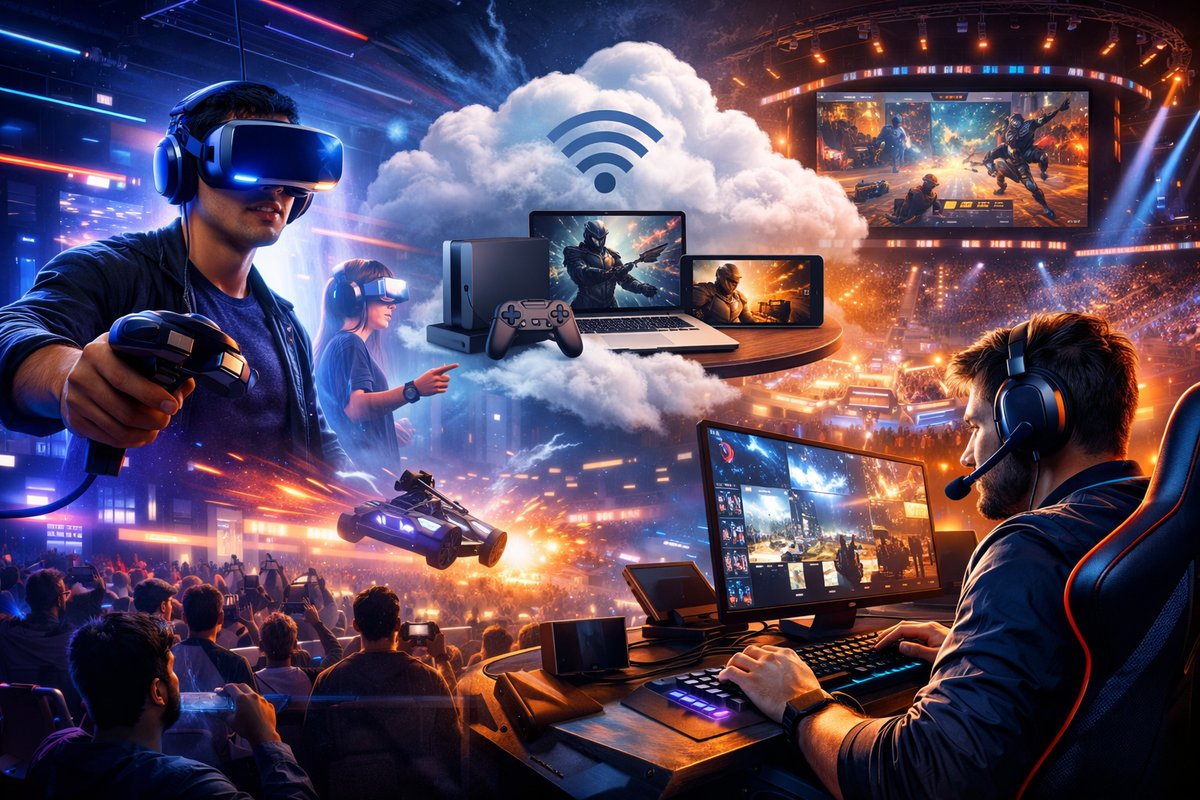

Across city centers and living rooms alike, play has taken on an unprecedented scale. Recent industry reports show that virtual reality headset ownership surged more than 50 percent year-over-year, while cloud gaming subscriptions climbed steadily as players seek instant access to triple-A titles on any screen. Meanwhile, eSports viewership shattered records at the largest tournaments, attracting millions of fans and solidifying competitive gaming’s place in mainstream entertainment.
The modern playground blends physical venues and digital realms. In downtown districts from Seoul to São Paulo, VR arcades-once niche curiosities-now pack lanes of private pods fitted with high-end headsets, haptic feedback vests, and full-body trackers. These local hotspots have become testbeds for studios refining the next generation of immersive titles, offering experiences that are often too demanding for home setups.
Inside one flagship arcade in Lisbon, dozens of players queue for a room devoted to an upcoming cooperative sci-fi adventure. Guided by live hosts, participants don real-time motion sensors and navigate a zero-gravity station under siege. The venue’s owner estimates walk-ins jumped 40 percent after introducing seasonal storylines with dynamic lighting and atmospheric soundscapes. It’s a model rapidly expanding to new markets, where developers partner with physical spaces to gather feedback and foster tight-knit communities.
Yet these brick-and-mortar hubs are only one frontier. Cloud gaming platforms are quietly reshaping the way titles launch and update. By offloading rendering and asset streaming to remote servers, players can sample blockbuster games on low-power laptops or smart TVs without downloads or expensive hardware. A recent analysis by a major analytics firm revealed a two-fold increase in hours streamed versus downloaded content-evidence that on-demand access has become a must-have feature.
That shift is altering development pipelines too. Studios can now roll out content drops in near real time, testing new maps, balance tweaks, and event modes seamlessly. One popular open-world title experimented with hourly weather cycles that adjust player strategies on the fly. Another multiplayer shooter introduced live in-match power-ups triggered by real-world sporting events, turning every goal or touchdown into a surprise buff for in-game wielders. These reactive mechanics wouldn’t be possible without cloud infrastructure bridging real-time data feeds and the player base.
But perhaps the most visible evolution of play comes through eSports. Last month’s international championship recorded a peak concurrent viewership that eclipsed prime-time ratings on several national networks. Stadiums seating 20,000 routinely sell out, and online audiences rival those of long-standing professional leagues. The rise in sponsorship from non-endemic brands-luxury automakers, finance apps, and even mainstream broadcasters-signals a maturing ecosystem where competitive gaming stands alongside traditional sports.
Streamers remain central to this transformation. Platforms dedicated to live gameplay now host celebrities whose channels draw half-a-million viewers at a moment’s notice. Interactive overlays allow audiences to influence in-game events or vote on handicaps, blurring lines between spectator and competitor. Innovative tournaments have begun integrating fan-driven challenges, vaulting lesser-known teams to the spotlight based on grassroots support.
With stakes so high, organizers are investing heavily in player wellness. Professional houses and arenas are outfitted with ergonomic lounges, recovery stations, and nutrition kitchens-mirroring top sports franchises. Mental health initiatives are now table stakes, offering counseling and downtime protocols to keep competitors sharp. One high-profile league mandated regular digital detox days, giving athletes space to recharge and avoid burnout.
The confluence of these trends underscores a broader cultural shift: entertainment is no longer passive consumption. Whether stepping into an LED-lit VR pod, queuing up a cloud session mid-commute, or cheering in virtual crowds, audiences actively shape their experiences. Creators respond in kind, weaving social features and adaptive narratives directly into game engines.
Looking ahead, augmented reality looms on the horizon. Developers are testing apps that overlay real-time challenges onto urban landscapes-imagine unlocking missions at historic landmarks or racing opponents through city streets. Early pilots in several European capitals reported rapid adoption, with players forming impromptu teams by scanning QR codes at cafes and parks. Such initiatives hint at a future where the boundary between digital quests and physical exploration dissolves entirely.
At home, too, new devices are enhancing immersion without a full VR rig. Haptic chairs that sync to in-game events, 360-degree soundbars, and dynamic lighting panels respond to every explosion and stealth kill. These upgrades can transform a standard living room into an interactive theater, making solo sessions feel communal and theater-style screenings for blockbuster launches more cinematic.
None of this is mere novelty. Industry forecasts predict that by the end of the next fiscal year, overall entertainment spending on gaming-hardware, software, and live events-will surpass that of traditional film and music combined. Advertisers are shifting budgets accordingly, and city planners are wooing conference organizers with new venues designed for gaming expos and pop-up experiences.
The net effect is clear: play has graduated from pastime to cornerstone of modern culture. Whether you’re a casual mobile gamer, a weekend VR explorer, or a professional eSports contender, the ecosystem now offers more pathways to connection, competition, and creative expression than ever before.
For gamers and curious newcomers alike, the challenge is choosing the right entry point. Start with a cloud gaming trial to test titles without commitment. Visit a local VR arcade for short-burst missions that showcase the medium’s potential. Join community servers to feel the camaraderie of cooperative missions. Or tune into a live eSports finale and witness firsthand how players blend strategy, skill, and showmanship on the world stage.
One thing is certain: the barriers to play are lower, but the stakes have never been higher. As the lines between developer, player, and spectator continue to blur, entertainment is no longer a passive backdrop-it’s an interactive spectacle powered by cutting-edge technology and fueled by community. And in this new frontier, the next great adventure is only a click, hop, or leap away.