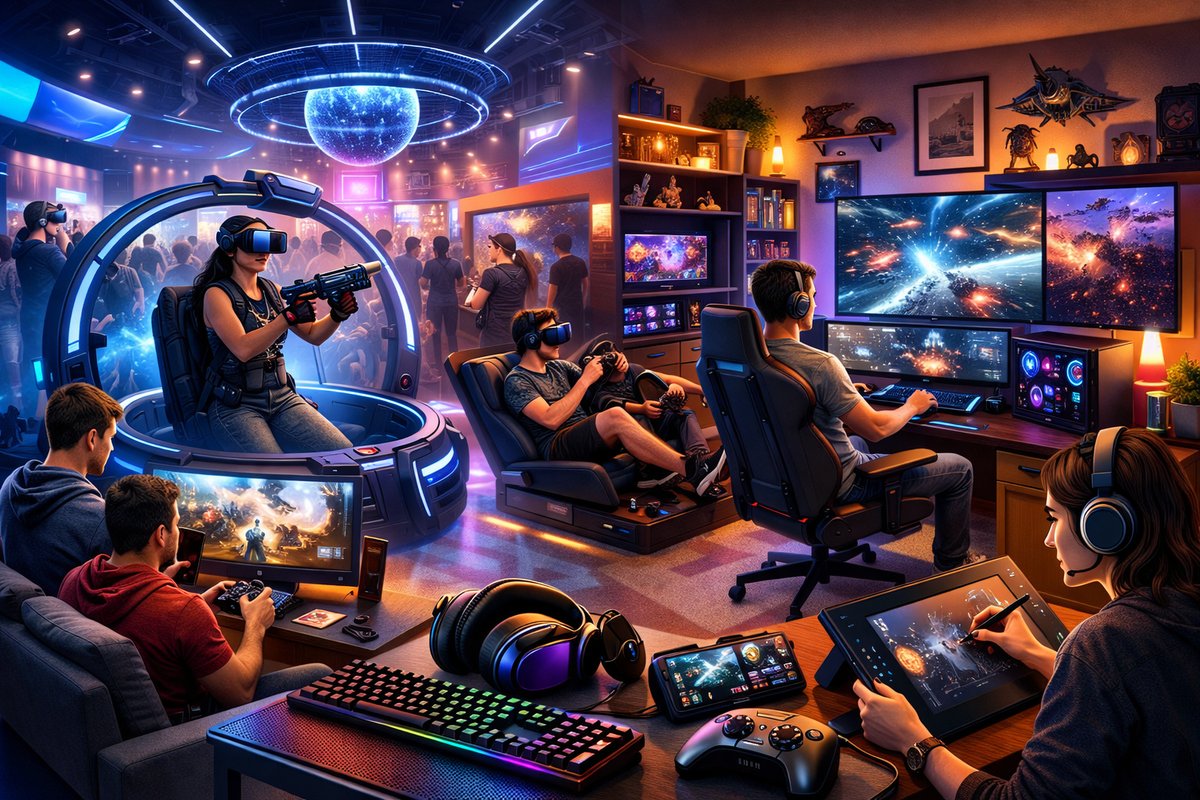

Gaming is no longer confined to a screen and controller. Venues around the world are experimenting with multi-sensory arcades, modular pods and hybrid spaces where digital action, physical design and community interaction fuse into a single experience. At recent events like a major West Coast gaming expo, organizers unveiled micro-arcade pop-ups built with configurable light panels, haptic feedback floors and scent diffusers. Players jump from indie titles on handheld consoles to virtual reality demos in enclosed pods, then gather in communal lounges equipped with coffee taps and creative workshops. It’s a playful ecosystem that stretches from large conventions to neighborhood cafés, reshaping our expectations of what “going out to play” means.
In parallel, a wave of home setups has emerged to bring that vibrancy indoors. Modular desks with attachable display arms and ready-made sound zones let gamers switch from solo RPG sessions to group stream-and-chat nights in seconds. AI-driven lighting systems respond to in-game events-from pulsing red during boss fights to a calm turquoise for exploration-while haptic cushions sync to on-screen rumbles and cues. By combining off-the-shelf furniture, smart gadgets and custom-printed decor, enthusiasts can craft a pocket-sized version of full-scale immersive lounges without sacrificing comfort or style.
What’s fueling these developments is a renewed focus on community, storytelling and physical engagement. Rather than zoning off at home or isolating in private voice channels, gamers are rediscovering the joy of sharing a space. Pop-up events at urban galleries and co-working spaces are harnessing everything from projection mapping to interactive murals, transforming blank walls into narrative canvases for emergent gameplay. Meanwhile, local meet-ups centered on speed-run challenges, retro high-score duels and augmented reality scavenger hunts are growing in number. They often integrate live DJs and craft workshops to break the ice, proving that gaming culture can be a gateway to broader creative collaboration.
This trend toward hybridization extends beyond hardware. Cloud-powered consoles and game-streaming apps let arcades operate lightweight gaming stations, freeing operators from hauling bulky PCs. Some venues now rely on central servers hosting dozens of game sessions simultaneously, with visitors connecting via thin-client consoles or tablets. This model supports rapid reconfiguration-switching themes from fantasy adventures to street racers in minutes-while streamlining maintenance and reducing e-waste. It’s a sustainable playbook that venues and home users alike can adopt by pooling resources and updating gear rather than replacing it wholesale.
On the sensory front, developers and gear makers are collaborating to explore temperature changes, directional audio and even programmable scent cartridges. Imagine stepping into a medieval-themed alcove that emits a faint smoke aroma and plays echoing gallop sounds as you mount a virtual steed. Or settling into a pod where gentle breezes accompany flight sequences in a space-exploration sim. While some of these features are still in prototype stages at design expos, others-like audio reactive LED strips and desktop fans with USB power-are already affordable for everyday users. The goal is simple: break the fourth wall and deepen the emotional connection between the player and the game world.
For streaming personalities and tournament hosts, these innovations offer fresh ways to engage audiences. Live-streamed ‘arcade takeovers’ showcase custom-built levels, mixed-reality overlays and audience-driven challenges, turning passive watchers into active participants. Interactive polls can trigger room lights, sound effects or even confetti cannons in a local venue. This synergy between physical stunts and digital interactivity has inspired a new generation of content creators who blend stagecraft, game design and performance art.
If you’re inspired to bring some of this magic into your own space, start small and scale up. A dedicated gaming desk with cable-management trays and mounting rails lays the foundation for tidy, adaptable setups. Pair it with a programmable LED lighting kit that can be synchronized across monitors, speakers and accent panels. Add a haptic feedback cushion or desktop gamepad mat for rumble effects in racing and action titles. Then layer on portable scent diffusers or a compact USB fan to approximate environmental cues. Before long, you’ll have a personal pocket arcade that feels alive and responsive-perfect for solo sessions or inviting friends over.
Community-focused design also translates well to home environments. Turn a spare corner into a ‘challenge station’ with open shelving for board games, handheld consoles and indie game demos. Host monthly meet-and-play events where participants bring a new game or share a favorite custom controller mod. Use simple projection mapping software to transform a blank wall into a dynamic leaderboard or visualizer during tournaments. These touches go beyond screen-time, encouraging social interaction and collaborative creativity.
At the heart of this movement is the recognition that modern gamers crave depth, connection and novelty. Whether you’re exploring a VR cityscape inside an urban pop-up or fine-tuning your home gaming hub, the emphasis has shifted from isolated, one-dimensional play to layered experiences that engage sight, sound, touch-and community. As modular designs mature and multi-sensory gear becomes more accessible, expect to see even more inventive venues, online-to-offline mash-ups and user-driven experiences over the coming months.
For anyone looking to level up their entertainment ecosystem, the path forward is clear: embrace hybridity, focus on immersion and build spaces that welcome collaboration. The future of play is not a singular device or platform. It’s the dynamic interplay between hardware, software, environment and the people who inhabit these worlds together.