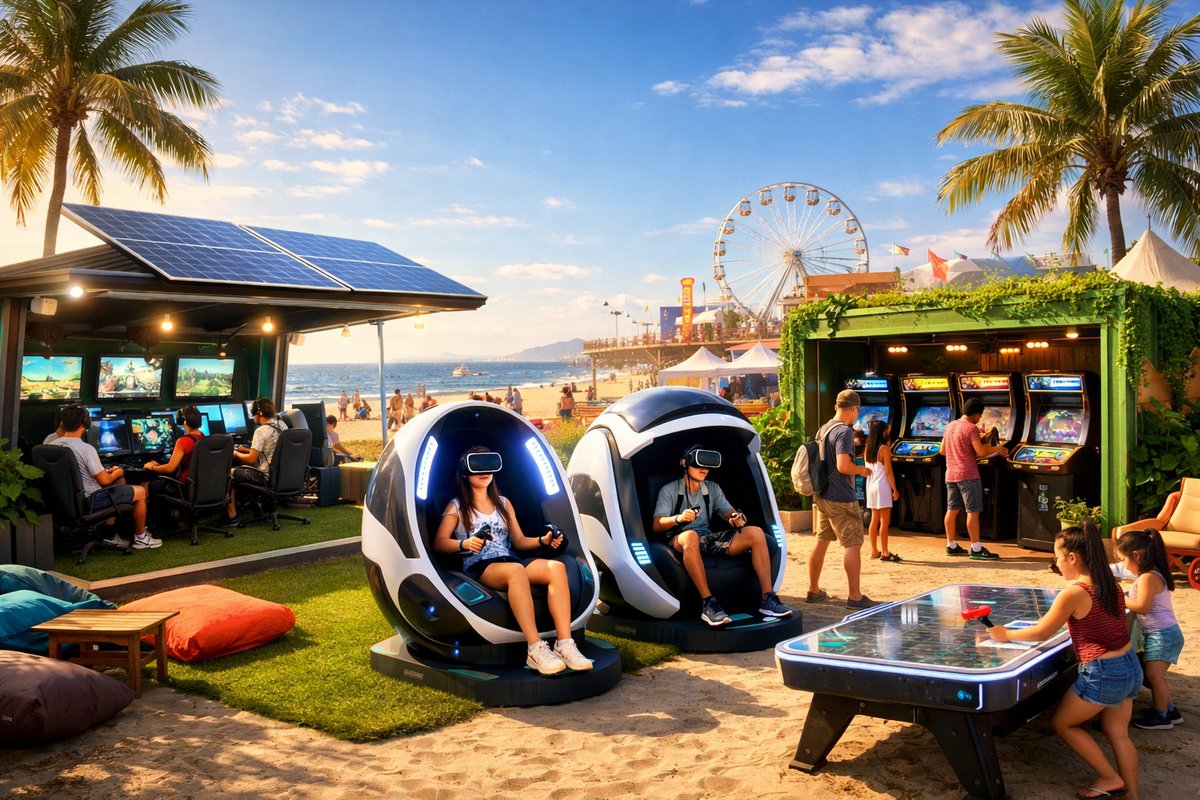

A new wave of mobile gaming experiences is gaining momentum, trading fixed setups for solar-charged Play Pods and retrofitted buses turned rolling arcades. From urban parks to music festivals, eco-conscious entrepreneurs are delivering communal play spaces powered by renewable energy, modular hardware, and advanced haptics. These green gaming hubs promise to lower carbon footprints, foster local connections, and push immersive tech beyond the living room.
It all started when a group of engineers and designers showcased a transportable gaming lounge at a major European games festival. Housed inside a shipping container fitted with photovoltaic panels, the lounge featured eight reclining chairs equipped with directional audio, dynamic LED accents, and high-refresh-rate screens. A compact battery bank, charged by rooftop solar arrays during the day, powered VR headsets and handheld consoles well into the evening. Festival-goers were invited to drop in for multiplayer matches or free-form virtual reality journeys, all without tapping grid power.
Inspired by that demonstration, several startups have launched mobile ‘Green Arcades’ in city centers and coastal communities. One operation refurbished a double-decker tour bus, decking it out with solar panels on the roof and exterior walls clad in reflective white paint to reduce heat gain. Inside, visitors find rows of controller-equipped pods, a touchscreen kiosk for booking time slots, and built-in wireless chargers at every seat. As the bus glides between neighborhoods, local gamers hop on for pick-up matches and local tournament qualifiers.
These mobile hubs don’t just rely on solar power. Innovations in portable battery technology-drawing from electric vehicle research-have enabled smaller form-factor power stations that pack enough capacity to run consoles, PC rigs, or VR setups for hours. By combining foldable solar panels, compact inverters, and smart energy management systems, operators can deliver continuous play under cloudy skies or in urban canyons where direct sun is scarce.
Beyond the hardware, immersive software is taking center stage. Rolling VR pods equipped with directional sound and haptic feedback vests deliver full-body experiences for groups of two or more. At a recent Maker Faire, attendees tried out a communal rhythm game where each player’s haptic vest synced to bass lines and environmental cues. Pulse-synchronized lighting inside the pod heightened the sensation of shared movement. Developers believe communal haptic gaming could redefine social outings, replacing rowdy bar scenes with synchronized VR dance-offs or cooperative survival adventures.
Local governments are noticing too. In one coastal town, beachside mobile arcades run on hybrid solar and wind chargers have become an evening attraction. Families gather at dusk around pop-up canopies strung with addressable LED strips, competing in racing games or party titles streamed from handheld consoles. Concession stands serve cold drinks and snacks, while solar arrays mounted on umbrella frames feed battery banks that keep servers and displays alive until late night.
The shift toward sustainable mobile play is reshaping how gaming companies approach events and community outreach. Major console makers and PC component vendors have begun sponsoring temporary Eco Play Zones at tech festivals, providing modular gear-wireless controllers, ergonomic chairs, and cloud-streaming devices-that pack into waterproof road cases. Attendees can plug directly into high-speed 5G hotspots for lag-free multiplayer, then watch as technicians fold away panels, routers, and generators in under an hour.
At the heart of this movement is a desire to lower barriers to entry. Not everyone can afford a top-end console or deck out a basement with a dedicated setup. Mobile green arcades democratize access, letting casual players experience VR for the first time or test the latest handheld units without a long-term commitment. Subscription-based models are emerging too, where local businesses lease gaming pods by the day, providing skill workshops or after-school coding camps on sustainable tech.
And the environmental benefits extend beyond energy sourcing. By rotating a single fleet of arcades among dozens of communities, operators reduce the need for individual households to upgrade hardware frequently. Centralized maintenance and modular component swaps extend product lifecycles, cutting down on electronic waste. Some companies even partner with recycling centers to collect and repurpose old peripherals.
This grassroots approach has caught the eye of major publications focused on green innovation. In a recent feature, sustainable-design magazines highlighted how modular gaming hubs demonstrate circular-economy principles: standardized racks for controllers, interchangeable lighting panels, and universal mounts that fit a wide range of devices. When an arcade unit reaches end-of-life, components can be refurbished or recycled without scrapping entire rigs.
Looking forward, the convergence of cloud streaming and edge computing promises even lighter mobile setups. 5G-enabled servers housed in modified trailers already allow full-resolution VR streams to thin clients inside Play Pods, meaning less on-board hardware and lower power draw. Companies are testing AI-driven load balancing that directs intensive rendering tasks to the nearest data center, while local battery packs buffer daylight charges for nighttime sessions.
For community organizers and event planners, the era of green gaming offers new opportunities. Pop-up tournaments can spring up in under an hour, complete with high-refresh displays, noise-cancelling headsets, and intuitive booking apps. Local artists and musicians can sync live performances with in-game events, creating cross-disciplinary showcases that blend concerts and co-op quests. Educators are also piloting environmental-science modules inside VR pods, using immersive simulations to teach coral-reef preservation, renewable-energy systems, and climate-adaptation strategies.
Some skeptics argue that portable arcades will remain niche, limited by weather conditions and logistical hurdles. Yet recent success stories-sold-out weekend runs at coastal towns and multi-city festival tours-signal growing demand. As battery energy density improves and solar panel efficiency climbs past 25 percent, mobile gaming lounges may soon rival brick-and-mortar cafes in performance and affordability.
The green revolution in play is more than a trend. It’s a testbed for how entertainment and sustainability can coexist seamlessly. By harnessing renewable energy, modular design, and communal creativity, these mobile arcades are redefining not just where we play, but why we come together to share experiences. Whether you’re a hardcore VR enthusiast or a casual gamer seeking a sunset match on the beach, solar-powered Play Pods and rolling gaming lounges are bringing new perspectives-and greener practices-to the world of interactive entertainment.