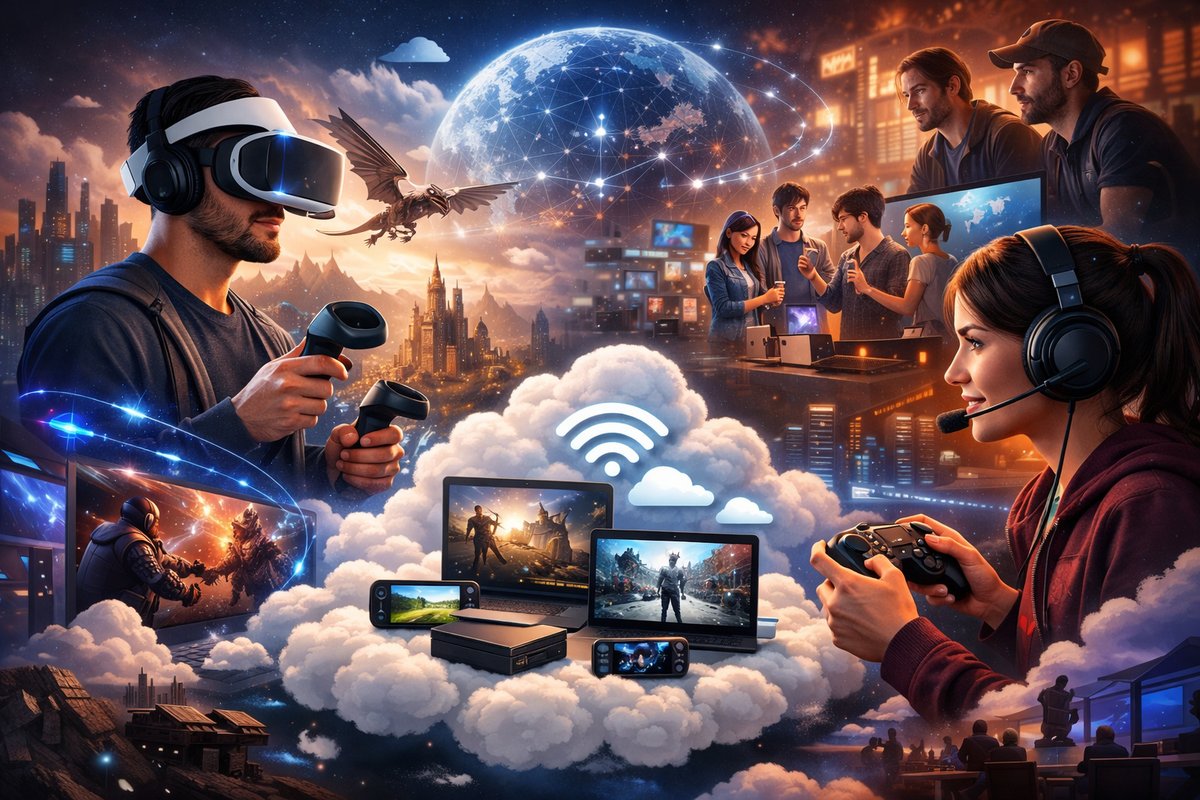

The gaming landscape is in the midst of a radical shift. What was once boxed software and isolated setups is now an on-demand, anywhere-anytime experience powered by cloud streaming and next-gen virtual reality. Over the last few quarters, major service providers have expanded their libraries to include hundreds of titles-ranging from massive open-world RPGs to niche indie experiments-without requiring a high-end console or PC. Meanwhile, VR systems have become more affordable, lighter, and packed with haptic feedback, promising a fully immersive dive into digital worlds from your living room.
These changes were on full display at the latest European gaming expo, where several hardware manufacturers and platform holders showcased cloud-powered demos alongside fresh VR experiences. Attendees lined up for a chance to play a zero-latency racing simulator streamed directly from data centers, as well as a physics-driven puzzle platform that adapts in real time to player movement. The result: a smoother, more accessible entry point for newcomers, and a higher bar for enthusiasts demanding lifelike visual fidelity.
Meanwhile, streaming integration has gone beyond standard controllers. A growing number of titles now support touch-enabled gamepads, mobile companion apps, and voice-guided navigation. One announcer demonstrated instantly switching from a stealth-action shooter on TV to a smartphone without interrupting the session-thanks to live state synchronization across devices. For households juggling multiple players, guest passes let friends join in cooperative quests without downloading hefty installs or purchases.
That same expo also shone a light on the rising indie scene adapting to these new platforms. Small studios are designing games optimized for cloud networks-meaning faster updates, global leaderboards, and even live community events built into the core experience. One physics sandbox released just days after the expo includes a weekly user-generated puzzle challenge, with winners streamed on the main service’s front page. It’s a level of direct feedback developers crave, and it’s made possible by the near-real-time telemetry that cloud infrastructures provide.
On the virtual reality front, manufacturers are dialing down weight and complexity. Gone are the days of bulky headsets tethered to powerful PCs; several lightweight, all-in-one units now offer six degrees of freedom, built-in audio, and adjustable head straps. At demo stations, players donned these headsets for an interactive escape-room title that uses motion sensors to track subtle hand gestures and body lean. The immersion was palpable: one reviewer described losing track of time as they solved a door-lock puzzle beneath a roaring digital waterfall.
But the transition hasn’t been without challenges. Network congestion remains a top concern for cloud gamers in regions with spotty broadband infrastructure. Some players report occasional frame-rate dips or audio stutters, particularly during peak hours. Developers are rushing to implement adaptive bitrate streaming and pre-buffered AI-driven upscaling to mitigate these issues, but the fixes often require a delicate balance between visual quality and latency.
VR enthusiasts face a different set of hurdles. Extended sessions can lead to discomfort and motion sickness for some users-a problem manufacturers tackle with adjustable frame rates, optimized locomotion algorithms, and guided acclimatization tutorials. Meanwhile, space constraints in standard homes mean setting up room-scale VR can be tricky. Companies are introducing floor-tracking mats and ceiling-mounted sensors that shrink the necessary footprint to a few square feet, but widespread adoption will depend on consumer budgets and available living space.
Community and social interaction remain at the heart of these new gaming environments. Cloud platforms now host regular tournaments, design-your-own-quest contests, and virtual watch-parties where players can spectate each other live. One social hub demo featured integrated voice chat, spectator cams, and a digital cheers feature-allowing friends to send virtual fireworks during a clutch play. These micro-experiences, embedded directly into service dashboards, reinforce the idea that gaming is no longer a solitary pursuit but a shared cultural event.
This evolution also carries broader implications for content preservation and access. Older games once out of print are being brought back through cloud-only relaunches, complete with updated controls and online matchmaking. For many nostalgic players, it’s the first chance in years to revisit beloved classics without hunting down secondhand discs or volatile digital storefronts. Preservationists are cautiously optimistic, though they warn that true archival requires open standards and transparent data policies-an ongoing conversation among industry bodies.
Beyond hardware and platforms, game design itself is adapting to the always-online model. Developers are experimenting with dynamic world changes triggered by global player behavior rather than pre-scripted cutscenes. One high-profile open-world title introduced a live weather system that shifts based on real-world climate data-and players in drought-affected regions saw in-game rivers run low, altering available resources and storyline branches. Such innovations highlight how cloud connectivity can blur the line between player actions and persistent virtual worlds.
As the technology matures, questions remain around sustainability and cost. Data centers powering cloud gaming require significant energy, and while some operators pledge 100 percent renewable power, others rely on traditional grids. Environmentally conscious gamers are urging transparency on server efficiency and carbon footprints, prompting several providers to release energy-use dashboards and invest in green computing research.
Meanwhile, subscription fees for cloud libraries and VR storefronts have become a hot topic. Bundling animated movies, TV tie-ins, and DLC expansions alongside games can boost value-but only if pricing remains fair and services don’t lock content behind exclusive deals. The industry is watching consumer response carefully; early feedback suggests players appreciate unified billing but balk at hidden tiered pricing and restrictive licensing.
Looking ahead, the fusion of cloud streaming and VR hints at a future where gaming isn’t confined to a single screen or room. Augmented reality integrations, spatial audio upgrades, and AI-driven NPC companions promise even richer experiences. Imagine training alongside a digital teammate who learns your playstyle, or exploring parallel worlds layered over real environments with seamless hand-tracking. These scenarios might soon be within reach-provided network reliability and hardware ergonomics continue to improve.
For now, the message is clear: play is serious business. Whether you’re a casual mobile gamer streaming puzzle titles on your tablet, a PC enthusiast chasing the highest frame rates, or a VR explorer stepping into dreamlike realms, the ecosystem is evolving at breakneck speed. The key to keeping up is investing in the right gear, staying informed about platform updates, and embracing the emerging trends that turn pixels into palpable experiences.
As the gears of cloud servers spin and headsets shrink, one thing remains constant: the thrill of discovery that first sparked a love for games-and the promise that the next generation of tech will unlock even more reasons to press start.
-
Danglers VR Cable Enhancement Kit - Wireless Like Experience - Etsy
May 13, 2022 ... Valve Index Cable Strain Relief Clip, VR Headset Cable Support, Secure Fit for Valve Index, Reduces Tension and Prevents Cable Damage. -
Virtual Reality | Wayfair
Shop Wayfair for the best Virtual Reality. Enjoy Free Shipping on most stuff, even big stuff.