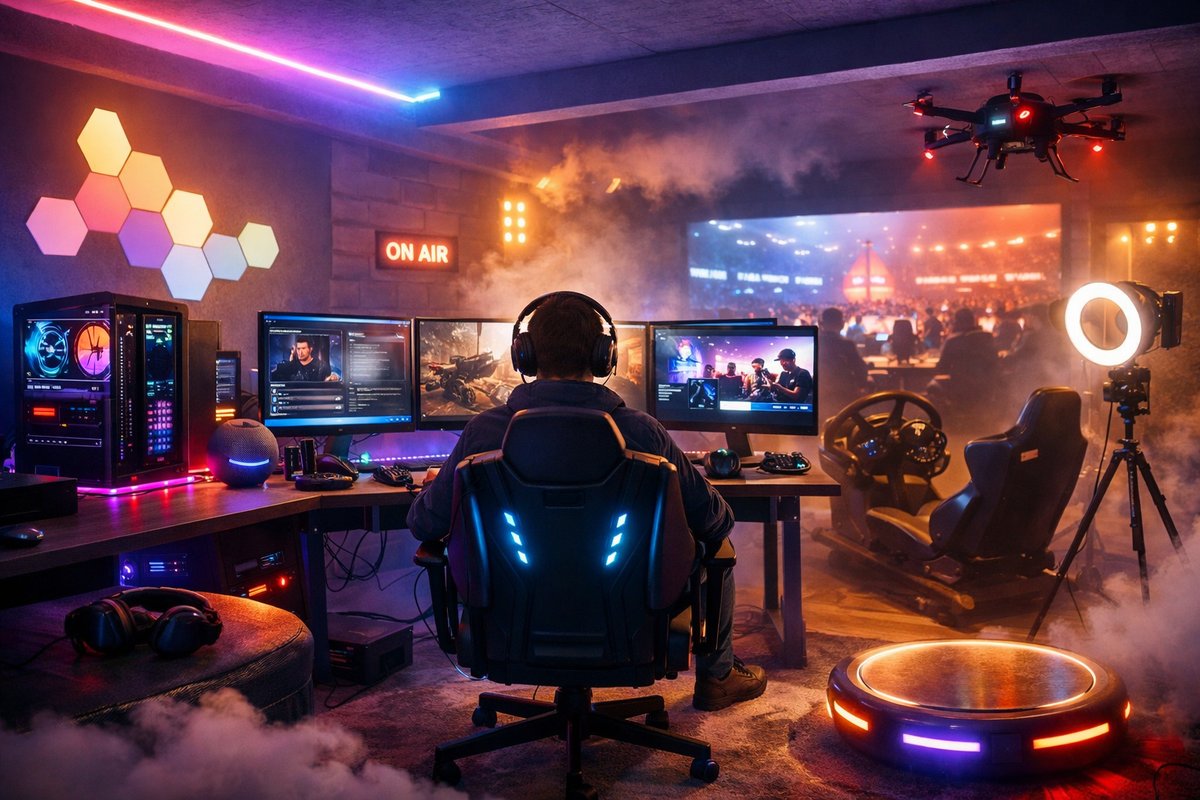

Living rooms have long served as the social heart of a home, but a new generation of players is reimagining these spaces as high-performance gaming arenas. What began as a dedicated console nook has blossomed into an ecosystem where ambient lighting, immersive audio, and AI-driven accessories converge to create truly transformative experiences. In an era defined by hybrid lifestyles, these homemade arenas blur the line between work, play, and community, setting new standards for comfort, performance, and connectivity.
According to a recent poll by GamingTech Insights, nearly 68% of gamers made significant upgrades to their living spaces in the past year, citing better ergonomics, richer audiovisual feedback, and streamlined cable management as key motivators. With on-demand tournaments and grassroots livestreaming events on the rise, players are no longer satisfied with mere pass-through HDMI setups or generic sofa layouts. Instead, they’re carving out zones optimized for every facet of modern gameplay, whether it’s a marathon RPG session, a late-night speedrun, or a weekly online tournament shared with thousands of viewers.
One standout trend driving this revolution is dynamic lighting. Addressable LED strips and smart bulbs now sync in real time with game data-pulsating red when health bars dip, shifting hues to match in-game weather, or even mimicking cinematic flare effects during boss fights. Beyond enhancing immersion, adaptive lighting can reduce eye strain by balancing contrast between a bright screen and dark room. It also doubles as an ambient mood setter: subdued blues for narrative-driven exploration, energetic greens for fast-paced shooters.
Acoustic treatments are moving out of recording studios and into basements and dens. Peel-and-stick foam panels, bass traps, and sound diffusers help tame echo and sharpen in-game audio cues. Precise sound staging isn’t just a luxury; in competitive matches, footsteps and distant gunshots can mean the difference between victory and defeat. Mesh-backed headsets with noise-isolating seals also play a role, giving players pinpoint spatial awareness without disturbing family members or roommates.
Furniture is undergoing its own makeover. Height-adjustable desks originally designed for office use have been repurposed for PC battlestations, offering sits-stands transitions to promote circulation during extended sessions. Modular shelving and sliding keyboard trays maximize surface area while keeping peripherals organized. And for those who favor console play, low-profile cocktail tables with built-in cup holders and cable ports are replacing clunky TV stands.
Haptic feedback has entered the furniture market, too. From vibration-enabled chairs that sync with in-game actions to foot pads that rumble during environmental effects, the sense of touch is increasingly integrated into the lounge. Developers are exposing APIs so that third-party controllers and room-scale devices can communicate directly with chair mounts, subwoofers, and even wall-mounted transducers-turning every explosion and engine roar into a full-body sensation.
The rise of cloud gaming services has accelerated the shift toward lightweight, multi-device ecosystems. Gamers can now jump into high-fidelity titles on a compact laptop, tablet, or handheld console and then cast the session to a 4K projector without missing a beat. This flexibility lets households share resources: one person practices in the bedroom while another broadcasts a match in the living room. Latency-sensitive adapters and dedicated Wi-Fi 6E access points ensure these remote connections maintain ultra-low lag.
Streaming infrastructure in home setups has also matured dramatically. Instead of a single camera pointed at an unmade couch, enthusiasts are investing in multi-angle rigs that include wide-angle webcams, overhead captures of tabletop RPGs, and even live audience views via small wireless cameras placed around the room. Dedicated streaming hubs manage audio mixing, overlay graphics, and chat integration, all from an easy-to-navigate interface. This level of professionalism makes grassroots events feel on par with convention stages.
Community-driven design has become a core principle. Gamers are collaborating on open-source layouts for multi-station pods-configurations that seat four to six players facing each other with communal RGB lighting beneath the desk. These setups foster friendly rivalry, local LAN parties, and board game nights, all without leaving the house. Customizable room modules that attach via magnetized rails can be reconfigured in minutes, adapting to anything from a solo roguelike run to a full-fledged VR coop mission.
VR and AR have also found new footholds in living room layouts. Haptic-enabled floor mats track foot movement, while wall-mounted trackers ensure room-scale play covers the entire space. Wireless adapters keep headsets untethered, and retractable ceilings with motorized pulley systems lower safety nets or foam barriers when breaks from immersion are needed. Complementary AR glasses can overlay digital HUDs onto real-world controllers and surfaces, helping anyone unfamiliar with virtual interfaces step directly into the action.
Ergonomics remain front and center, especially as gaming sessions stretch from casual evenings into multi-hour marathons. Custom-contoured cushions and adjustable lumbar supports address common complaints of stiffness and fatigue. Players are also turning to wearable posture sensors-discreet devices that buzz when back alignment shifts out of the optimal zone-to reinforce healthy habits over time. Integrations with voice assistants enable quick stints of guided stretching without navigating away from the game.
Sustainability is a rising priority too. Modular desks built from reclaimed wood, low-power displays certified by energy star ratings, and refurbished gaming gear are earning fans. Some enthusiasts even retrofit older consoles with LED upgrades and custom paint jobs, reducing electronic waste by keeping legacy hardware in circulation. It’s a small but growing movement that balances cutting-edge flair with mindful consumption.
The final piece of the puzzle is personalization. Custom-keycap sets, 3D-printed controller grips, and hand-woven cable wraps turn mass-produced accessories into one-of-a-kind statements. Fans commission local artists to paint centerpieces like wall murals depicting favorite game landscapes or characters. Ambient scent diffusers calibrated to release pine, ocean breeze, or crackling campfire aromas at key narrative beats are on the horizon, signaling a truly multi-sensory future.
As the boundaries between living room, studio, and esports arena continue to blur, industry analysts predict that home entertainment hardware sales will grow by double digits next quarter. Manufacturers are responding with DIY-friendly kits and cross-compatible components, recognizing that personalization and community sharing drive long-term loyalty more than any single flagship product.
Whether you’re a professional streamer, a weekend warrior, or a family seeking shared adventures, the modern home gaming setup offers endless avenues for creativity, competition, and comfort. From the soft glow of adaptive LEDs to the pulse of haptic chairs, these living room arenas embody a new chapter in interactive play-one where innovation, sustainability, and social connection thrive under one roof.
-
X-Win 71" Electric Standing Desk, 4-Leg Height Adjustable Gaming ...
The X-WIN desk features customizable height settings, memory presets, and a sit-stand reminder to help you maintain a healthy posture and stay active throughout ... -
DEALTOPS 59" L-Shaped Electric Standing Desk with Power Strip ...
Buy DEALTOPS 59" L-Shaped Electric Standing Desk with Power Strip, Height Adjustable Table with Mouse Pad, Rustic Brown at Walmart.com. -
8BITDO Retro 87-Key Wireless RGB Mechanical Gaming Keyboard
8Bitdo Retro Mechanical Keyboard, Bluetooth/2.4G/USB-C Hot Swappable Gaming · 8BitDo Retro 18 Mechanical Numpad, Supports Calculator Mode, Bluetooth/2.4G/Wired. -
edaiser Wireless Magic Keyboard Case Compatible with Apple iPad ...
Buy edaiser Aluminum Alloy Magic Keyboard Case Compatible with Apple iPad Pro 11-inch M5 2025 & M4 2024: Wireless Keyboard with Multi-Touch Trackpad, RGB ... -
Amazon.com: Ozeino Gaming Headset for PC, Ps4, Ps5, Xbox ...
Amazon.com: Ozeino Gaming Headset for PC, Ps4, Ps5, Xbox Headset with 7.1 Surround Sound Gaming Headphones with Noise Canceling Mic, LED Light Over Ear ... -
Razer Kraken V3 X USB Gaming Headset for PC, PS5, PS4 ...
Accurate Positional Audio: 7.1 surround sound enhances match awareness with precise audio positioning (available on Windows 10 64-bit). Customizable RGB ...