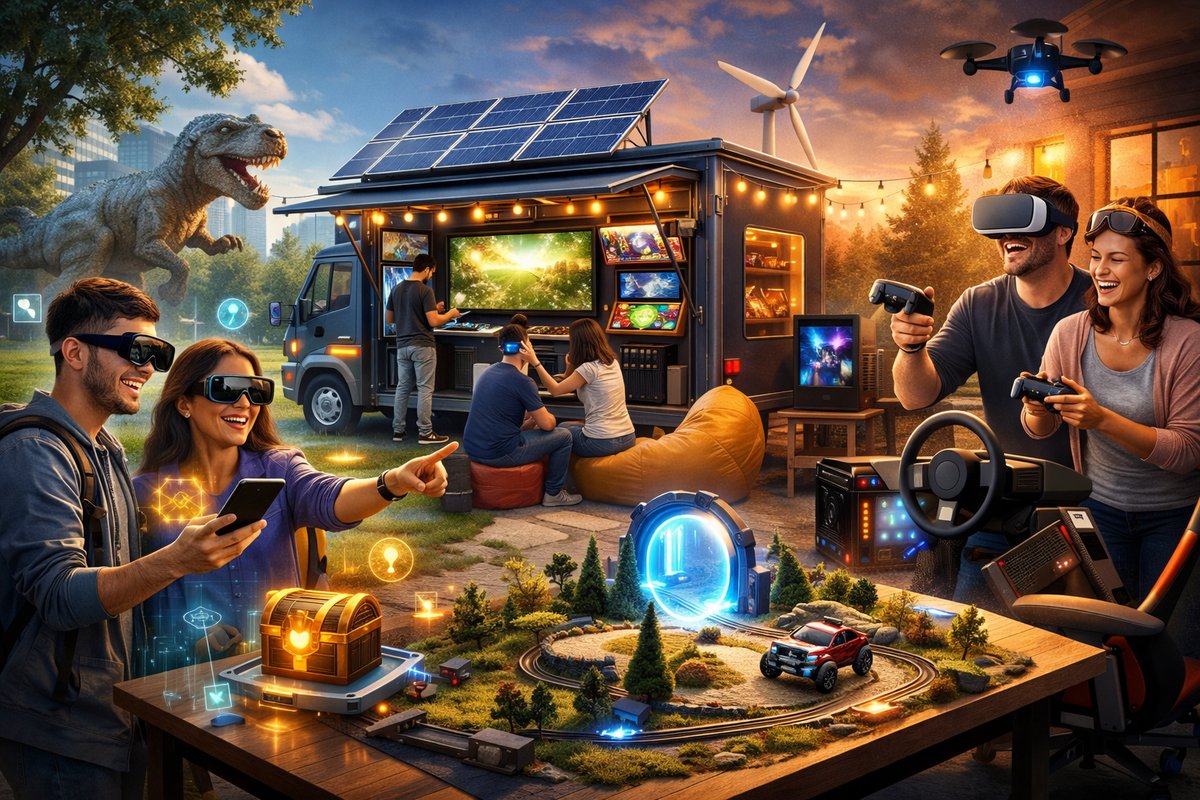

Imagine stepping into a shipping container transformed into a glowing portal, where augmented reality overlays dance across the walls and laughter echoes off recycled steel. This isn’t a concept art piece-it’s the latest wave of hybrid gaming hubs popping up in cities worldwide. By merging high-tech experiences with grassroots community spirit, these pop-ups are redefining play as both a social catalyst and a driver of sustainable design.
In neighborhoods from Baton Rouge to Barcelona, local organizers are turning underused spaces-parking lots, empty storefronts, and even vacant warehouses-into modular gaming labs. Each installation features a rotating menu of experiences, from VR shooting galleries to projection-mapped rhythm arenas where players dodge virtual obstacles in time with electronic beats. What sets these labs apart is their emphasis on collaboration rather than competition: visitors team up to solve puzzle quests, hack together simple controllers at DIY stations and celebrate each success with live music drawn from local artists.
At the heart of this movement is a shared desire for tangible connection. While traditional esports tournaments streamline matches into live streams and stadium seating, hybrid hubs bring players face-to-face in settings that reward improvisation. One collective in Berlin, operating out of converted trams, recently hosted an event where riders raced solar-powered go-karts through a course augmented by AR beacons. Spectators used smartphone apps to drop digital power-ups onto the track, creating a dynamic interplay between driver skill, audience participation and environmental awareness.
These experiments haven’t gone unnoticed by larger tech investors seeking the next frontier beyond traditional arcades. A handful of hospitality startups now back traveling play pods built from repurposed shipping containers. Each pod uses off-grid solar panels and battery storage to power high-end graphics PCs, motion platforms and 5G-enabled cloud gaming rigs. Positioned at music festivals, college campuses and riverside parks, the pods offer everything from retro shooter shows to experimental multiplayer experiences that leverage geolocation data for city-wide scavenger hunts.
Behind that growing wave of itinerant arcades is a broader sustainability ethos. Organizers source reclaimed wood for lounge areas, retrofit LEDs to reduce power usage and upcycle scrap fabric into oversized beanbags and VR safety nets. Waste reduction workshops teach participants how to solder old console parts into custom controllers and convert broken hard drives into kinetic sculptures. This hands-on approach elevates play into a learning environment, fostering curiosity about electronics, craftsmanship and green design.
While on-site events generate buzz, there’s a parallel renaissance unfolding in living rooms and spare bedrooms. Savvy hobbyists are building next-gen home arenas that echo the interactivity of pop-ups. One enthusiast collective in Taipei transformed a spare attic into a kinetic obstacle course where players wear wireless haptic suits linked to motion-capture cameras. Each punch or dodge triggers immersive soundscapes and reactive LED panels lining the walls. Open-source software lets players remix environments on the fly, creating procedurally-generated dungeons or futuristic cityscapes.
Building these setups demands a blend of coding know-how, woodworking tools and a willingness to experiment. Online communities swarm around tutorials for mounting sensors, optimizing network latency and 3D printing ergonomic grips. The real challenge lies in balancing performance with comfort: long sessions require chairs designed to prevent fatigue, lighting calibrated to reduce eye strain and audio systems tuned for spatial accuracy. Increasingly, DIY creators are turning to modular kits-plug-and-play sensor arrays, snap-together frame systems and rechargeable LED strips-to streamline assembly without sacrificing customization.
Community gaming festivals represent another frontier. Unlike massive expos anchored by corporate sponsorships, micro-festivals attract local designers, indie studios and hobbyists under communal themes. Recent editions have centered on tactile interfaces-think hand-carved joysticks and motion-sensitive puppetry-while others spotlight slow-tech play using analog and mechanical devices to poke fun at screen fatigue. Many events donate proceeds to urban greening projects or digital literacy programs, reinforcing the link between play, civic engagement and environmental stewardship.
Perhaps the most surprising twist is how mobile gaming pods are harnessing renewable power. Solar-equipped trailers now tour rural areas with limited broadband infrastructure, bringing multiplayer tournaments to underrepresented communities. Broadband arrives via integrated 5G routers and satellite uplinks, while solar arrays feed both gameplay rigs and essential services like refrigeration for chilled refreshments. These rolling arcades aren’t just about entertainment-they double as digital inclusion initiatives, offering hands-on tech workshops and open-source curriculum for local schools.
For gaming venues and home builders alike, the convergence of immersive technology and sustainability poses fresh challenges. How do you ensure heat-sensitive GPUs run smoothly under the sun? What’s the best way to secure personal data in a roaming arcade environment? And how can organizers measure carbon footprints in experiences that span physical construction, powered devices and long-distance travel? Solutions are emerging from unexpected corners: phase-change cooling packs borrowed from the outdoor gear industry, modular encryption modules for privacy-focused LAN parties and carbon-offset protocols layered into ticketing systems.
Looking ahead, experts predict hybrid play spaces will become an integral part of urban planning. Architects are exploring plug-in “play plazas”-public squares outfitted with retractable projection screens, sensor-embedded pavement and civic Wi-Fi optimized for low latency. Such plazas could host everything from flash-mob dance-off tournaments to open-call AR art exhibits. Whether orchestrated by community councils, nonprofits or boutique entertainment firms, these installations could shift how cities view public space: not merely as areas for transit or commerce, but as canvases for collaborative digital-physical storytelling.
This evolution is reshaping the gamer’s experience from isolated screen time into a multisensory journey that touches on sustainability, creativity and social connection. It’s not just about the next big title or the latest console release anymore. Whether you’re a festival-goer chasing solar-charged leaderboards or a homeowner wiring up your garage for a motion-capture dojo, play has become a serious business that blends technology, art and environmental ethics.
As we level up collectively, the real victory lies in shared experiences that transcend pixels. Immersive hubs, rolling arcades and micro-festivals demonstrate that play can be a force for community building, skill development and ecological awareness. The next time you don a haptic vest or assemble a VR hideaway in your basement, you’re participating in a movement that turns entertainment into a catalyst for social and environmental innovation.