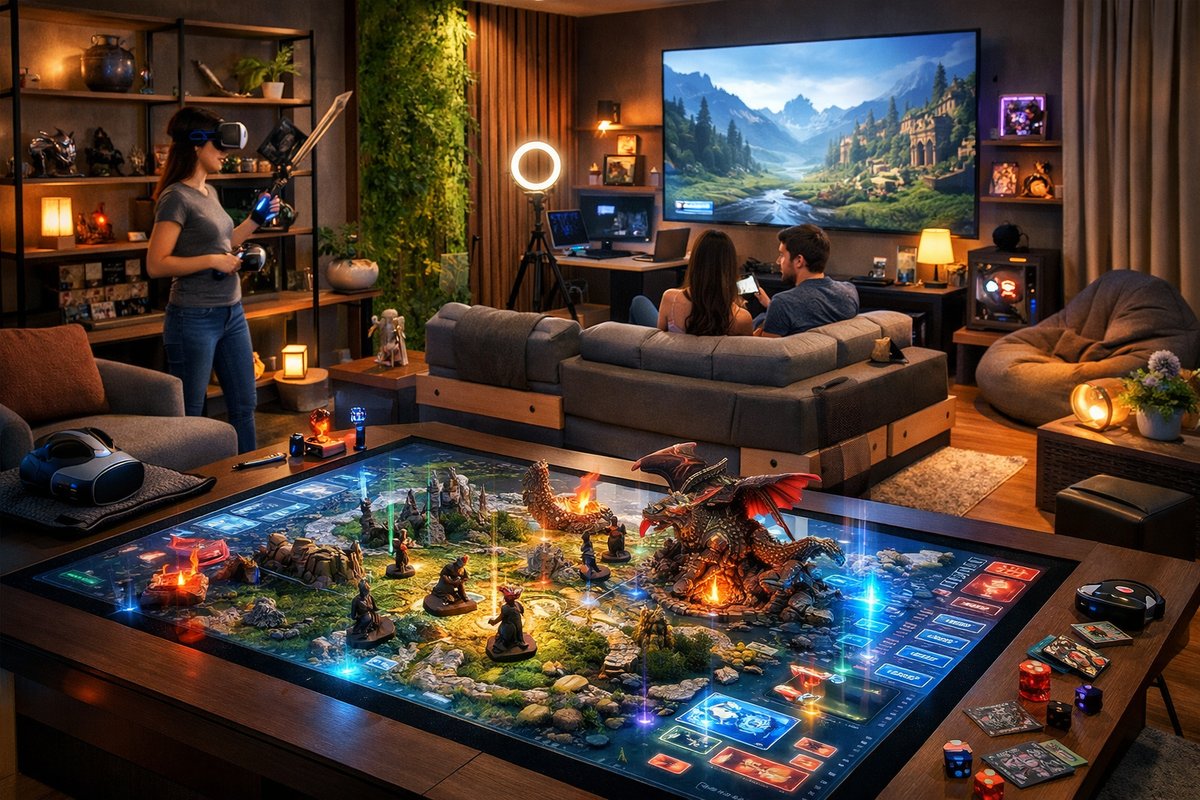

In the past year, living rooms and spare bedrooms around the globe have transformed into dynamic playgrounds where analog dice rolls meet virtual vistas, and custom-built furniture morphs from solo flight decks to group tabletop arenas in a matter of minutes. The gaming hobby is no longer confined to static consoles and fixed monitors. Driven by advances in augmented reality, modular design, and sustainable materials, enthusiasts are crafting versatile hubs that cradle everything from epic role-playing sessions to high-octane esports matches.
At the heart of this metamorphosis lies a hybrid tabletop renaissance. Long beloved by board-game devotees, physical miniatures and richly illustrated maps are now augmented by smartphone and tablet apps that project animated overlays, track hit points, and even generate dynamic soundscapes. A fledgling category of smartphone clip-on depth sensors can read the position of miniatures on a printed grid and render holographic effects in real time, turning a cardboard dungeon into a living, breathing world. These hybrid setups bridge the tactile joys of rolling dice and moving pawns with the dramatic flair of digital magic spells, lighting effects, and crowd roars.
While tabletop AR remains in its infancy, early adopters praise its ability to boost immersion without sacrificing social interaction. One popular toolkit uses a compact projector that sits above a foldaway table, beaming terrain textures onto physical game boards and adjusting to raised terrain features cut from foam. Another accessory transports character sheets to a companion app that automatically updates stats when dice land. The result? Faster gameplay, fewer bookkeeping errors, and a stage that spotlight players instead of rulebooks.
Parallel to tabletop innovation, virtual and cross-reality experiences have leapt forward. Wireless standalone headsets are now compact enough to fit within a modular entertainment cart that houses cable management channels, adjustable mounts, and hidden storage for extra controllers. Paired with haptic vests and modular floor panels that click into place around a central mat, these systems deliver full-body immersion while preserving precious living-space square footage.
Crucially, builders of these next-gen hubs have woven privacy and sustainability into their designs. Acoustic foam panels made from recycled fabrics help containfootsteps and microphone bleed in shared apartments, preserving roommates’ quiet hours. Modular desks crafted from reclaimed woods and low-VOC finishes can be reconfigured across genres-raising power outlets for flight-sim yokes or lowering shelves for board-game card stacks. Many setups now lean on open-frame shelving and detachable cable arms so every switch, port, and battery pack remains accessible without ripping apart walls or drilling permanent holes.
The social layer has also evolved. Small-scale streaming enclaves-complete with adjustable ring lights and spill-proof desks-enable friends across time zones to shard a single digital board, each with their own local camera and microphone station. Unseen by viewers is a network of custom-built privacy filters and local-only data channels that ensure voice comms and gameplay footage never traverse insecure public servers. Streaming meets safe-room principles, letting players share candid reactions without fearing platform-wide eavesdropping.
AI has begun to infiltrate these home arenas too. Adaptive NPC masters in role-playing games can react to voice direction, shifting narrative arcs on the fly. Procedural dungeon generators whisper plot twists into headsets, guiding gamemasters through morally complex branching stories that adapt to player emotion cues-sensed via wrist-mounted biometric tags. Rather than replace human creativity, these tools act as collaborative partners, offering spur-of-the-moment twists and ambient mood music that enrich every encounter.
A modular approach isn’t limited to cutting-edge tech. Many hobbyists champion interchangeable lighting panels that magnetically snap to metal frames around doors and shelves. Warm amber hues can cast a tavern mood for nighttime campaigns, while cool blue-white strips energize speedrun marathons. Some kits include individually addressable RGB zones that sync to game soundtracks or controller vibrations, turning every spell blast or engine roar into a burst of color.
Furniture has stepped into the game too. A growing community of DIY builders is using parametric design software to laser-cut custom desk legs that telescope into various heights and angles. Panel kits slide into pre-drilled slots to create secure partitions for solo streaming or group play. Under-desk cable trays clip onto universal rails, hiding power bricks and surge protectors out of sight but within reach. Sustainability comes full circle when desks are crafted from certified bamboo plywood, and acoustic tiles are made from recycled fishing nets.
Enthusiasts aiming to maximize focus are investing in ergonomic chairs with adjustable armrests, lumbar support, and breathable mesh backs. Some setups even integrate lumbar massage modules and under-desk footrests that swivel with your posture. These aren’t just office chairs rebranded for gaming; they’re engineered with insights from occupational therapy to prevent fatigue during marathon sessions.
Community events mirror these home innovations. Pop-up “micro-cafés” in parks are equipped with solar-powered Wi-Fi routers and rolling racks of modular tables, letting strangers challenge each other to digital-analog hybrid contests under canopies. Organizers supply foldable whiteboard walls for sketching strategies, acoustic partitions to manage noise, and battery-powered LED arrays for evening play-all scalable from four seats to a packed block party.
What’s next? Developers are exploring brain-computer interfaces that could map player emotions directly into game worlds-triggering dynamic weather changes when tension peaks or shifting music when calm prevails. In parallel, a new wave of ultra-low-power edge-AI devices promises to run complex voice-recognition routines locally, so even the most private living rooms can host voice-commanded encounters without routing data through remote data centers.
Whether you’re a solo streamer, tabletop storyteller, or competitive esports aspirant, the future of play is modular, immersive, and deeply personal. As AR overlays grow more precise, AI game masters become more attuned to human emotion, and furniture flexes to match every genre’s needs, home gaming hubs are fast evolving from one-size-fits-all media centers into purpose-built arenas of adventure and connection. In this unfolding paradigm, every desk, light, and acoustic panel is as critical as the games themselves, transforming play from a hobby into a fully integrated lifestyle.