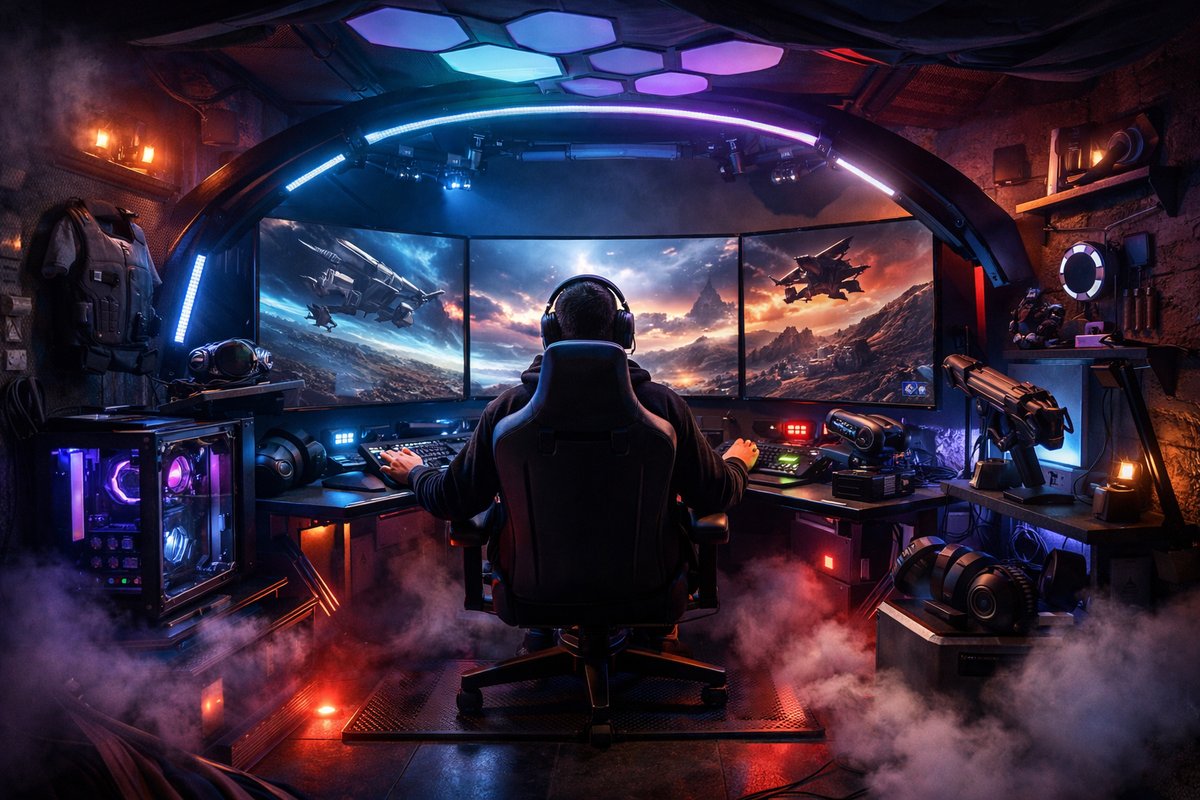

Across urban apartments and suburban homes alike, a new trend is reshaping the landscape of at-home gaming: the DIY immersive sanctuary. Rather than relying solely on high-end consoles or flagship GPUs, players are combining plug-and-play components-modular lighting, haptic feedback seating, aroma diffusers, even mini projectors-to create personalized micro-arenas. The result is a bespoke escape hatch from routine, where every sight, sound, and sensation can be dialed in for maximum engagement.
Industry research highlights the momentum behind this movement. Analysts at Newzoo report that global spending on gaming accessories climbed by 15 percent in the last year, with a significant portion driven by demand for mid-tier gear such as LED lighting strips, streaming devices, and customizable peripherals. Meanwhile, crowdfunding platforms have seen a wave of backers supporting projects that promise everything from tactile floor panels to ceiling-mounted projector rigs, indicating a broad appetite for hands-on, experiential hardware beyond traditional controllers.
What sets these immersive pods apart is not sheer spectacle but thoughtful curation. A small team of content creators recently shared a blueprint for transforming a 6-by-8-foot spare room into a multi-sensory portal. Ambient soundtracks flow through a compact surround system, synchronized to color-changing LED strips lining the ceiling and baseboards. A scent diffuser releases subtle forest mist or salty sea air cues at key moments, while an under-desk haptic plate rumbles softly in time with thunder or explosions onscreen. The builders emphasized modularity-every panel, cable channel, and light strip snaps into place without specialized tools, allowing easy upgrades and reconfiguration.
For streamers and content creators, the advantage goes deeper. Immersive backdrops and reactive lighting schemes can instantly elevate production value for live audiences. By automating lighting triggers via simple software integrations, a streamer’s setup can shift color palettes or intensify brightness based on in-game events, lending dynamic flair without manual intervention. As one studio consultant notes, “Viewers today expect more than just gameplay- they want to feel like they’re in the action. These plug-and-play ecosystems make that possible at a fraction of the cost of professional soundstages.”
Budget and space constraints remain top considerations. Converting a closet or corner office into a game pod demands careful planning: power distribution must account for multiple USB hubs, high-wattage LED controllers, and audio amplifiers. Ventilation is essential to prevent gear from overheating, especially when a projector and PC tower are confined within a small footprint. Yet many enthusiasts find that repurposed unused furniture-like secondhand bookshelves or old cabinet shells-provides adequate enclosures for cable routing and component mounting.
VR pioneers are also finding inspiration in these compact hubs. Designers at a recent electronics expo showcased a head-mounted spatial audio rig paired with an inflatable enclosure that expands around a user’s headset area, blocking out external noise and reflections. The coupling of inflatable walls, directional speakers, and ambient lighting created a mobile “sensory bubble” that easily collapses for storage. While still niche, the demo underscored a broader appetite for hybrid solutions that merge low-tech materials with advanced signal processing.
Commercial retailers have entered the fray with pre-built kits promising quick assembly. One mass-market boxed solution includes a tri-color LED strip controller, a portable projector mount, and a soundbar designed for wall attachment. Though less customizable than DIY alternatives, these starter packs guide newcomers through an affordable entry point. Retail data indicates that these kits now account for nearly 20 percent of accessory sales in the “home entertainment” category, especially among buyers aged 18 to 34.
Community platforms have become fertile ground for sharing tips, hacks, and blueprints. A dedicated subreddit dedicated to “micro-pod gaming” now boasts over 50,000 members trading wiring diagrams, component lists, and even open-source code for lighting sequences. Fellow members collaborate on 3D-printable mounts, recommend low-profile cable ties, and review compact UPS units that provide surge protection without taking up shelf space. This collective ingenuity has accelerated innovation-what once required complex programming skills can now be set up with drag-and-drop templates.
Beyond gaming, these immersive pods are crossing over into fitness, meditation, and creative arts. Yoga instructors stream classes into compact soundproof enclosures equipped with floor-mounted vibration plates that guide posture and breathing. Visual artists project generative light scapes onto white-coated walls, turning small nooks into living galleries. Educators are exploring pods for student focus zones, aiming to minimize distractions and foster deeper concentration through controlled sensory environments.
Industry forecasters anticipate that by the end of next year, the average household will allocate nearly $200 annually toward ambient hardware upgrades-an increase largely attributed to demand for reactive lighting and multi-sensory accessories. As components become more interoperable through open APIs, the barrier to entry continues to fall. The promise of a truly modular, scalable gaming haven now rests less on bespoke craftsmanship and more on user-friendly ecosystems that invite experimentation.
Of course, challenges lie ahead. The proliferation of electronic modules raises questions around energy consumption and e-waste. Experts stress the importance of recyclable materials, power-efficient LEDs, and upgradable firmware that extends device lifespans. Some DIY communities have started circulating guides on eco-conscious designs, recommending solar-powered USB hubs and biodegradable mounting clips. Sustainability, they argue, must evolve alongside immersion.
In the end, the growth of at-home gaming sanctuaries reflects a deeper cultural shift: play is treated as serious business. Whether it’s chasing raid bosses, streaming speedruns, or exploring virtual reality vistas, participants demand environments that mirror their passion. From the hum of a calibrated sound system to the subtle glow of programmable LEDs, the quest for total focus and escape is powering an entirely new segment of home entertainment. As accessibility improves and ecosystems expand, what began as a niche hobby is poised to redefine the very architecture of play.
While the blueprints, gear lists, and online tutorials continue to evolve, one thing remains clear: the gaming room of tomorrow is not just a place-it’s an experience sculpted around each individual’s imagination and need for immersion. And for a community of builders, tinkerers, and storytellers, that creates room for endless innovation within four walls.