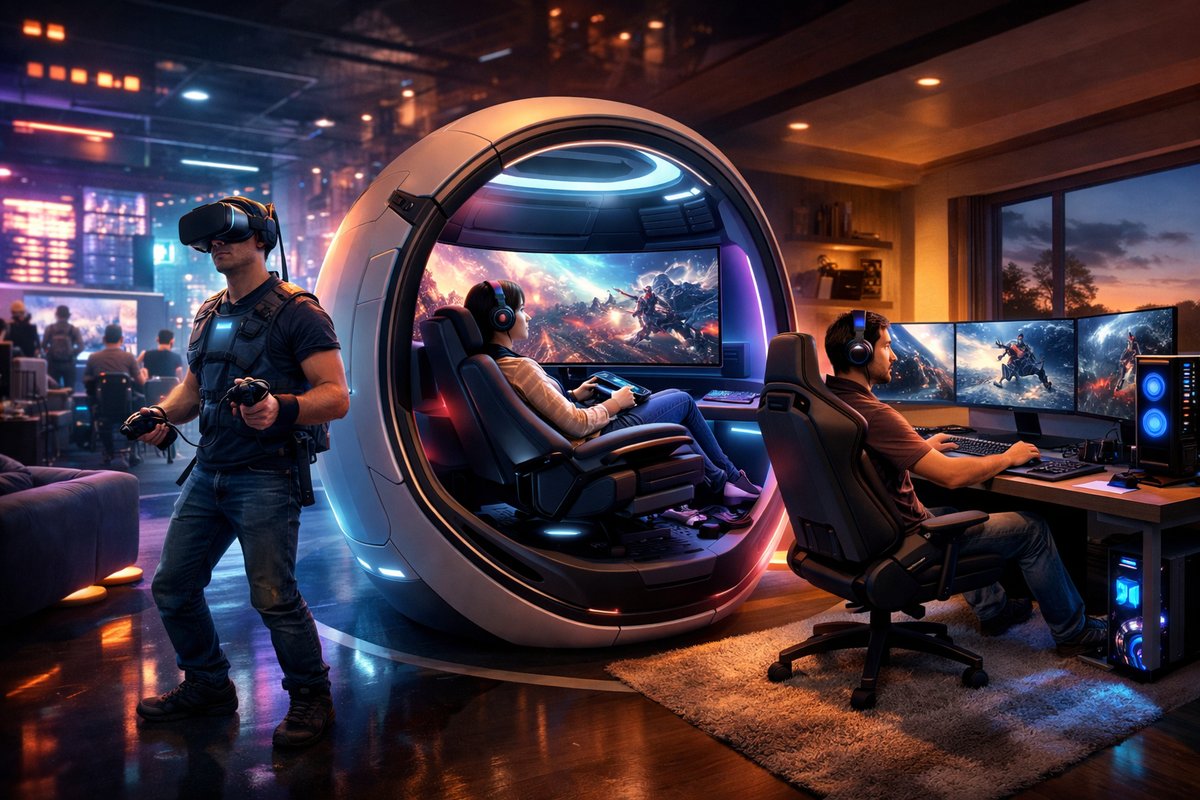

Gaming and entertainment have moved far beyond the living room couch. A surge of innovative venues and modular home units is reshaping how players interact with digital worlds. Whereas the last decade saw high-end consoles and slick streaming services, today’s trend is hybrid: dedicated micro-capsules that merge VR rigs, motion tracking, and environmental controls, alongside urban gaming lounges that foster in-person tournaments and social gatherings.
Urban centers around the globe are unveiling immersive gaming hubs modeled on coworking spaces. These venues feature soundproof pods, full-motion racing simulators, and drop-in VR experiences calibrated for group play. Data from a recent market analysis shows that foot traffic at gaming lounges grew by 25 percent over the past year, driven by casual participants, competitive teams, and curious passersby looking for interactive entertainment beyond restaurants and bars.
At the same time, home enthusiasts are investing in scaled-down play capsules. These vertical, space-efficient units stack a monitor or headset mount, adjustable lighting, and a compact desktop with cable management. Designers emphasize ergonomics and minimal visual clutter to prevent sensory overload during marathon sessions. Many of these units include built-in sound dampening and ambient LED color shifting to match in-game environments.
One emerging model is a “game tower” resembling a miniature arcade booth. It takes up less floor space than a traditional desk but still accommodates high-refresh-rate displays or VR setups. Fans report that these capsules enhance immersion by isolating background noise and reducing distractions from roommates or family members. The result: stronger focus, heightened enjoyment of sound effects, and more intense competitions.
Beyond personal capsules, a parallel trend is collaboration spaces for hobbyists and pro players. Hybrid gaming hubs are adopting modular furniture that reconfigures for team scrimmages, livestream panels, and private coaching. Some venues host community-driven leagues where local developers demo prototypes, inviting real-time feedback. This integration of player feedback loops with developer presence accelerates creative cycles and fosters deeper connections between creators and audiences.
On the tech side, motion-tracking sensors are now affordable enough to outfit multi-pod networks. A small set of ceiling-mounted cameras can track limb movements within each capsule, enabling full-body VR without bulky external towers. Combined with haptic vests and gloves, players experience physical feedback during sword fights or racing collisions. Analysts predict that by next year, over 40 percent of dedicated gaming venues worldwide will offer these next-gen tracking systems.
For at-home fans who prefer physical controllers, there’s a parallel renaissance in mechanical keyboards and precision gaming mice. Enthusiasts are customizing keycaps with translucent materials and installing sound-absorbing foam to soften keystrokes. Ambience matters as well: tunable LED backlighting synced to on-screen events immerses you deeper into fantasy worlds or competitive arenas.
Audio gear has also evolved. Instead of standard headphones, some home capsules integrate beam-forming speaker arrays that deliver surround sound without wearing a headset. Acoustic panels within each pod absorb echoes, creating a perfect audio bubble. These setups suit streamers who need clear speech capture and viewers who crave crisp immersive audio without bulky gear.
When it comes to seating, ergonomic haptic chairs are gaining traction. These chairs include actuators in the backrest synchronized to game audio and physics, letting you feel rumbles, impacts, and engine vibrations. Early adopters laud the multisensory dimension for both horror titles-where footsteps seem to creep up behind you-and racing sims, where road texture and collision forces become palpable.
Mobile gaming is pulling from this play capsule ethos as well. Portable docking stations transform smartphones into micro-console experiences. Players slide a high-refresh handheld into a fold-out stand with controller attachments and attachable speakers. While these units lack full-body tracking, they bring hybrid features-like modular attachments-to on-the-go play.
Community meetups remain vital. Even with advanced home pods, players still crave in-person camaraderie. Hybrid hubs offer themed nights: retro arcade throwbacks, speed-running tournaments, and cosplay showcases. These events often include food pop-ups, artisan merch stalls, and live DJ sets to create a festival atmosphere around gaming.
Filmmakers and live event producers are noticing too. Some venues double as performance spaces for streaming talent to host Q&A panels with game designers. Audiences can experience behind-the-scenes glimpses at upcoming releases, all within the immersive environment of the hub. This convergence of media literacy, audience participation, and merchandise opportunities is transforming what it means to launch a new game or entertainment IP.
As these trends mature, sustainability and privacy take center stage. Eco-friendly materials-recycled plastics, low-power LED panels, and modular designs promising longer lifespans-are replacing one-off pods. Capsule networks now allow software updates to hardware profiles, ensuring that gear remains compatible with future titles without full replacement.
Privacy protocols have become critical as well. Play capsules handle sensitive biometric data-eye-tracking and motion signatures, for example. Leading venues are encrypting all telemetry and offering clear opt-in consent flows for recordings. This approach builds trust among users who might otherwise feel surveilled in public gaming pods.
Looking ahead, experts envision AI-driven customization within each capsule. Imagine an adaptive soundscape that responds to your emotional state, or real-time difficulty adjustments based on heart rate. Machine learning could optimize comfort settings and ambient temperature to keep players at peak performance for longer sessions.
What does this mean for the average player? Whether you’re building a modular home setup or dropping into the latest urban play hub, the lines between private and public, digital and physical, are blurring. The future of gaming is a tapestry of scalable micro-experiences, robust community gatherings, and personalized sensory environments. This hybrid model offers the freedom to choose how, where, and with whom you play, all while tapping into the power of specialized gear to fuel focus and excitement.
For those ready to upgrade, the next step is exploring capsule concepts and community hubs near you. Check out local venues for trial passes, and research modular furniture kits and sensor bundles to start crafting your own micro-pod. In this new era of play, serious business meets imaginative design, inviting everyone to level up their entertainment ecosystem.
-
YSCP Typewriter Style Mechanical Gaming Keyboard RGB Backlit ...
【Retro Typewriter Style Keyboard】: Merges the charm of vintage typewriters with advanced mechanical blue switches for medium resistance, clear click sounds, ... -
Razer Freyja HD Haptic Gaming Chair Cushion, Multi-Directional ...
Buy Razer Freyja HD Haptic Gaming Chair Cushion, Multi-Directional Haptics | Haptic EQ Customization via Razer Synapse, HyperSpeed Wireless & Bluetooth, ...