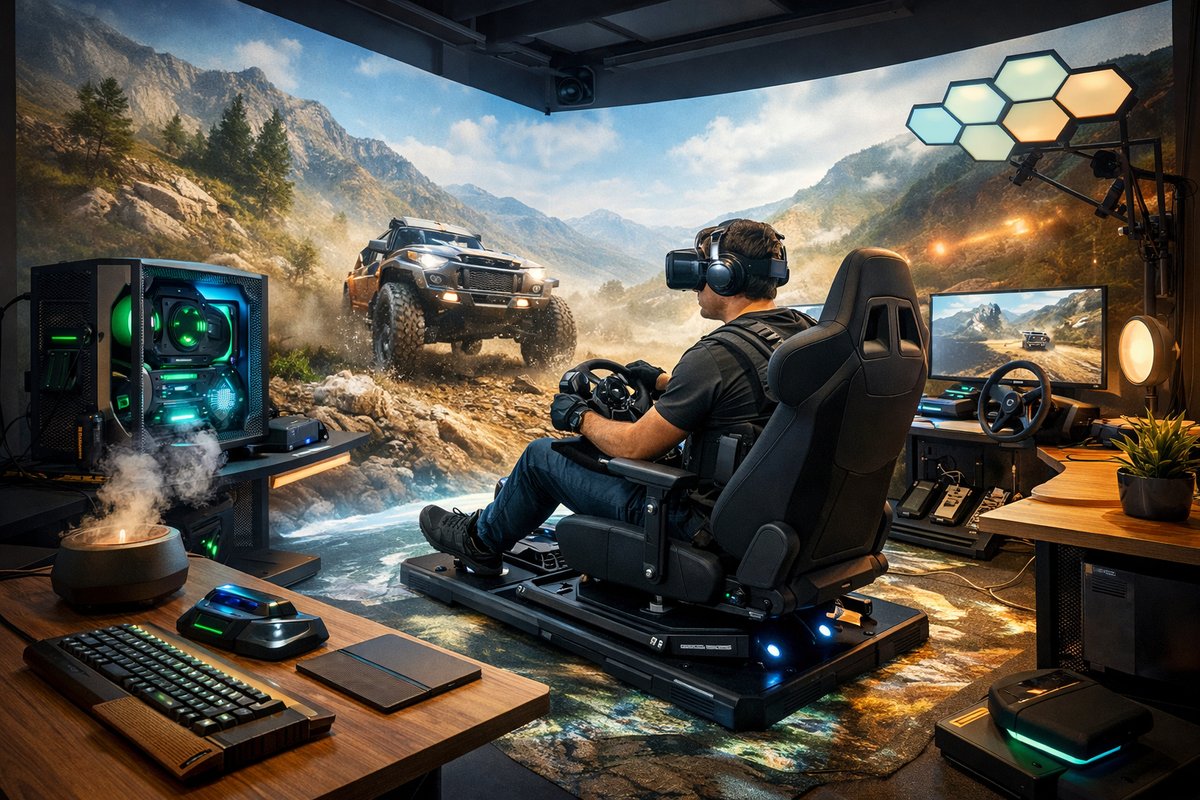

In the past decade, what starts as a two-monitor desk and a performance PC has blossomed into a layered ecosystem of specialized hardware, lighting moods, and spatial audio that reaches far beyond the screen. Recent surveys by Consumer Tech Insights report that more than two out of three enthusiasts have adjusted their setups in the past year-driven by a quest for deeper immersion, greater flexibility, and the ability to pivot between work, play, and social connection in a single environment.
Traditionally, a gaming corner was a dedicated shelf for consoles, a tower PC, and a couple of RGB fans. Today’s enthusiasts are building hybrid spaces that address both productivity and play. One hobbyist turned an infrared-tracked bookshelf into a stealth projector mount, directing gameplay onto a retractable screen at night and a whiteboard mural by day. Co-working lounges now offer rentable ‘play pods’ where urban pros can switch from video calls to co-op raids without breaking stride. This fusion of dual use has elevated the role of multi-function furniture, modular panels, and adjustable mounts that cater to both a quick strategy session at lunch and a marathon VR dungeon crawl after hours.
Central to this trend is modular gear design. Magnetic cable clips, adhesive-backed mounting plates, and stackable hub blocks empower users to reconfigure their physical setup in minutes-no tools required. Instead of rerouting dozens of cables when a new capture card arrives, a removable channel on the back of a desk can be slid open, wires swapped out, and the lid snapped shut. Desk manufacturers now offer customizable routing trays, detachable side panels for USB hub modules, and even quick-change top plates in eco-friendly bamboo or recycled plastic. This do-it-yourself spirit echoes wider consumer expectations for products that last longer and adapt to shifting needs.
At the hardware frontier, projection mapping and mixed-reality wearables are challenging the dominance of flat glass slabs. Compact short-throw projectors with keystone correction can turn any wall into a 100-inch panorama in seconds. When paired with a basic haptic vest, in-game explosion ripples can be felt across the torso, amplifying every encounter. Developers report that players using combination audio-haptic feedback perform more intuitively, reacting faster to environmental cues and reporting a stronger emotional connection to characters. Meanwhile, lightweight augmented reality glasses promise to overlay a 3D HUD onto a physical backdrop, though true mass adoption hinges on battery life and field-of-view improvements.
Haptic integration has quietly matured beyond controllers. Full-chamber chairs now offer directional vibration drivers that trace footsteps across a polished floor or simulate engine rumble in racing titles. Enthusiasts pairing a massage-style haptic pad with dynamic lighting find that color shifts synced to audio peaks sharpen focus and reduce fatigue during extended sessions. The next wave of patents suggests game editors may gain interfaces that let designers author haptic events alongside animation keys, turning vibration into an official creative layer-akin to sound or particle effects.
Soundscapes have also broken free from stereo speakers. Compact soundbars with integrated subwoofers leverage beamforming to create a sense of height without bulky satellite speakers. Some models support object-based audio standards that place explosions overhead or whisper dialogue from behind. A handful of audio brands now bundle furniture-friendly bar units with detachable wireless surround speakers, enabling flexible staging or pop-up viewing parties at a moment’s notice.
Streaming and social sharing remain a cornerstone of how setups evolve. Integrated capture cards and dock-style audio interfaces have slashed the barrier to live content. Casual players can now mount a clip cam above a game-cube controller or clip a bi-directional mic near a tabletop board game without wiring chaos. Open-source software updates are expanding green-screen functionality to handheld cameras, letting small creators project mini-sets on their bedroom walls. With community hubs sprouting for every fandom, setup ideas circulate faster than ever-often in the form of step-by-step photo guides or short tutorial clips.
In parallel, creative tools for world-building are growing more accessible. User-friendly game engines offer drag-and-drop terrain, lighting presets, and audio filters that let storytellers craft immersive demos without coding. A rising number of open asset libraries supply free 3D models, sound effects, and motion captures. New podcast-style recording rigs, complete with built-in acoustic panels, turn a closet corner into a makeshift voice-over booth. These capabilities are fueling a renaissance in indie games, audio dramas, and collaborative live-action role-play streamed straight from personal setups.
While connectivity and cloud features offer convenience, concerns over data privacy and owner control are prompting a cottage-industry of local-streaming solutions. Small servers running on mini-PCs can relay gameplay to multiple screens in the house without touching the internet, keeping personal data within four walls. Network shares are now simpler to mount on consoles, PCs, and AR headsets alike, letting households share media libraries without streaming subscriptions. This model appeals to privacy-minded users and those with bandwidth constraints, reducing jitter and giving gamers more predictable latency.
Sustainability has moved from buzzword to purchase criterion. Several peripheral makers now publish environmental impact reports, showcasing product carbon footprints and end-of-life recycling programs. Modular gadgets built from recycled polycarbonate help reduce waste, and some “greener” desks use sustainably harvested woods and low-VOC finishes. Community swaps and refurbish markets have also grown, allowing developers and gamers to trade tested equipment rather than buying new. As materials science innovations reach supply chains, we may soon see biodegradable cables and circuit boards built from plant-based composites.
Ergonomics and well-being have taken center stage as marathon sessions become commonplace. Adjustable-height desks, supportive gaming chairs, and wrist-support mats are no longer niche luxuries but essential health items. Eye-tracking sensors can prompt screen-break reminders after extended focus, and smart lighting systems can tint ambient LEDs to reduce blue-light exposure as evening deepens. Some setups even integrate subtle air-quality monitors that adjust a nearby purifier when VOCs rise-ensuring clear thinking even during intense strategy rounds.
Economic and accessibility considerations shape who benefits from these innovations. Entry-level streaming kits now sell for under a hundred dollars, including a plug-and-play mic, a compact LED panel, and an all-in-one capture dongle. Rebate programs through hardware manufacturers offer discounted bundles to students, educators, and creators in underserved regions. Open hardware communities design low-cost DIY templates for custom desks and mounts that can be laser-cut at local maker spaces. These efforts level the playing field, letting first-time streamers and community organizers find traction without an arm’s-length bank account.
Aesthetically, setups have shed the neon-splatter stereotype in favor of sleek lines and muted finishes that blend into living rooms and home offices. Minimalist themes harness dark matte surfaces, concealed cabling, and discreet LEDs that only glow when systems are active. Modular shelves double as ambient alcoves for figures, memory cards, and modular haptic pods-turning once-functional furniture into expressive installations with a personal touch.
For enthusiasts eyeing their next upgrade, keep an ear on emerging museum installations and design showcases. Interactive exhibits often preview the next generation of user-tracking cameras, next-level micro projectors, and ultra-low-latency network solutions. Influencers and interior designers are collaborating on lifestyle galleries where community members can audition gear in real-world layouts before committing to big purchases.
As the boundaries between physical and digital continue to blur, we’re moving toward a future where gaming setups serve as dynamic canvases for self-expression, productivity, and shared experiences. Whether you’re building a cost-effective streaming corner in a compact apartment or engineering a full-spectrum sensory theater, today’s modular, sustainable, and privacy-focused innovations ensure that every player can craft a setup that’s uniquely theirs.