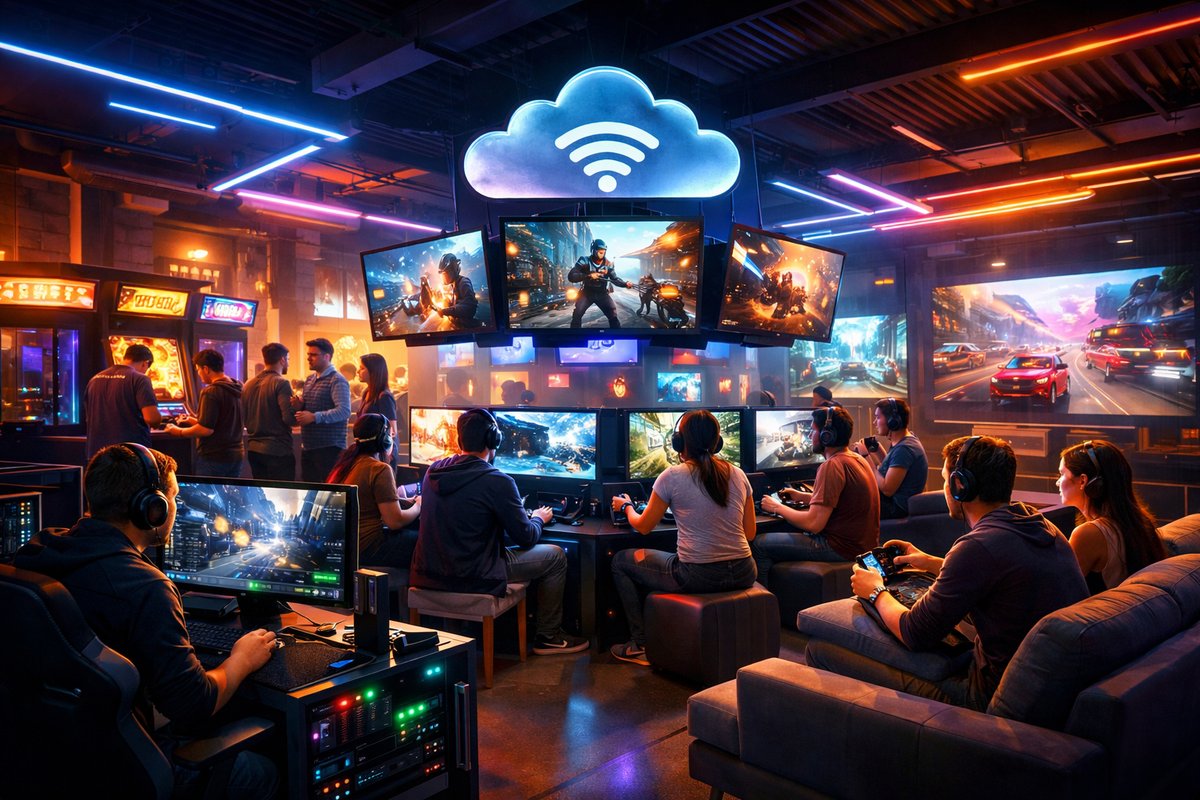

In a repurposed warehouse district on the outskirts of the city, the doors of a futuristic gaming lounge swing open to reveal rows of sleek pods, each equipped with high-speed mesh networking and cloud-connected consoles. Here, latency hovers below the threshold of notice, despite all the processing happening off-site. Rather than relying on bulky PCs or static set-ups, gamers slip into haptic chairs that pulse with every explosion and rumble, while adaptive lighting shifts with in-game weather and time of day. This isn’t a typical esports arena nor a retro arcade; it’s a hybrid playground where cloud streaming meets local social play.
The concept rests on a twofold technological breakthrough: edge computing nodes strategically placed near urban centers, and a mesh network that links individual stations into a single low-latency fabric. Traditionally, cloud gaming demanded vast distances between players and data centers, resulting in lag that could ruin fast-paced matches. But with micro-data centers tucked into commercial buildings, the time signals take to travel is slashed by more than half. The result is a local-area network built on public infrastructure, offering players the immediacy of a LAN party without hauling hardware to every meetup.
At the heart of each station sits a modular console dock-a compact box that handles input and output while streaming the actual game from remote servers. Users supply their own controllers, keyboards, or mice, and the system recognizes profiles in seconds. Once logged in, they can jump from a competitive shooter to a sprawling open-world RPG in the span of a few minutes, all with zero downloads or patch installs. Behind the scenes, an orchestration layer rebalances server loads across multiple edge sites, ensuring sessions remain stable even at peak hours.
Beyond the technical wizardry, these spaces are tailored to foster connection and immersion. Acoustic panels double as projection surfaces, displaying live leaderboards and community art alongside cinematic backdrops. Customizable haptic chairs synchronize with on-screen events-every crash or collision sends subtle vibrations through the seat and backrest. Ambient lighting systems scan game palettes in real time, bathing users in coordinated hues that heighten focus and emotional engagement. This multisensory fusion transforms a simple match into a fully embodied experience.
But the growing appeal isn’t limited to competitive gamers. On weekends, families and casual groups reserve zones for cooperative challenges-puzzle adventures, rhythm games, or creative sandboxes where participants collaborate in building digital worlds. A section of the lounge features a hybrid tabletop setup: real miniatures rest on a smart surface that tracks movements with computer vision, projecting animated effects and dynamic environments onto the board. This melding of tactile and digital playfields gives board-game enthusiasts a taste of next-gen interactivity without abandoning dice and tokens.
Curating the right mix of titles has become an art form for lounge operators. Subscription-based access to cloud libraries lets them rotate popular releases with indie experiments, ensuring there’s always something fresh. Analytics dashboards highlight which genres draw crowds at different times. Operators might find that battle royale sessions peak after work hours, while cooperative building games flourish on Saturday mornings. Armed with this data, they tweak lighting themes, snack menus, and promotional events to match patron preferences.
Sustainability and local impact are woven into the business model. Instead of shipping new consoles or PCs every few years, lounges upgrade central servers and edge hardware in modular racks. Energy consumption is tracked in real time, with on-site solar panels and high-efficiency cooling systems offsetting a portion of demand. Partnering with neighborhood cafes and pop-up food vendors, these spaces often operate as community anchors-hosting charity tournaments, youth coding workshops, and design meetups that explore emerging technologies like spatial audio and light-field displays.
Industry observers see these hybrid hubs as a natural evolution, marrying the global reach of cloud gaming with the social dynamics of physical spaces. Major publishers have begun piloting venue-only tournaments that sync stadium-style broadcasts with local matches. Meanwhile, independent developers experiment with episodic content tailored for lounge environments-short multiplayer quests that players can tackle in an hour or less, perfectly timed for a lunch break or evening outing.
Looking ahead, the line between home and away experiences will blur further. Consumer-grade edge appliances promise to bring micro-data centers within reach of residential communities, turning co-ops and coworking spaces into mini-arcades. Software updates will enable spontaneous cross-venue matchmaking, inviting players to wander between locations mid-session while their avatars persist in the cloud. As hardware continues to shrink and streaming protocols optimize, immersive experiences once confined to high-end rigs may become as commonplace as coffee shop Wi-Fi.
In the meantime, these urban gaming lounges are setting a precedent for what the next chapter of play can look like: a shared realm where cutting-edge streaming technology, haptic hardware, and social design converge. Players aren’t just logging in; they’re stepping into a living, breathing ecosystem that responds to every move, sound, and color. And in that space between pixels and flesh, a new form of communal entertainment is taking shape-one that prizes both the thrill of digital worlds and the warmth of human connection.
-
Under Desk Mount for Steelseries Arctis Nova Pro Wireless ... - Etsy
Under Desk Mount for SteelSeries Arctis Nova Pro Wireless Gaming Headset Steel Series. SimRaceMods. Star Seller. Star Sellers have an outstanding track ... -
Wireless Headset - Wayfair
Shop Wayfair for the best Wireless Headset. Enjoy Free Shipping on most stuff, even big stuff. -
Xtreme USB-A/Type-C Adapter, USB-A Female-USB Male, Charge ...
Dual Adapter Inclusion: Comes with two adapters, allowing users to connect different compatible devices simultaneously or have a spare. View all item details.