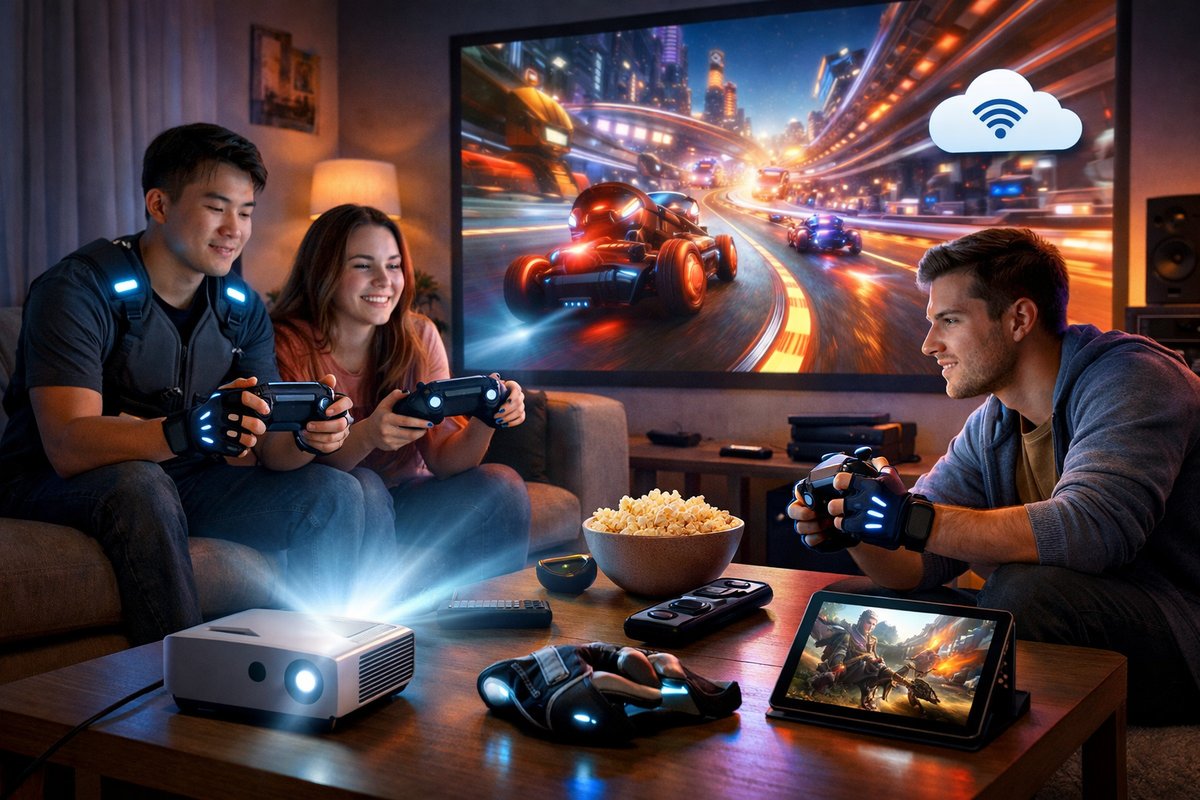

On a Saturday evening, a group of friends gathered in a living room bathed in soft, color-shifting light as a portable projector cast a sprawling battlefield across a blank wall. Instead of hunching over individual screens, they leaned back on beanbags and inflatable chairs equipped with small vibration modules. At each table, a multi-sensory scent diffuser released subtle forest aromas timed to in-game events. This isn’t a scene from a sci-fi novel-it’s the new normal for home game nights, where projection, haptics, and atmosphere converge to blur lines between console play and micro-arcade immersion.
Less than three years ago, portable projection devices were seen as niche gadgets for business presentations or impromptu movie nights. In the latest quarterly report from the NPD Group, sales of compact projectors jumped 27 percent year over year, driven in part by titles that support 120-inch projected displays and flexible screen modes. Manufacturers now compete on brightness, battery life, and wireless connectivity, letting gamers mirror consoles or stream directly from cloud-based services without lugging around heavy hardware.
Yet projection alone can feel flat without tactile feedback. Enter the haptic accessory ecosystem: seat cushions, foot pedals, and even handheld grips that pulse in sync with onscreen action. Indie developers are releasing open-source libraries so hobbyists can tinker with vibration mappings, creating custom rumble patterns for each explosion, thunderclap, or car crash. Early adopters report a 40-percent increase in perceived immersion when simple haptics are added, and enthusiasts are only scratching the surface of what a vibrating sofa cushion or under-desk footboard can deliver.
This convergence of sight, sound, and feel has spurred a wave of communal experimentation. In one Midwestern city, a local board-game café rebranded itself as a “projection lab,” renting out portable projectors alongside traditional tabletop setups. Patrons can project digital battle maps for role-playing games onto giant tables, while nearby VR pods remain an option for more immersive quests. The café’s owner tells us that weekly bookings are up 65 percent since projection suites launched, and a growing waiting list now includes after-hours blocks for small esports tryouts.
Behind the scenes, cloud gaming platforms are stepping up to meet the demand for flexible, screen-agnostic streaming. Recent service upgrades have improved latency by routing connections through regional edge servers, ensuring that projected action remains fluid and responsive. Gamers report that titles once notorious for input lag now play as smoothly as on dedicated local hardware, making it easier to share AAA experiences without investing in multiple consoles or gaming PCs.
One startup based in a former warehouse district has even developed a modular game server on wheels-about the size of a carry-on suitcase-that can beam titles to any nearby screen via Wi-Fi 6. At last month’s indie expo, teams of testers clustered around these rolling rigs to try out competitive shooters, cooperative platformers, and rhythm games. Organizers say the kits allow pop-up LAN parties in unsuspecting corners of the city: from coffee shops after hours to public parks at dusk, as long as ambient light is low enough for projection.
Sustainability advocates have also taken notice. Portable projectors now tout energy-saving modes that dial down lumen output when full brightness isn’t needed, cutting power consumption by up to 50 percent. Reusable lens caps, biodegradable packaging, and repair-friendly designs are becoming selling points. As households accumulate more electronic gear, these green considerations help reduce waste and encourage longer device lifespans-a clear win for both industry and planet.
Accessibility is another frontier. Controller manufacturers are releasing wireless models with modular button plates, swappable d-pads, and programmable touch sensors to accommodate a wider range of physical abilities. Eye-tracking cameras and voice-command modules can handle menu navigation or basic in-game actions, opening projection-based game nights to players who once felt excluded by complex controller layouts.
Meanwhile, developers are optimizing user interfaces for large-screen projection. Text, HUD elements, and minimaps automatically scale to maintain legibility at varying throw distances. A recent patch for a popular action-RPG introduced a “cinematic mode” that arranges subtitles and quest markers along the edges of a projected display, preventing vital information from cutting into gameplay. Test groups have described the result as “going from a fishbowl to a panoramic storyboard.”
Beyond software tweaks, designers are embracing multi-sensory kits that sync scent dispensers and smart lights with in-game triggers. Imagine a rainstorm in a survival game that is accompanied by a quick burst of petrichor-inspired fragrance, or a sci-fi epic where the color temperature of LED panels shifts from neon violet to cold blue. Players say these touches may not change mechanics, but they reshape emotional engagement and create moments that feel truly cinematic.
Of course, not every household is ready to overhaul its living room. That’s why some companies are creating plug-and-play projection bundles: a compact unit with built-in speakers, a simplified wireless controller, and a subscription to a rotating library of titles optimized for big-picture play. For families curious about hosting weekly game nights, these starter kits promise a turnkey experience without requiring technical know-how or extensive setup.
On the social side, online communities have sprung up to share demo reels, setup photos, and customization guides. Hashtags for projected game nights now rack up tens of thousands of posts across social platforms. Enthusiasts swap tips on vintage projector screen fabrics, DIY soundbar mounts, and the ideal projector-to-wall distance for maximizing immersion while minimizing eye strain.
Looking ahead, analysts predict the hybrid home arcade concept will continue to evolve. AI-driven avatars could join projected match lobbies, instantly calibrating game balance or providing coaching tips in real time. Smart home integration may allow lighting, sound, and even HVAC settings to shift dynamically based on in-game events. The next generation of projectors could even embed lightweight sensors that respond to physical props-turning a coffee table into an interactive puzzle surface or a reclaimed wooden floor into a responsive dance pad.
For now, the sweet spot lies in combining proven technologies with creative flair. Whether it’s a weekend gathering with friends, a family-friendly co-op campaign, or a pop-up community showcase, home game nights have never felt more alive. Projection, haptic feedback, and atmospheric enhancements are turning everyday living rooms into personal entertainment hubs-proof that play truly is serious business.