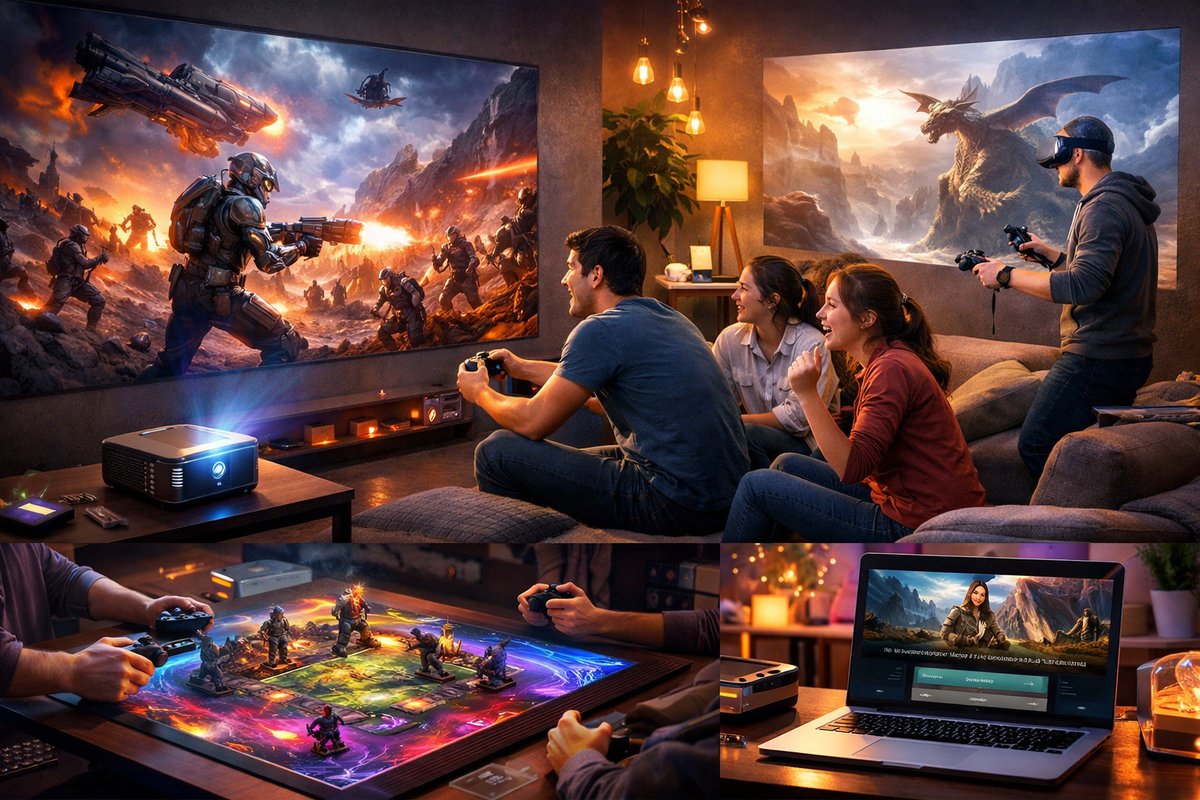

In the ever-evolving landscape of play, 2023 saw gamers and entertainment enthusiasts embrace modular, portable, and community-focused setups that blend social connection with next-level immersion. Experts at major tech expos and community gatherings have highlighted a shift away from monolithic consoles toward flexible, multipurpose gear-tools that adapt to varied spaces and experiences, whether it’s a cramped dorm room, a sprawling living room, or a pop-up arcade in a vacant storefront.
Savvy players are no longer confined to traditional couch sessions. Portable mini projectors, once niche novelties, now pack brightness levels rivaling small TVs and deliver crisp 1080p gaming on surfaces from wood tables to white walls. Coupled with wireless controllers that slip into backpacks and fold-flat Bluetooth speakers, these setup kits empower spontaneous LAN parties, movie marathons, and retro arcade revivals nearly anywhere.
But the story goes deeper than just smaller screens. Haptic feedback gloves and modular adaptive controllers are injecting physicality into digital realms. Imagine feeling the recoil of a sci-fi blaster, the tug of a virtual bowstring, or the weight of an ancient sword-all while standing in your living room. Early adopters report that this fusion of tactile sensation and projection-based visuals turns solo play into a full-body workout and makes group sessions more engaging: each punch, block, and magic spell carries authentic sensation.
Across the globe, the resurgence of community hubs-pop-up arcades, retro gaming bars, and home play capsules-underscores the human craving for shared experiences. These spaces combine head-to-head tournaments with lounge areas equipped for streaming watch parties. One recently opened venue converted shipping containers into modular gaming pods with built-in projectors, adjustable desks, and ambient lighting that syncs to in-game cues. Visitors can plug in handheld devices, queue their favorite indie titles from cloud libraries, or gather for collaborative story-driven adventures.
Meanwhile, cloud gaming services have quietly expanded their reach. With global cloud gaming revenues projected to top $5 billion by mid-decade, according to Newzoo, major data centers are bringing low-latency streams to living rooms worldwide. Now, players with basic notebooks or low-end PCs can access blockbuster titles on demand, eliminating the need for frequent hardware upgrades. Combined with adaptive streaming technology, this means fluid frame rates and stable resolution even across fluctuating home internet connections.
Virtual and augmented reality remain hotbeds of innovation. Standalone headsets have shed cumbersome cables and PC tethering, while inside-out tracking systems now rival dedicated sensor setups. Developers are refining spatial audio layers, so footsteps echo accurately, whispers come from behind, and explosions rumble through wearable subwoofers. Community-built platforms are hosting virtual lobbies where friends launch into co-op quests, share in-world concerts, or stage digital art shows. Critics note that social VR is still pioneering territory, but early adopters praise how quickly strangers collaborate on puzzles or join impromptu dance-offs.
At the heart of this renaissance is a push for sustainability and privacy. More manufacturers are offering modular components-interchangeable projection modules, rechargeable battery packs, and upgradable controllers-so users can repair or adapt rather than discard entire systems. Open-source firmware initiatives ensure that device telemetry remains under user control, and peer-to-peer encryption options give players confidence when joining public or private lobbies.
Beyond hardware, software innovations are transforming the narrative dimension of play. AI-driven storytelling engines now weave dynamically generated quests, branching dialogue, and reactive NPC behavior tailored to each group’s play style. Dungeon masters in tabletop role-playing communities are supplementing traditional rulebooks with AI companions that propose side quests, adjust difficulty on the fly, or craft vivid descriptions of dungeon interiors. This fusion of human creativity and machine learning helps keep long-running campaigns fresh and accessible to new players.
That emphasis on flexibility extends to living rooms doubling as home theaters. Enthusiasts are pairing projectors with compact projection screens and ambient LED light strips, syncing colors to on-screen action for an immersive cinematic vibe. When a game session ends, the same rig flips to movie mode, delivering bright imagery and surround sound for streaming rentals or action-packed film franchises. As a result, gear investments pull triple duty-gaming, movie nights, and even remote work presentations.
Perhaps the most significant cultural shift is how younger generations approach shared play. Discord servers, community forums, and in-game voice channels have become digital living rooms. Players coordinate themed game nights-80s retro arcade tournaments, sci-fi co-op marathons, or horror survival challenges-often broadcasting via built-in streaming modes. Friends across continents gather, chat, and vote on upcoming matches, creating communal narratives that extend far beyond single sessions.
Looking ahead, experts predict further convergence between gaming and broader entertainment. Interactive film-style experiences, where viewers make real-time choices that influence plot outcomes, are on the rise. These hybrid formats borrow elements from game design-branching paths, resource management, customizable character traits-and meld them with high-production cinematography. Early trials at film festivals have drawn crowds eager to rate their choices and compare divergent endings.
For hardware makers, the mandate is clear: design ecosystems rather than isolated devices. Collaboration between projection specialists, haptics engineers, and audio designers is giving rise to all-in-one kits that spontaneously reconfigure for different uses. One promising concept contours modular blocks that snap together magnetically-projector here, sound unit there, battery pack on top-automatically aligning software settings for gaming, movie screening, or interactive learning modules.
In an age where isolation can make screens feel cold, these emerging setups aim to restore the warmth of face-to-face interaction. By scaling from pocket-sized arenas to sprawling community hubs, the latest wave of gaming and entertainment technology is empowering players to connect on their own terms. Whether you’re rallying friends for a virtual raid, hosting a cinematic cosplay night, or simply projecting a puzzle game onto your kitchen table, the tools today are more adaptable, more tactile, and more socially driven than ever before.
Play might be serious business, but it’s never felt this fun-or this communal.