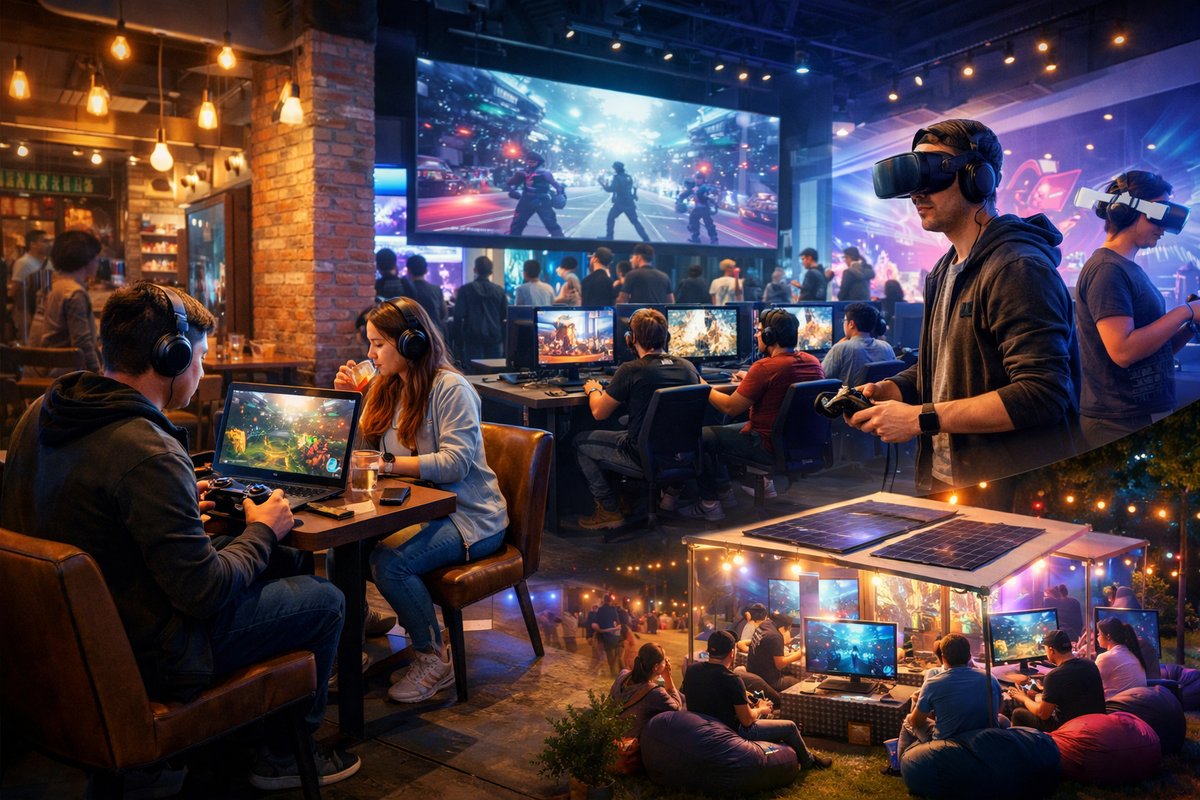

Play has never been static. In living rooms and basements around the world, neighbors and friends once gathered over consoles and PCs, passing controllers and swapping snacks. Today, that ritual is morphing into something new: hybrid game nights that fuse the immediacy of in-person camaraderie with the limitless reach of cloud streaming. These events blur familiar boundaries, letting local squads and remote players share the same battlefield or racing track in real time. As casual meetups and professional brackets converge, this shift is reshaping how communities form around games-and demanding fresh setups, novel venues, and thoughtful design.
The origins of in-person gaming trace back decades to LAN parties and arcade arcades. Back then, gamers lugged heavy PCs, network cables, and surge protectors into living rooms or rented halls. The thrill of side-by-side competition was as much about the rig-up as it was about the victory screens. Fast-forward to a time of ubiquitous broadband, and those bulky setups gave way to seamless online matchmaking. Yet something was missing: the laughter echoing off walls, the high-fives between breaks, the shared thrill when a clutch play lands. Hybrid game nights have emerged to bridge that gap, mixing pop-up venues, streaming APIs, and local gear rentals to create playful social ecosystems.
Across North America, independent cafés, coworking spaces, and even art galleries are rethinking their coffee bars and workstations as gaming micro-hubs. One Portland coworking spot reconfigured half its floor to host weekly tournaments on large-format screens while offering private booths for remote teammates dialing in via cloud gaming services. In Melbourne, creative co-ops now schedule ‘beat-the-boss’ nights where a hosted tournament streams live to remote participants on laptops. The result is a mash-up of coffee shop chill and esports intensity-where espresso machines hum behind controllers, and latte art shares counter space with illuminated keyboards.
The technical foundation of these hybrid meetups relies on low-latency cloud platforms and high-bandwidth wireless networks. Edge computing nodes positioned at local mini-data centers ensure that players on-site and online experience minimal lag, even in fast-paced shooters and racing titles. Many venues leverage specialized streaming boxes-small form-factor devices that ingest local console output and push it directly to participants’ screens anywhere on the planet. These gadgets come with HDMI pass-through, hardware encoding, and Wi-Fi 6 support, making it simple for organizers to plug in a console or PC and invite remote guests without a lengthy configuration.
Virtual reality has found its place in the hybrid model, too. Pop-up VR lounges equipped with headsets and haptic floor mats are springing up in city centers, often alongside hybrid tournaments. Some event hosts create mirrored rooms: local VR pods broadcasting to remote spectators via 360-degree video streams, and remote VR users sharing their avatars with on-site players through projection mapping. While challenges persist-sanitation protocols for shared headsets, tracking accuracy, and spatial constraints-the promise of entering digital worlds together is driving creative solutions like disposable hygiene covers and UV-sterilizing lockers.
At the heart of every successful hybrid game night is carefully chosen gear. Ergonomic gaming chairs with adjustable lumbar support help players power through longer sessions without discomfort. Mechanical keyboards with hot-swap key switches let attendees customize tactile feedback on the fly. Noise-cancelling headsets ensure team calls remain crystal clear, even over the hum of espresso machines and arcade cabinets. Ambient LED strip lighting behind monitors enhances immersion and empowers organizers to brand nights with custom color palettes. Portable power stations, sometimes paired with solar charging panels, keep every rig online when power outlets are at a premium.
Sustainability has moved from buzzword to design principle in this burgeoning scene. Many hybrid hosts now deploy energy-efficient mini PCs alongside consoles, reducing overall power draw by up to 60 percent compared to traditional gaming towers. Solar-powered charging docks let attendees top off controllers and headsets without adding strain to local grids. Upcycled furniture-think coffee tables built from reclaimed wood or seating upholstered with recycled textiles-lends venues an eco-chic vibe that resonates with environmentally conscious gamers. Even snack options have evolved, with craft soda on tap and bulk snack dispensers replacing individually wrapped treats to cut down on packaging waste.
Emotional intelligence underpins a welcoming atmosphere. Organizers curate inclusive playlists and mood lighting that shifts through calming hues between matches. Quiet zones stocked with beanbags and noise-dampening panels offer breaks for players who need to decompress. Signage reminds attendees to respect personal space and encourages “GG” and “WP” messages after each game. Some hosts even invite local therapists to drop by during all-ages events, offering mindfulness tips and conflict-resolution tools-particularly appreciated where friendly competition can sometimes escalate.
One mid-sized hybrid meetup in Austin, Texas, exemplifies this new paradigm. Hosted in a refurbished warehouse, the event featured four high-definition projection screens for local tournaments and a mirrored online lobby for cloud participants. Players could switch between in-house PCs running the latest battle royale title and personal laptops streaming a puzzle game via a dedicated cloud client. A workshop corner demonstrated DIY ambient lighting hacks, while a VR sandbox area let curious newcomers gear up for immersive co-op missions. Solar canopies outside fueled USB charging stations and powered an outdoor mini-arcade arcade with three refurbished cabinets.
The business case for venue owners and event promoters is equally compelling. Hybrid game nights attract a broader demographic-local gamers, remote friends, content creators, and casual passersby-all under one roof. Sponsors can activate product demos on-site while streaming those activations to global audiences. Subscription-based venue software helps track attendance, manage gear inventory, and even monitor energy usage for sustainability reporting. Partnerships with local food vendors and craft brewers add revenue streams, turning what was once a niche hobby gathering into a multifaceted community happening.
Looking ahead, several trends promise to accelerate hybrid game nights. Wider rollout of 5G and private LTE networks could shrink latency further, making split-screen competition between couch and cloud feel truly seamless. Edge AI systems might handle referee duties-detecting cheating attempts and resolving disputes in near real time. Metaverse-style virtual lobbies, where avatars can mingle before being teleported into real-world event spaces, are already in early beta tests. Even more intriguing is the notion of mobile hybrid hubs: retrofitted vans and trailers carrying server racks and display gear on tour, bringing the experience to underserved neighborhoods and small towns.
The evolution of game nights from private living rooms into hybrid arenas underscores a larger truth: play is a powerful social glue. By blending tangible gatherings with digital reach, organizers are weaving new communities that span geographies and time zones. Whether you’re a casual player seeking fresh meetups or a venue owner looking to tap into the gaming zeitgeist, the hybrid hybrid model offers an accessible path forward. As technology and sustainability practices advance, this next wave of collaborative play will likely become as commonplace as weekend movie nights-and infinitely more interactive.