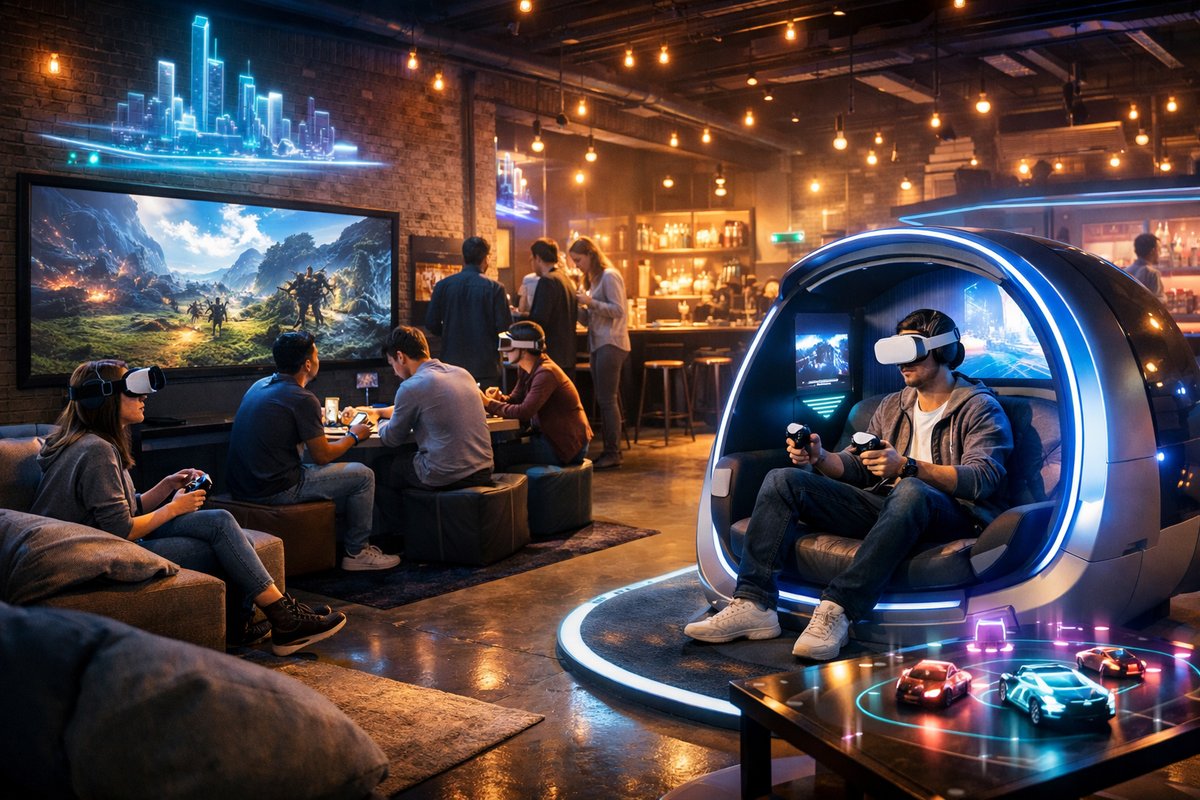

In living rooms around the globe, the familiar hum of consoles and the click of controllers are being joined by an unexpected guest: ambient chatter. No longer confined to solo expeditions or online chat lobbies, today’s players are gravitating toward hybrid meeting grounds where digital realms and real-world camaraderie intersect.
Once the preserve of LAN parties and local arcades, communal gaming has taken on new shapes. It’s not just about rows of PCs or consoles in a basement. Instead, innovators are reimagining underused retail spaces, warehouses and even cafés, transforming them into pop-up social hubs stocked with VR headsets, cloud gaming terminals and modular furniture. Here, strangers bond over cooperative quests, speedrun challenges and streaming watch parties, forging ties that outlast both the event and the final boss fight.
At the heart of this movement lies a technological trifecta: cloud infrastructure that delivers high-fidelity graphics without a bulky rig; affordable wireless headsets that let players roam free; and adaptable furnishings that can be reconfigured in minutes. Together, these elements empower a host of organizers-from grassroots volunteer crews to small-scale event producers-to launch experiences with minimal upfront investment.
Take for example the recent block-party activation in a former bike shop. Organizers installed retractable projection screens, tether-free VR stations, and sound-dampening panels purchased off the shelf. A central “hub table” beckoned groups to settle in for board-game crossovers with augmented reality overlays. Nearby, a bank of cloud gaming pods streamed competitive shooters to participants using lightweight controllers. By evening’s end, more than 250 attendees had cycled through, leaving behind an energized sense of community and a stack of feedback surveys promising even bigger weekends ahead.
While many cite nostalgia for the social arcades of yesteryear, today’s venues differ in two critical ways. First, they share live data dashboards-leaderboards, performance stats and interactive polls bar-fed in real time-so that participants can track progress, cheer on rivals and anticipate upcoming challenges. Second, hybrid spaces often extend online: livestreams amplify local tournaments to remote audiences, while integrated chat channels invite distant friends to drop into matches or spectate with live commentary.
This melding of physical and virtual communities has broader cultural ripples. Local businesses report foot traffic spikes when events coincide with late-night sessions, while creators find a new stage to test unreleased demos and gather instant feedback. Community educators are even experimenting with curriculum-driven sessions: puzzle games become logic lessons for teens, while virtual world-building workshops teach basic scripting and collaborative storytelling.
Yet creating these cross-reality venues is not without logistical hitches. Reliable high-speed internet is essential for low-latency streaming, prompting many hosts to invest in portable mesh-network routers. Acoustic treatment and airflow must be balanced-intense VR sessions can heat up small spaces quickly-so organizers often rely on modular fan units and noise-reducing foam panels. Cable management becomes an art form as power strips and display adapters snake under tables, demanding pre-event checklists and color-coded ties.
Furniture also plays an outsized role. Standard folding chairs and card tables feel out of place when players slip into VR or dive into marathon sessions. Instead, many hosts turn to lightweight, adjustable gaming chairs and collapsible desks with built-in cable channels. LED accent lights not only heighten the futuristic vibe but also serve practical purposes, outlining walkways and delineating zone boundaries without requiring permanent fixtures.
Such setups are increasingly migrating indoors. Enthusiasts are converting basements, garages and spare bedrooms into micro-hubs: a streaming-ready console section, a VR corner with safety mats and motion tracking sensors, and a communal snack zone stocked with themed treats. Some even share open invitations through local social networks, letting curious neighbors drop by during designated “play windows.”
Cloud gaming services have been a major catalyst. With no need for high-end GPUs, hosts can simply rent access to remote servers and stream the games to entry-level hardware. This means attendees can experience the latest AAA titles on compact mini-PCs or purpose-built set-top boxes with little setup time. Game libraries become instantly accessible, avoiding lengthy downloads or compatibility headaches.
Of course, security and privacy considerations follow. When public-facing events handle user accounts, organizers must ensure personal data isn’t exposed. That calls for guest networks, temporary login credentials and device-wiping routines after each session. Gamified sign-in kiosks-complete with QR-code badges-are helping streamline check-in while preserving confidentiality.
Despite these hurdles, the hybrid social gaming sector shows no sign of slowing. Industry analysts point to a compound annual growth rate north of 15 percent in community gaming events, citing both rising consumer interest and the success of legacy LAN festivals pivoting toward portable activations. Emerging markets in cities across Asia, Latin America and Africa are also adopting the model, often pairing it with local cultural events to attract diverse crowds.
For players, the payoff is more than just thrills and bragging rights. These cross-reality spaces spark collaborations between artists, coders, performers and educators, often leading to spin-off projects-from indie game prototypes to interactive theater pieces. Networking is organic: you bump into a budding streamer next to the VR pods, swap headset tips with a hardware enthusiast at a bar-table, or join an impromptu speed-paint session inspired by a live demonstration.
Looking ahead, the next frontier may well be multimodal sensory integration. Some hosts are piloting scent diffusers that release forest or ocean fragrances during specific in-game moments. Others are experimenting with haptic floors that rumble in sync with explosions or environmental changes. And modular sound domes aim to create pocket-sized isolation booths for competitive matches without the cost of dedicated soundproof rooms.
As the line between digital and physical play continues to blur, cross-reality social spaces are poised to become a staple of community life. They offer a potent blend of technology and human connection, proving that even in an age of remote entertainment, nothing quite replaces the electric charge of shared experiences-whether you’re dodging virtual dragons or rallying teammates in a global league.
Whether you’re a seasoned event organizer, an aspiring pop-up host, or simply a player craving a more dynamic game night, these hybrid hubs offer a blueprint for the future: one where the living room expands to the cloud, and every public space holds the promise of an unforgettable adventure.