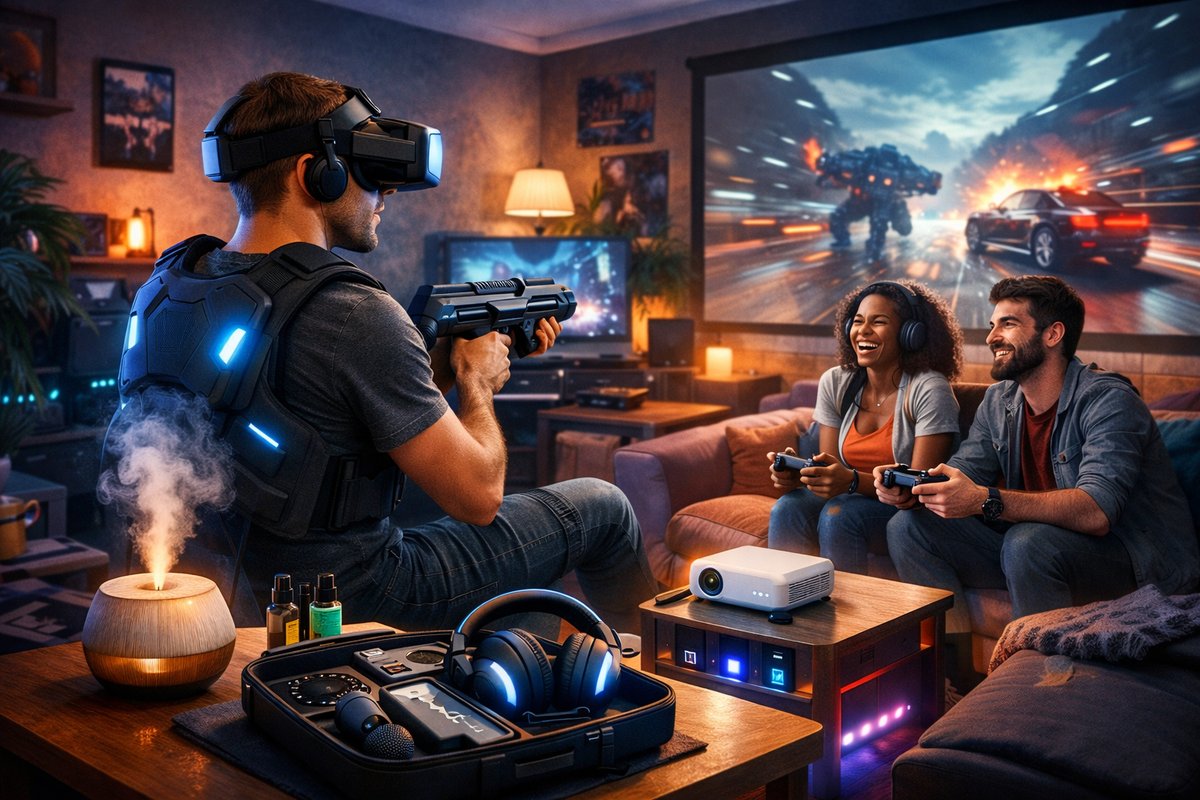

The boundaries of gaming are shifting once again. No longer content with high frame rates and razor-sharp resolutions, a growing wave of players and designers is pushing into uncharted territory: multi-sensory gaming environments that engage all the senses. These next-generation setups combine haptic feedback, dynamic lighting, spatial audio, scent diffusion, and even temperature control to create truly immersive experiences.
Early experiments in sensory play have given way to accessible, modular tools. A recent whitepaper from an industry consortium outlines a framework for “sensory layering,” in which traditional visual and auditory elements are overlaid with targeted tactile and olfactory cues. That approach has already inspired a series of community pop-ups in converted shipping containers, where visitors don vibration vests synced to in-game explosions, step onto pressure-sensitive floor panels that mimic footsteps, and inhale bursts of pine, ozone, or leather depending on the environment. Organizers report a 50 percent jump in dwell time compared to standard arcade cabinets.
Meanwhile, at home, enthusiasts are piecing together custom rigs that rival boutique installations. One DIY collective transformed a corner of a suburban living room into a turnkey sensory booth by mounting addressable LED strips behind acoustic panels, installing a modular scent diffuser near a racing wheel, and rigging a motion-sim seat on a low-profile hydraulic base. Within minutes, a futuristic space opera scene comes alive with pulsating neon, roaring engine vibrations, wind-simulating fans, and the faint aroma of burning rocket fuel.
Manufacturers are taking note. An emerging lineup of haptic vibration vests now starts under $200, supporting dozens of game titles out of the box. Lightweight, rechargeable versions tap into console and PC controllers via USB-C, while higher-end models integrate with motion-capture cameras for full-body feedback. Those systems pair seamlessly with plug-and-play scent modules that release custom essential-oil blends at key moments in a story. In horror titles, for example, a sudden drift of damp forest moss or metallic tang can amplify tension, turning typical jump scares into full-body jolts.
Lighting has also become a storytelling tool. Addressable RGB strips once reserved for case mods have migrated to wall panels, ceiling grids, and floor coves. Advanced setups now sync with game engines to cast reactive glows across a room-casting a warm dusk hue during an open-world sunset or harsh red strobe when alarms blare. Users report that these ambient cues enhance spatial awareness and reduce immersion breaks, especially in titles with sprawling outdoor vistas.
Sound remains the cornerstone of immersion, but spatial audio has leapt ahead. Growling bass floors heads, while intricately placed tweeters simulate insect chitter or distant thunder. New headphone drivers employ micro-balanced armature arrays for pinpoint accuracy, complemented by head-tracking modules that adjust audio panning as you turn. For communal play, compact multi-driver soundbars can be configured into stereo or surround layouts, fitting under monitors or mounting discreetly behind screens.
Behind the scenes, software is catching up. Several open-source projects now let home builders calibrate and sequence hardware triggers alongside gameplay events. A drag-and-drop timeline editor can launch scent bursts, flicker lights, fire off vibration motors, and cue temperature fans in perfect sync with a scripted trailer or live stream. That level of control, once reserved for Hollywood studios, is now available on a mid-range gaming PC.
But it’s not just solo players who benefit. Local gaming houses are converting spare rooms into multi-sensory lounges. One neighborhood cooperative repurposed an old warehouse into an “Immersive Play Lab,” housing clusters of motion rigs, smell pods, and VR treadmills. Members rotate responsibilities: one team handles scent refill schedules, another manages LED pattern libraries, while a third writes custom profiles for new game releases. The result is a dynamic calendar of events that blends cosplay meet-ups, indie developer demos, and late-night multiplayer marathons.
Sustainability is woven into these projects. Many collectives source reclaimed LED strips, salvaged PC fans, and biodegradable diffuser cartridges. Solar-powered battery banks now keep mobile sensory carts running in outdoor festivals, reducing generator noise and fossil-fuel emissions. Workshops on upcycling old peripherals into haptic actuators have sprung up, spreading knowledge on how to breathe new life into forgotten gear.
Perhaps the most intriguing frontier is neuroadaptive gaming. Researchers at a major university have demonstrated a prototype that adjusts difficulty based on real-time biometric feedback-heart rate, skin conductance, and subtle facial muscle movements. When stress spikes, the game can dial down enemy aggression or trigger a soothing scent. If focus wanes, it might introduce a vibration pulse to recapture attention. While commercial versions are still in development, open standards are already circulating in firmware repositories, hinting at a near future where games actively monitor and respond to a player’s emotional state.
Community leaders emphasize that these advances are not about gimmicks, but about emotional connection. “When you feel the reverberation of a spell in your chest or catch a whiff of desert dust as you cross dunes, the world becomes yours,” says one organizer of a touring sensory arcade. “It’s the difference between watching a story and inhabiting it.”
That ethos extends to accessibility. Sensory setups can help neurodivergent players by providing customizable stimuli-ramping up tactile cues for those who process information kinesthetically, or toning down flashing lights for those sensitive to visual overload. Adjustable scent intensities and audio profiles empower users to tailor experiences to personal comfort zones.
Looking ahead, several trends are poised to reshape multi-sensory gaming. Compact 3D printers are already enabling homebrew haptic attachments, from finger-ring actuators to chair-mounted force simulators. Open hardware communities are prototyping temperature-regulated gloves that can simulate the heat of lava or the chill of ice. And AI-driven scent generators could one day formulate custom fragrance profiles on demand, remixing thousands of molecular compounds at the push of a button.
The next few years promise a renaissance in how we play, blurring the lines between the digital and the physical. Whether it’s a pop-up container in an urban plaza, a turn-key home booth, or a community lab in a rural fairground, multi-sensory environments are unlocking a new chapter in interactive entertainment. For players and designers alike, the message is clear: the game has just begun.