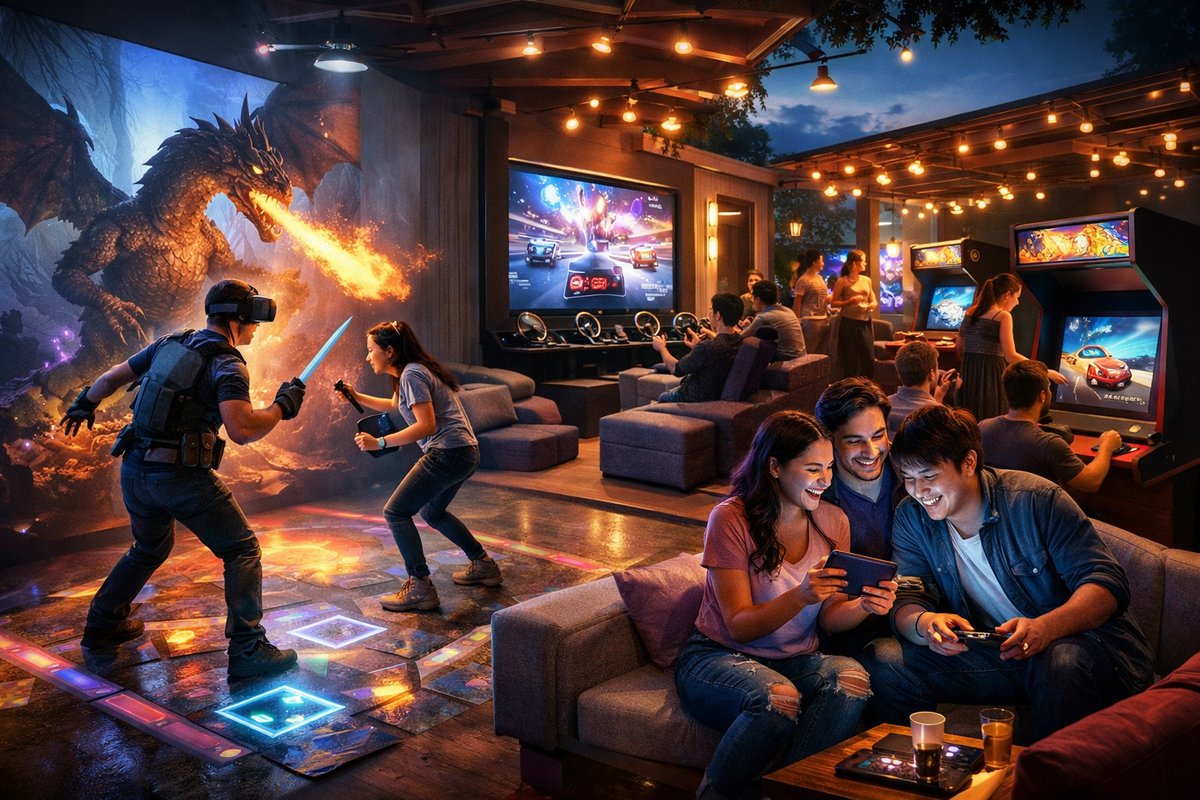

In living rooms and warehouses alike, a quiet revolution is taking place. Gamers are no longer satisfied with a solo quest in front of a monitor or a couch-bound marathon on a console. Instead, they’re building hybrid environments that fuse real-world interaction with digital immersion. Across compact micro-arcades, community-run gaming capsules, and projection-powered tables, the aim is the same: to break down the wall between player and world, and to invite friends-both local and remote-into the adventure.
It all starts with space. In city neighborhoods that once hosted only coffee shops and co-working nooks, pop-up gaming lounges have sprung up as short-term experiments in public play. Organizers bring in modular projection cubes and portable padded seating, then map classic board-game boards or indie side-scrollers onto tabletop surfaces. Passersby can drop in, don a pair of haptic gloves or a lightweight VR headset, and challenge a neighbor to a quick round. By evening, these pop-ups transform into screen-sharing arenas where onlookers cheer every head-shot and magical spell unleashed.
Meanwhile, back at home, enthusiasts are carving out their own hybrid capsules. One enterprising developer converted a garden shed into a multi-sensor gaming den, outfitting the walls with LED ambient strips that react to in-game sounds, and installing a multi-channel projector that can switch between large-format RPG maps and high-frame-rate shooters at a moment’s notice. On weekends, neighbors gather for co-op marathons, bringing their own controllers so that everyone can huddle around the same semaphore of light, sound, and tactile feedback.
Streaming platforms have also embraced the trend, blurring the line between spectator sport and participatory play. Viewers can now vote in real time on in-game challenges or environmental tweaks, while the streamer’s ring light and LED backdrop shift colors to match community choices. A simple chat command can trigger a burst of confetti animations across the backdrop or send haptic pulses to players wearing compatible gloves. This level of integration is driving up engagement metrics, but more importantly, it’s creating a sense of shared ownership over the narrative unfolding on screen.
At its heart, this hybrid wave is powered by evolving tech. Wireless haptic gloves use discreet vibration motors to mimic the feeling of drawing a bowstring or wielding a sword. Compact projection modules can beam 120-inch displays onto blank walls or tabletops without bulky setups. Capture cards now allow dual-PC streaming rigs to offload performance tasks and maintain consistent 60-frame-per-second output, even when running demanding VR titles. Behind the scenes, open-source communities are sharing modular CAD files for 3D-printed controller attachments, enabling gamers to customize feels and weights with sustainable materials.
But it’s not just about hardware. Emotional intelligence and social sustainability are becoming central design pillars. In one community hub, parents and teenagers play side by side, working through team-based puzzle games that emphasize communication over competition. In another, accessible audio cues and tactile signals ensure that players with visual impairments can track on-screen action as effectively as sighted friends. These inclusive practices demonstrate that hybrid gaming isn’t just a flashy trend-it can reshape how we connect, empathize, and collaborate.
Looking ahead, the next frontier may lie in ambient gaming. Imagine a shared workspace where conference tables double as AR surfaces, giving colleagues a break-time escape into turn-based strategy or cooperative dungeon crawls. Or picture public parks outfitted with solar-powered projection towers that host weekend demo events for sustainable indie titles. As cities and homes evolve, gaming will no longer be confined to dedicated rigs or bulky consoles. Instead, it will weave itself seamlessly into our daily routines, turning sidewalks, desks, and living rooms into portals for collective play.
Whether you’re plotting a micro-arcade pop-up in your neighborhood café or creating a projection-powered retreat in your backyard, the tools for hybrid play are more accessible than ever. All it takes is a dash of creativity, an eye for ergonomic design, and a willingness to invite others into the fun. After all, when we break free from the single-screen paradigm, we unlock a new era of communal discovery-one where every corner of our physical world can become the next great gaming arena.