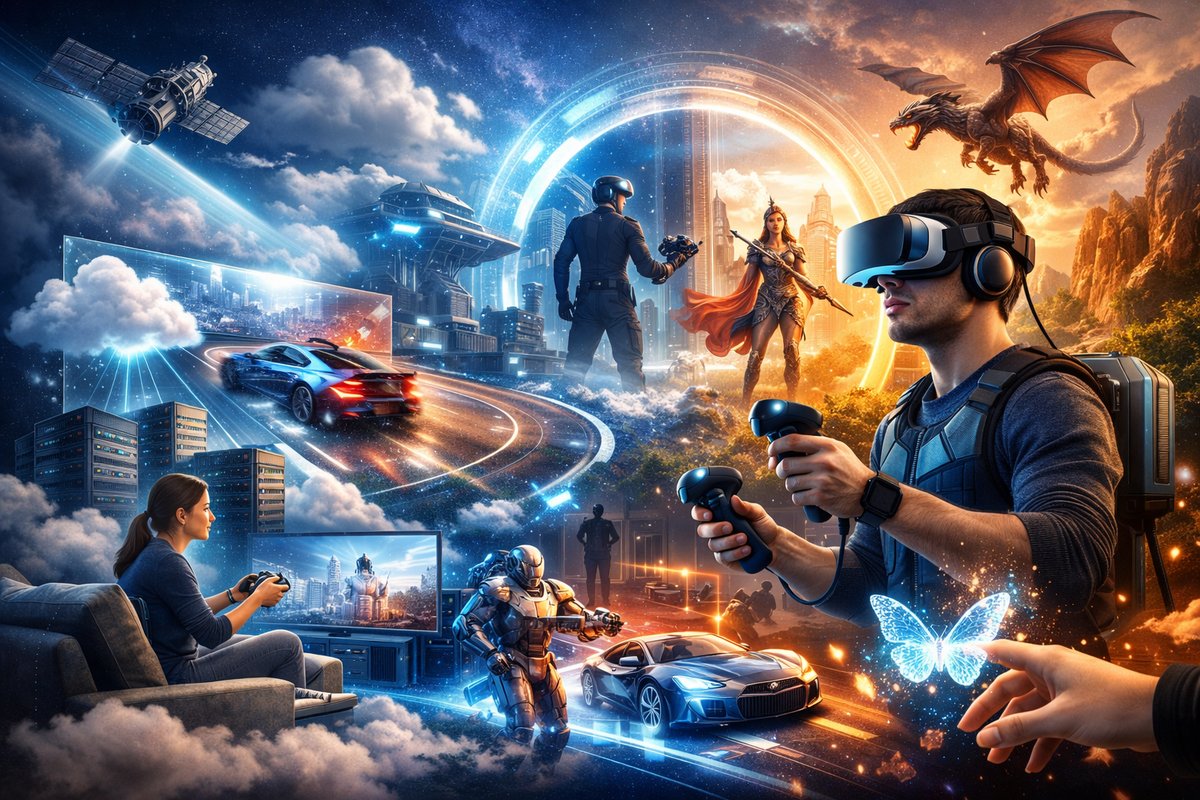

In a time when entertainment is no longer confined to a television screen or a controller in hand, today’s gaming landscape has become a frontier of limitless possibilities. Recent industry figures point to a surge in global engagement: analysts estimate that cloud-based gaming reached over 100 million active users in the last quarter, while virtual reality adoption climbed by nearly 30 percent compared with the previous year. What was once niche hardware and experimental indie projects has morphed into mainstream phenomena, with immersive storytelling, live events, and adaptive tech anchoring an ecosystem that prizes creativity and connection.
Cloud streaming services have emerged as one of the most transformative forces in modern play. By decoupling performance from local hardware, players can harness high-fidelity graphics and low-latency experiences on devices ranging from ultrathin laptops to mobile phones. Leading platforms rolled out support for ray-traced visuals and 120-frame-per-second gameplay, enabling blockbuster titles to run seamlessly on hardware that would have been unthinkable only a few years ago. This shift has not only broadened access for casual gamers but also propelled competitive scenes, where esports teams practice across continents without being tethered to high-end PCs.
Virtual reality headsets have stepped out of prototype labs and into living rooms, airports, even classrooms. According to a recent market analysis, shipments of next-generation VR devices rose by 28 percent during the last product cycle, driven by a wave of compelling exclusives and ease-of-setup improvements. Developers are layering haptic feedback vests, hand-tracking cameras, and adaptive controllers into their design process, crafting experiences that appeal equally to seasoned players and first-time explorers. Whether piloting starships in zero gravity or collaboratively solving escape-room puzzles with remote friends, VR now offers a level of presence that touches on science fiction.
Interactive storytelling has become another vital strand of today’s entertainment tapestry. Early experiments in branching narratives have given way to hybrid cinematic games that respond to player choices in real time. Streaming platforms have broadcast community-driven events where thousands of viewers vote live on plot twists or character fates, transforming passive consumption into collective creation. Meanwhile, traditional studios are investing in titles that marry film-grade visuals with dynamic gameplay, creating an entertainment model that rewards repeated exploration and unfurls new secrets with each playthrough.
Cross-platform play and social integration have erased old boundaries between consoles, PCs, and mobile devices. Friends can leap into matches together regardless of their hardware, using shared voice channels, cross-chat features, and unified progression systems. Community hubs within games now host mini-concerts, virtual art galleries, and even educational seminars-often in partnership with cultural institutions. In many live titles, players earn cosmetic rewards by attending real-world events, forging a synergy between in-person gatherings and digital communities that keeps audiences engaged beyond the core gameplay loops.
At the hardware level, innovation continues unabated. Haptic controllers deliver nuanced feedback for everything from a bow’s tension to the rumble of a distant thunderstorm. Ultra-wide monitors curve around a player’s field of vision, while modular accessories let them swap out thumbsticks, D-pads, and touchpads on the fly. Portable displays and foldable gaming devices promise to carry flagship titles down to a commute or coffee break. Each new component reflects a desire to deepen immersion-and to meet diverse player needs, from competitive accuracy to casual comfort.
Meanwhile, augmented reality is staging its own renaissance. App makers have refined world-scanning technologies that anchor digital creatures, puzzles, and art installations in physical spaces. From large-scale treasure hunts that span city blocks to educational overlays that animate museum exhibits, AR titles are inventive bridges between digital content and real environments. Brands and developers alike are collaborating on location-based games that reward exploration, turning parks, public squares, and even retail shops into gameboards alive with possibilities.
Competitive gaming and live events continue to draw record crowds. Packed arenas host tournaments where professional teams compete for multi-million dollar prize pools, broadcast globally to millions of fans. But the grassroots scene is no less vibrant: local LAN parties and grassroots leagues flourish, fueled by accessible software tools for tournament management and community streaming. As big-budget franchises invest in franchised leagues, smaller developers are experimenting with unconventional formats-battle royale chess, rhythm-based combat arenas, and reality-show-style competitions that air episodically online.
The indie development community remains a fertile ground for experimentation. Crowdfunding platforms and digital marketplaces allow small teams to prototype radical ideas-everything from narrative experiences driven by artificial intelligence narrators to physics-based sandbox worlds where players design ecosystems. Open-source tools and collaborative asset libraries have lowered technical barriers, while mentorship initiatives connect emerging talents with veteran designers. The result is a rich mosaic of titles that offer fresh mechanics, surreal art styles, and emotionally resonant stories that big studios might never greenlight.
Sound design and spatial audio have become critical differentiators. Immersive audio engines now track headphone movements in real time, wrapping environmental cues around the player’s head. Games leverage dynamic music scores that shift mood based on narrative stakes or on-screen action, creating adaptive soundscapes that respond to every footstep and decision. Developers are treating audio not as background filler but as a storytelling tool that guides players’ emotions, heightens suspense, and fosters deep connections to in-game worlds.
Sustainability and ethical considerations are also rising to the forefront. Manufacturers are reducing packaging waste, adopting fair-trade materials for peripherals, and designing energy-efficient hardware that conserves power when idle. On the software side, initiatives promote accessibility features-color-blind modes, text-to-speech narrators, and customizable difficulty curves-making games welcoming to players of all abilities. A new generation of designers is prioritizing diverse representation and inclusive narratives, ensuring that play remains a universal language.
Looking ahead, artificial intelligence promises to reshape entertainment once more. Procedurally generated worlds with AI-driven inhabitants may offer truly open-ended exploration, while machine-learning assistants could help creators iterate faster, localize games seamlessly, and personalize challenges for each player. Metaverse concepts hint at persistent, interconnected virtual spaces where work, play, and creativity flow in an unbroken continuum. Though obstacles remain-interoperability standards, data privacy concerns, and digital ownership frameworks-the trajectory points to increasingly seamless fusion between reality and digital realms.
As gaming and entertainment continue their rapid evolution, one constant remains: the drive to connect. Whether tuning into a global tournament, teaming up in a VR adventure, or sharing a community-driven narrative, players across the world are forging relationships and discovering new forms of expression. The devices, platforms, and stories may shift, but the core impulse-to play, to imagine, to belong-endures. In this ever-expanding landscape, every console, every screen, and every headset becomes a portal to deeper engagement, reminding us that play, indeed, is serious business.