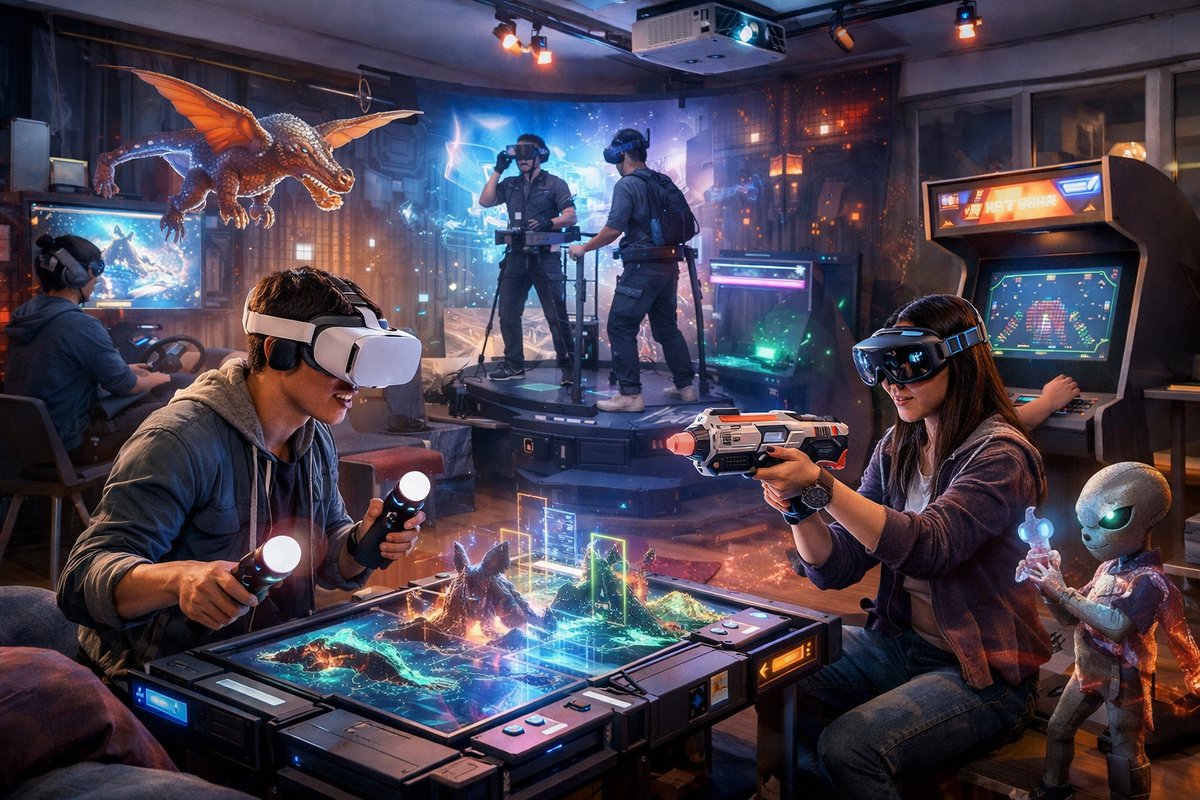

Imagine stepping into a living room where the walls pulse with ambient lighting in sync with your in-game heartbeat, where tactile surfaces respond under your fingertips and every movement translates seamlessly into the virtual battlefield. Across cities, gamers are fueled by curiosity and community spirit to assemble hybrid reality playgrounds-spaces that blur the once rigid border between screen and surroundings. From shipping-container arcades tucked behind coffee shops to garage lofts fitted with projection walls, these DIY setups champion imagination, sustainability, and social connection.
At the core of this movement is modularity. Players have begun repurposing affordable materials-acoustic panels foam-cut into geometric patterns, industrial shelving units doubling as display racks, and portable blackout curtains forming pop-up micro-arenas. Crowdsourced online blueprints guide newcomers on everything from constructing ceiling-mounted VR cable retractors to rigging motion-sensing light fixtures. Instead of relegating gaming to a desk corner, designers treat the entire room as an interactive canvas. Motion tracking cameras perch on tripods, floor-embedded pressure sensors measure stomps and shifts, and projectors spill landscapes across every surface. The result is an environment that reacts dynamically to in-game events: footsteps echo around the room, walls flash warnings when health is low, and virtual glass shatters in dazzling bursts on the real-world floor.
Communities are hosting weekend showcases in parks and vacant lots. Portable gaming pods-cube-shaped frames draped in custom fabric skins-roll on trailer wheels, offering AR scavenger hunts that merge city streets with layered digital clues. These rolling arcades employ solar-powered battery banks and off-the-shelf network routers to stay online, minimizing environmental impact while maximizing novelty. Shaded seating areas double as brainstorming hubs, where players swap tips on haptic sensor calibration or debate which open-source motion-capture software offers the most accuracy. Sustainability is front and center: many groups upcycle second-hand controllers, harvest scrap LED strips from decommissioned billboards, and barter unused PC parts to keep budgets low and waste out of landfills.
Home setups are evolving in parallel. Rather than investing in a single flagship console, aficionados mix and match hardware. A standalone VR headset pairs with a retro console emulator station, while a mini projector beams cooperative puzzle games onto a whiteboard propped against a bookcase. Multi-zone audio systems let friends gather around a couch and still hear directional gunshots from a shooter game as if they were inside a virtual arena. Some enthusiasts are integrating scent diffusers calibrated to release pine aromas during forest levels or ozone hints when riding futuristic hovercars. The goal is total immersion: every sense occupied, every boundary dissolved.
But the real magic happens when strangers become teammates. Online forums now host meet-and-build events, where participants stream their DIY progress on social platforms and invite others to overlay digital blueprints via AR viewer apps. A designer in Berlin might share a step-by-step guide for a collapsible VR gateway, while a maker in São Paulo records timed laps around a treadmill platform designed for room-scale movement. Cross-continental collaboration accelerates innovation and encourages cultural exchange-players import local design motifs into global templates, resulting in game rooms that feel both universal and deeply personal.
This ethos of openness extends to software too. Indie developers release plug-and-play modules that integrate with common game engines, enabling custom haptic feedback patterns, dynamic lighting control, and spatial audio triggers. Gamers experiment with bespoke modes: in stealth missions, under-floor tiles light up if an opponent crosses your path; in rhythm challenges, wall panels pulse in sync with beats, creating a dance floor fused with your favorite tracks. The open-source spirit means tweaks and refinements arrive weekly, shared across Git repositories and livestreamed build sessions.
Amid the buzz, designers are confronting real hurdles. Space constraints in urban apartments force inventive folding furniture and retractable sensor rigs. Power demands of high-end gear push many to install dedicated circuits and invest in portable UPS systems as blackout protection. And beginners sometimes feel overwhelmed by the technical barrier-calibrating motion-capture cameras or troubleshooting networked lighting protocols can be daunting without basic electronics know-how.
Fortunately, a new crop of tutorials and starter kits is lowering the bar. Entry-level packages bundle preconfigured motion sensors, cable-management clips, and quick-start guides for popular game engines. Local makerspaces host drop-in workshops on soldering LED strips or designing padded floor mats for VR room-scale tracking. Community volunteers document each step, from measuring room corners for optimal sensor placement to programming interactive light patterns with simple block-based software.
Experts say this hybrid approach is reshaping how we play and socialize. Instead of passive viewers of polished AAA experiences, gamers become co-designers of their playgrounds. They learn wiring principles, explore spatial design, and develop skills in 3D modeling and circuitry. This hands-on involvement strengthens emotional bonds-friends who built a room-scale shooter coop arena report stronger camaraderie and more meaningful experiences than those playing the same title on disjointed screens.
Vendors are taking notice. Retailers now stock modular sensor kits alongside gaming chairs and monitors, and software providers offer official plug-ins for dynamic environmental controls. Technology conventions host “configurator labs” where attendees test light-reactive gloves and wall-haptic panels. While mass-market solutions will streamline adoption, the DIY heart remains vital-players cherish the fact that every prototype is rooted in community collaboration and personal creativity.
Looking ahead, 5G rollouts promise even tighter integration of cloud-driven interactive elements. Imagine real-time audience participation in home-hosted game nights, where remote spectators trigger environmental effects-rains of confetti projected across the room or blasts of air timed to on-screen explosions. Mixed-reality theater performances could invite viewers into narrative arcs, guiding actors whose costumes transmit motions back into a shared digital world. The line between player and creator will continue to blur.
For now, the revolution is powered by curiosity, resourcefulness, and a commitment to sustainable play. Whether you’re sketching your first motion-tracking mat or building a solar-charged rolling arcade, the adventure lies in the process as much as the pixels. As these hybrid reality playgrounds expand, they’ll redefine what it means to be ‘in the game’-grounded in your own space yet connected to a global network of makers, dreamers, and fellow players. Lace up your haptic boots, wire up those LED strips, and prepare to explore a new dimension where every surface is a joystick and every corner hides a surprise.