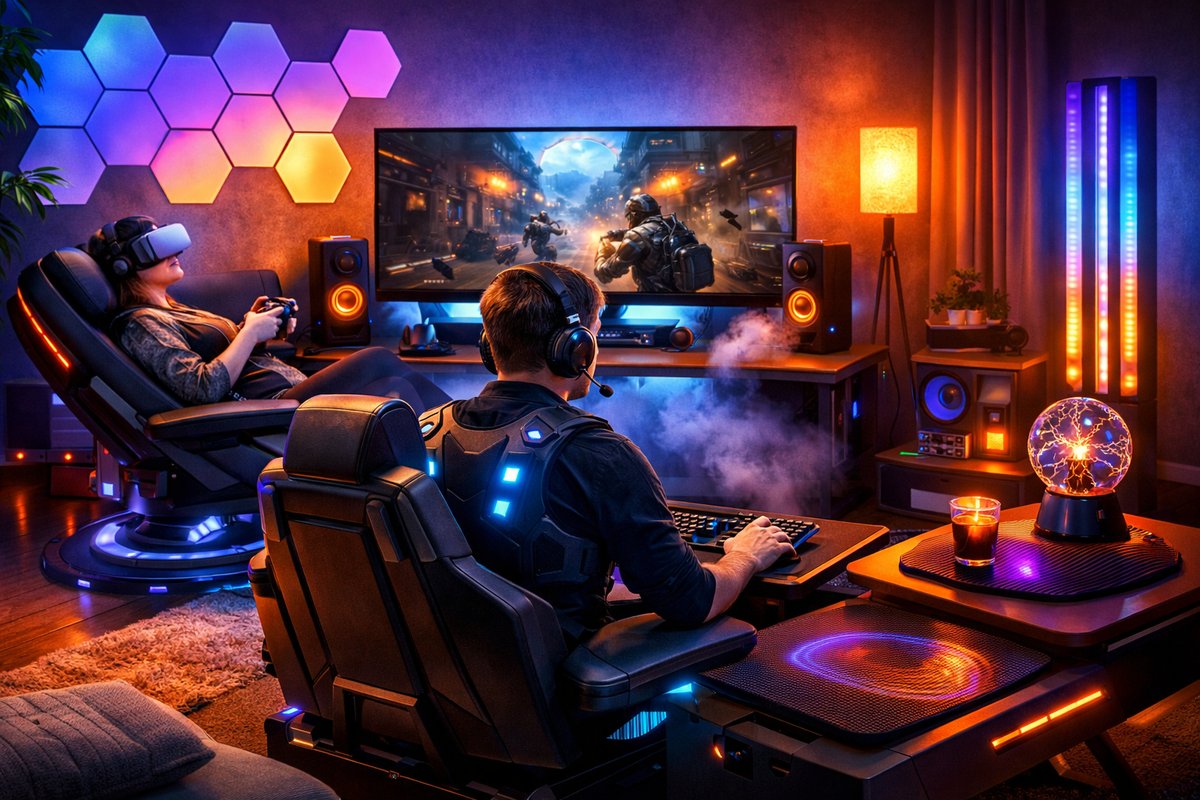

In living rooms and dedicated gaming studios around the world, play is transcending the boundaries of a simple screen-and-controller setup. Today’s gaming enthusiasts are demanding more than crisp visuals or faster frame rates. They crave experiences that engage touch, sound, and even smell to transport them fully into virtual worlds. This shift toward multi-sensory environments reflects a broader cultural trend: play is serious business, and the right gear can fuel both fun and focused gameplay.
At the heart of this revolution are haptic feedback vests and gloves, which deliver tactile sensations that sync with in-game events. Imagine feeling the rumble of a passing truck, the recoil of a virtual blast, or the flutter of a dragon’s wing on your skin. Early adopters say these peripherals dramatically heighten immersion, blurring the line between digital fiction and physical experience. Beyond thrill‐rides, tactile elements can reinforce emotional storytelling-soft pulses during quiet narrative moments, for instance, deepen a player’s emotional connection to characters and plot twists.
Yet haptics represent just one piece of the puzzle. Spatial audio solutions-delivered through specialized headsets or room-filling speaker arrays-place sounds precisely in three-dimensional space. Enemies sneaking up behind you or distant footsteps echoing in a cavern become visceral cues rather than virtual artifacts. For players with hearing sensitivities, customizable equalization and selective sound isolation enhance both comfort and competitive edge. High-fidelity audio combined with haptics creates a layered sensory tapestry that keeps players engaged for hours without fatigue.
Ambient lighting systems are another cornerstone of contemporary gaming sanctuaries. These dynamic LED arrays sync with on-screen action or audio cues, bathing the environment in real-time color shifts. A descent into an underwater kingdom might emit soft blues and greens, while an intense firefight ignites blazing reds and oranges. Beyond mood setting, adaptive light can reduce eye strain by balancing the contrast between a bright screen and a dark room. Some setups even adjust color temperature throughout the day to encourage healthy circadian rhythms-demonstrating how play spaces can promote wellness alongside entertainment.
Furniture and desk design have also evolved in response to multi-sensory demands. Height-adjustable desks with curved surfaces allow seamless switching between sitting and standing, reducing physical fatigue during marathon sessions. Modular shelving and cable-management trays keep power bricks, external drives, and VR hubs organized and out of sight-preserving the illusion of entering an alternate realm. Some designers incorporate sound-absorbing panels or sustainable materials like recycled wood and plant-based fabrics, marrying environmental consciousness with high-performance function.
The integration of scent diffusers is one of the more experimental trends gaining traction. By releasing synchronized fragrances-pine needles in a forest level, salty mist by a virtual ocean-these devices add an olfactory dimension to gameplay. While still niche, early testers report a heightened sense of presence and a deeper emotional response. Developers are exploring narrative possibilities tied to scent, such as unlocking hidden story elements through specific aroma combinations.
On the software side, cross-platform play and cloud streaming services are dismantling hardware barriers. Players can hop from console to PC to handheld without losing progress or compromising performance. Cloud-rendered visuals feed into local haptic and lighting systems, ensuring the multi-sensory environment remains coherent regardless of device. This software harmonization fosters inclusivity-friends with different systems can compete or collaborate in the same richly textured worlds.
Privacy and data security underpin every layer of today’s sophisticated setups. As peripherals capture biometric data-heart rate, hand movement, even skin conductivity-responsible manufacturers encrypt sensitive information and allow users granular control over what is stored or shared. Some systems process haptic feedback and audio cues locally, minimizing the need to transmit raw data to external servers. Players gain peace of mind knowing that their physiological responses enhance immersion without compromising personal privacy.
Beyond individual focus, these multi-sensory arrangements foster social connection. Streamers leverage ambient lighting and haptic reactions to create dynamic viewer experiences. Chat-controlled lighting triggers or tactile alerts when followers subscribe transform solitary shows into interactive performances. Local co-op arenas now feature communal furniture pods that share audio, haptics, and scent, edging social play toward full environmental collaboration.
Still, the journey toward perfect immersion raises questions about accessibility. Not every player has the budget for high-end vests or adaptive furniture. Open-source communities are stepping in with DIY plans for 3D-printed mounts, repurposed sensors, and budget-friendly ambient lights. Workshops and online tutorials teach novices how to retrofit standard chairs with low-cost vibration motors or build custom LED panels from recycled electronics. This spirit of creativity ensures that the benefits of multi-sensory design can reach beyond affluent early adopters.
Educational applications also stand to benefit. Institutions exploring virtual labs or historical re-enactments can equip students with multi-sensory kits to deepen engagement. Imagine a history class where learners feel the jolt of cannon fire in a simulated battlefield or sense the heat of a digital forge during a metallurgy lesson. By scaffolding sensory elements around curriculum goals, educators can ignite curiosity and emotional intelligence in learners of all ages.
What’s next on the horizon? Companies are experimenting with neural feedback headsets that monitor brainwave activity to adapt game difficulty or trigger environmental effects. Biofeedback could calm ambient lighting during tense plot moments or ramp up haptic intensity as focus wanes. While research is still emerging, the potential to create truly responsive, emotionally intelligent play environments is tantalizing.
Meanwhile, sustainable design remains a core value. Innovators are exploring biodegradable haptic modules and energy-harvesting desks that convert kinetic movement into power for peripheral devices. Solar-charged LED panels and low-power audio processing chips reduce the ecological footprint of a typical gaming rig. As consumer awareness grows, eco-friendly certifications for gaming gear may become as influential as performance benchmarks.
For any player-from novice to lifelong enthusiast-the key takeaway is that the future of fun depends on holistic design. Immersion is no longer a buzzword limited to graphics engines; it’s about engaging the whole body, respecting personal privacy, and fostering sustainable practices. With modular furniture, multi-sensory peripherals, and software that bridges platforms, play spaces can evolve into adaptive ecosystems. These environments respond to our emotions, support our health, and fuel our curiosity, transforming gaming rooms into arenas where serious focus meets boundless imagination.
In the span of a single session, a player might sprint through neon-lit cityscapes, brace for impact in a space battle, and then unwind with a narrative-driven exploration-all within a single integrated setup. As technology and design continue to co-evolve, tomorrow’s play spaces will be more than places to press buttons. They’ll be immersive habitats where every sense plays a part in crafting unforgettable experiences.
Whether you’re outfitting a dorm nook or designing a dedicated studio, the multi-sensory trend offers a roadmap for leveling up your setup. By prioritizing tactile feedback, spatial audio, adaptive lighting, and sustainable materials, you can create a personalized playground that fuels both fun and focus. After all, when play becomes an all-encompassing journey through sound, light, touch, and scent, the boundaries between reality and imagination begin to fade-and that’s where the real magic happens.