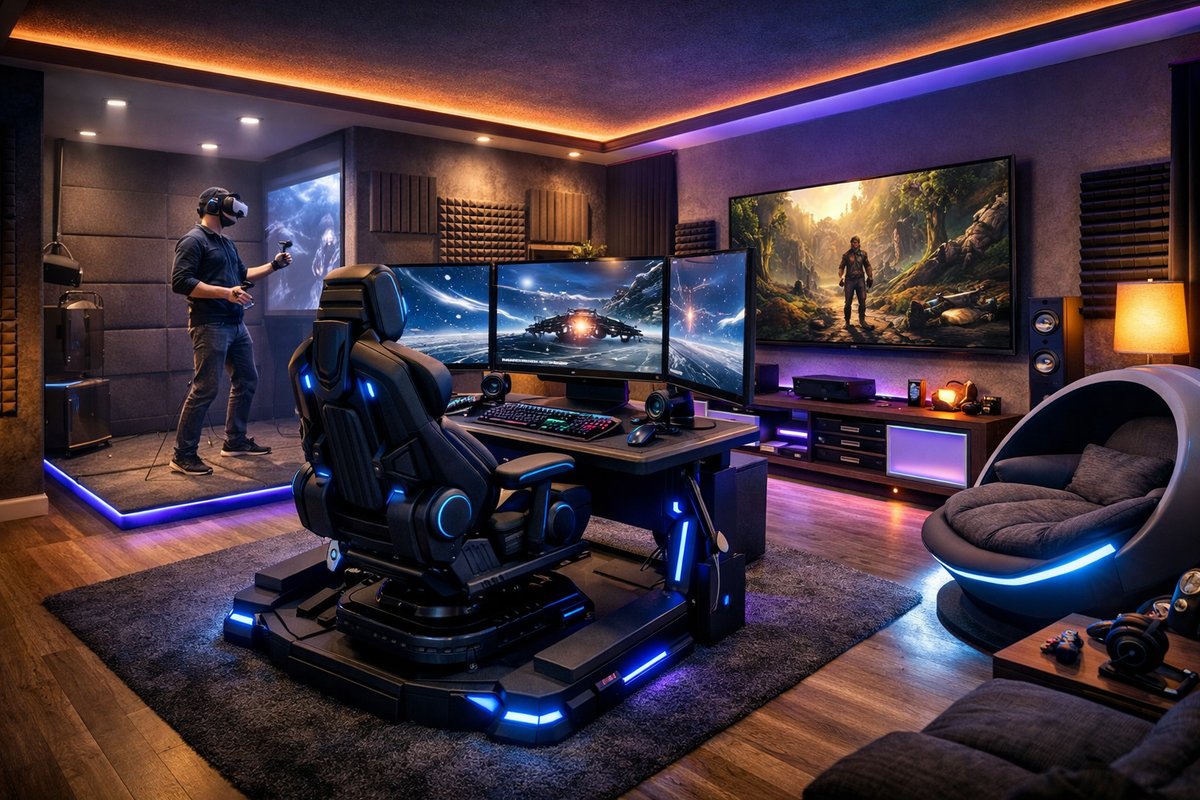

In living rooms, spare bedrooms, and even attic nooks around the world, a quiet revolution is underway. Gamers tired of one-size-fits-all setups are building bespoke environments where every element-from the hum of the graphics card to the color of the wall-aligns with their play style. No longer content with a simple monitor perched on a desk, they’ve embraced modular design panels, floating shelving systems, and adjustable desk heights to craft dynamic scenes that shift with game genres and mood. What began as a handful of upscale builds shared on streaming platforms has now rippled across communities, fueling a wave of DIY renovation projects and budget-friendly hacks.
At the heart of these sanctuaries lies a deep dive into sound. Audiophiles and casual players alike have discovered that off-the-shelf speakers often fall short when it comes to situational awareness in competitive shooters or the subtle environmental cues in open-world adventures. Enter acoustic foam panels and sound-absorbing curtains, strategically mounted to tame echo and refine bass response. Some enthusiasts supplement these with modular wall diffusers-3D-printed geometries that scatter mid-range frequencies-turning any room into a personalized studio. The result is not just clearer dialogue or thunderous explosions, but an elevated sense of presence that keeps players locked into the action.
Light has become equally central to the narrative. Beyond static backlighting, gamers are now integrating full-room LED strips with color-matching software that syncs with on-screen elements in real time. Whether chasing the red glow of a sci-fi interface or bathing the space in moody purples during a stealth mission, these ambient systems extend the game world into the very walls. Some hobbyists combine LED panels with projection mapping, overlaying dynamic textures-rusted metal, digital rain, or shifting clouds-across surfaces to blur the line between virtual and physical. In daylight hours, smart blackout curtains ensure that no glare mars the illusion, while soft task lamps provide enough illumination for strategy guides and collectible displays.
As ergonomic science meets gaming passion, seating solutions have also evolved far beyond the typical racing-style chair. Haptic gaming chairs now deliver synchronized vibrations for every footstep and explosion, creating an unbroken chain of sensory feedback. Seats with adjustable lumbar supports, memory foam cushions, and modular armrests cater not just to comfort but to posture over extended sessions. Alternative setups include low-profile bean bag loungers paired with large floor mouse pads, allowing sprawling gestures in fighting games or flight simulators. For those who juggle work and play in the same space, height-adjustable desks with memory presets let users switch from office mode to hardcore raid stance in seconds.
In parallel with hardware upgrades, community events are migrating into these curated environments. Hybrid game nights-where local friends gather around a board-game table while remote teammates appear via wall-mounted screens-are flourishing. Hosts outfit tables with interactive underlays that light up based on in-game states, and side zones for quick-swap consoles ensure seamless transitions between virtual and analog play. Catering to diverse tastes, setups often include a dedicated console bar, a shelf organized by cherished retro cartridges, and even a small library of rulebooks for tabletop role-playing sessions.
Mindful design is also reshaping the very atmosphere of play. Gamers increasingly view these spaces as extensions of their wellbeing routines. Essential oil diffusers disperse citrus or pine scents tied to alertness, while potted plants and living moss walls improve air quality and inject organic texture into otherwise tech-heavy rooms. Soft rugs and upholstered panels create acoustic warmth underfoot, reducing the clinical feel that can accompany high-performance gear. Some setups incorporate soundscapes-rainforest ambience or crackling fireplace tracks-into pre-game rituals, helping players decompress before tackling competitive modes.
Virtual reality continues to push boundaries, too. Dedicated VR zones often include ceiling-mounted cable management arms and floor markers to prevent accidental collisions. Larger installations feature omnidirectional treadmills that translate user movement into in-game locomotion, while expandable mat surfaces provide safety buffers. To ensure longevity, builders line flooring with interlocking foam tiles that protect both the floor and the player’s knees during extended sessions. Nearby shelves hold spare face cushions, lens cleaning kits, and haptic gloves, ready to support both hardcore explorers and casual tourists venturing into virtual realms.
For those who prize seamless streaming and content creation, networking and displays represent a key battleground. Many are investing in high-refresh-rate monitors with adaptive sync technology, pairing them with external capture cards for integrated live-broadcast setups. Handheld wireless microphones and omnidirectional USB capsules capture crisp commentary, while dual-camera rigs switch between first-person gameplay and face-cam angles. Behind the scenes, custom PC cases with tempered glass panels and liquid-cooling loops become showcases in their own right-tucked under tempered glass desks for a museum-like effect.
The rise of augmented reality tabletop experiences has sparked another wave of innovation. Makers 3D-print custom dice towers embedded with NFC chips to track rolls, while smartphone mounts project digital overlays onto game boards. Miniature terrain sets incorporate LED bases that glow when characters enter highlighted zones, automatically updating via companion apps. This fusion of physical and digital play fosters an ever-expanding ecosystem of cross-platform gamemaster tools, breathing fresh life into classic tabletop franchises.
As AI and machine learning filter into setup design, we’re seeing early prototypes of environments that adapt on the fly. Smart lighting rigs can adjust color and brightness based not only on in-game triggers but on biometric feedback from wearable sensors. Rooms equipped with small cameras and microphones analyze player stress levels and ambient noise, fine-tuning fan speeds, music playlists, or room temperature to optimize focus. While still experimental, these AI-driven sanctuaries hint at a future where the environment is as responsive as the controller in your hands.
What all these trends share is a desire to elevate play beyond mere button-pressing. Gamers now consider factors from acoustics and ergonomics to scent and greenery as essential ingredients in their personal universes. Whether battling foes in VR, strategizing in a hybrid game night, or simply streaming a digital marathon with friends, the modern setup strives to be more than functional-it aims to be an inspiring backdrop, a source of calm, and a stage for collective stories.
Ultimately, the home gaming sanctuary has become a canvas for creativity, a laboratory for innovation, and a haven for social connection. The evolving toolkit of haptic chairs, acoustic treatments, adaptive lighting, and spatial design empowers players to craft experiences that resonate far beyond pixels on a screen. As these spaces continue to mature, one thing is clear: play is serious business, and the next level isn’t just digital-it’s the world we build around ourselves.
-
MageGee Typewriter Mechanical Gaming Keyboard, Retro Punk ...
【104-Key Anti-ghosting Keyboards】This is a Full-Size keyboard, featuring standard keyboard layout with F1-F12 function keys and number pad, provides high ... -
Logitech MX Mechanical Wireless Illuminated Keyboard ... - Walmart
Explore Logitech MX Mechanical Wireless Keyboard in Graphite with Clicky Switches & Backlit Keys. Compatible with all OS! -
NUBWO Wireless Gaming Headset with Mic for Ps5 Ps4 PC, Zero ...
NUBWO Wireless Gaming Headset with Mic for Ps5 Ps4 PC, Zero Interference, 100-Hour Battery All-Day Play, 23ms Sync for Fortnite & Call of Duty/FPS Gamers, ...