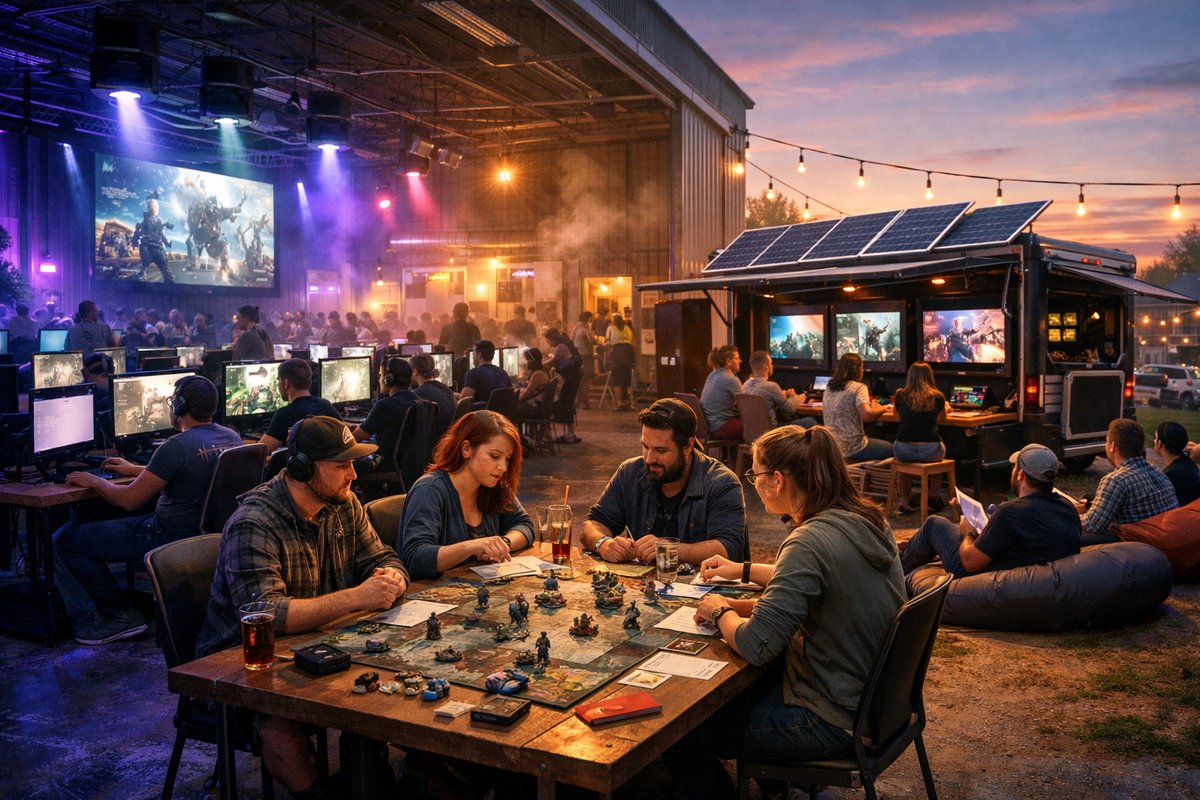

In cities and towns around the globe, play is escaping the confines of living rooms and server farms. A new generation of hybrid gaming events is emerging, where mobile consoles meet board games, live actors share the stage with virtual avatars, and local creatives reimagine public spaces as playgrounds for all ages. From neon-lit warehouse lan parties to rooftop role‐playing nights under the stars, these gatherings blend technology, design, and community energy into refreshingly unexpected experiences.
One recent pop-up in a converted industrial loft showcased this shift in dramatic fashion. A trailer hauling cloud-streamed consoles parked outside, while inside, long tables held analog favorites like cooperative card games and strategy board titles. Attendees could switch from a high-stakes online racing session to a tactical tabletop skirmish in seconds. Surround-sound speakers pulsed with crowd cheers, and color-changing LED strips traced the edges of draped fabric partitions, enveloping participants in a cohesive aesthetic. Organizers described it less as a tournament and more as a festival of play, with participants free to drift between digital and physical realms.
This cross-pollination of formats isn’t just a novelty-it answers an evolving desire for more social, flexible gaming. Stagnant rented arcades and static home setups struggle to compete with experiences that combine the best of both worlds. At a recent urban gaming carnival, visitors queued for motion-capture area challenges, sampled location-based augmented reality hunts spread across city blocks, and joined karaoke style rhythm battles projected on building facades. When the sun set, projectors turned blank walls into sprawling tiled playfields for retro arcade cabinets, letting gamers relive classics with a modern audiovisual injection.
Transportable gaming hubs are also redefining access. Solar-powered game trucks have begun threading through suburban streets and festival grounds, fueled by rooftop panels and silent electric generators. These mobile units offer climate-controlled interiors decked with comfortable seating, adaptive lighting, and racks of multiplayer hardware. Some operators even include on-demand snack stations stocked with locally sourced treats, blurring the lines between pop-up cafés and interactive media lounges. In communities underserved by traditional entertainment venues, these trucks have become pop culture lifelines, fostering meetups for casual gamers, after-school clubs, and charity drive-through events.
Behind the scenes, emphasis on sustainable materials and inclusive design is growing. Local makers and upcycling artists have begun repurposing old gaming cabinets as modular furniture-benches that double as illuminated shelving or coffee tables that conceal hidden controllers and charging points. DIY builders 3D-print custom mounts for virtual reality headsets, use reclaimed wood slabs for tabletop surfaces, and incorporate recycled fabrics into seating cushions. The ecological impact of these community-driven innovations appeals to environmentally conscious players who want entertainment that aligns with their values.
Audio installations play an equally vital role in these hybrid events. Surround systems are tailored to indoor-outdoor transitions, with weather-proof speakers on patios feeding into acoustic treatments inside. Wireless audio beacons allow small groups to tune into optional commentary tracks-insider tip-streams on competitive matches, guided ambient soundscapes for role-playing sessions, or curated playlists synced with real-time gameplay. By letting attendees personalize their auditory experience, organizers create layered environments that feel simultaneously communal and private.
Lighting design elevates mood and guides flow. Programmable LED strips mark different play zones, while overhead projections and handheld lanterns direct players along scavenger hunts. At dusk, artists deploy laser-etched fog curtains to transform parking lots into illusionary arenas, complete with holographic fountain effects and color-chasing beams. The visual choreography of these events becomes part of the game itself, using space as a dynamic canvas.
Perhaps most surprisingly, analog games have blossomed alongside high-tech attractions. Indie tabletop designers preview prototype titles on communal demo tables, drawing parallels between narrative game nights and interactive theater. Game masters in period costumes guide small parties through scripted escape-room style quests that integrate smartphone apps, motion-sensing puzzles, and RFID-tagged props. The blend of tactile puzzling and digital feedback loops makes each scenario feel alive and responsive.
Economic models underpinning these experiences are also evolving. Pay-what-you-can entries, community funding pools, and sliding-scale membership passes expand access beyond traditional ticket tiers. Some hybrid hubs partner with local libraries and arts councils to offer free weekly drop-in sessions where families can explore coding workshops, tabletop prototyping, or collaborative map design for location-based adventures. These partnerships emphasize play as a catalyst for lifelong learning and civic engagement.
Looking ahead, organizers are experimenting with cross-platform seasonal leagues-imagine a city-wide tournament where points earned in VR skating duels feed into analog board game tournaments the next day, with leaderboards tracked on community billboards in local cafés. Mobile notifications guide participants to surprise mini-events-pop-up trading card drafts in public parks or flash mobs of rhythmic hand-clap challenges in mall atriums. As 5G coverage expands and portable battery tech improves, these spontaneous intersections of digital and physical play will only become more seamless.
For adults juggling work and family commitments, hybrid gaming nights offer a refreshing alternative to screens alone. They foster genuine face-to-face interaction while honoring the convenience of cloud streaming and digital matchmaking. For young players, the chance to craft real-world objects-like custom game tokens or laser-cut puzzle pieces-instills design thinking and engineering curiosity. Across generations, these events reinforce that play is a fundamental human impulse, thriving at the intersection of imagination, technology, and community.
Whether you’re drawn to the spectacle of light-sculpted arenas or the quiet satisfaction of a new strategy card game, this era of hybrid gaming events has something to offer. By combining sustainable practices, innovative audio-visual design, and inclusive formats, organizers are redefining what a gaming scene can be. The future of play is less about choosing digital or analog and more about weaving them together into a living tapestry-one where every corner turned, every button pressed, and every dice rolled fuels connection and discovery on a grand scale.