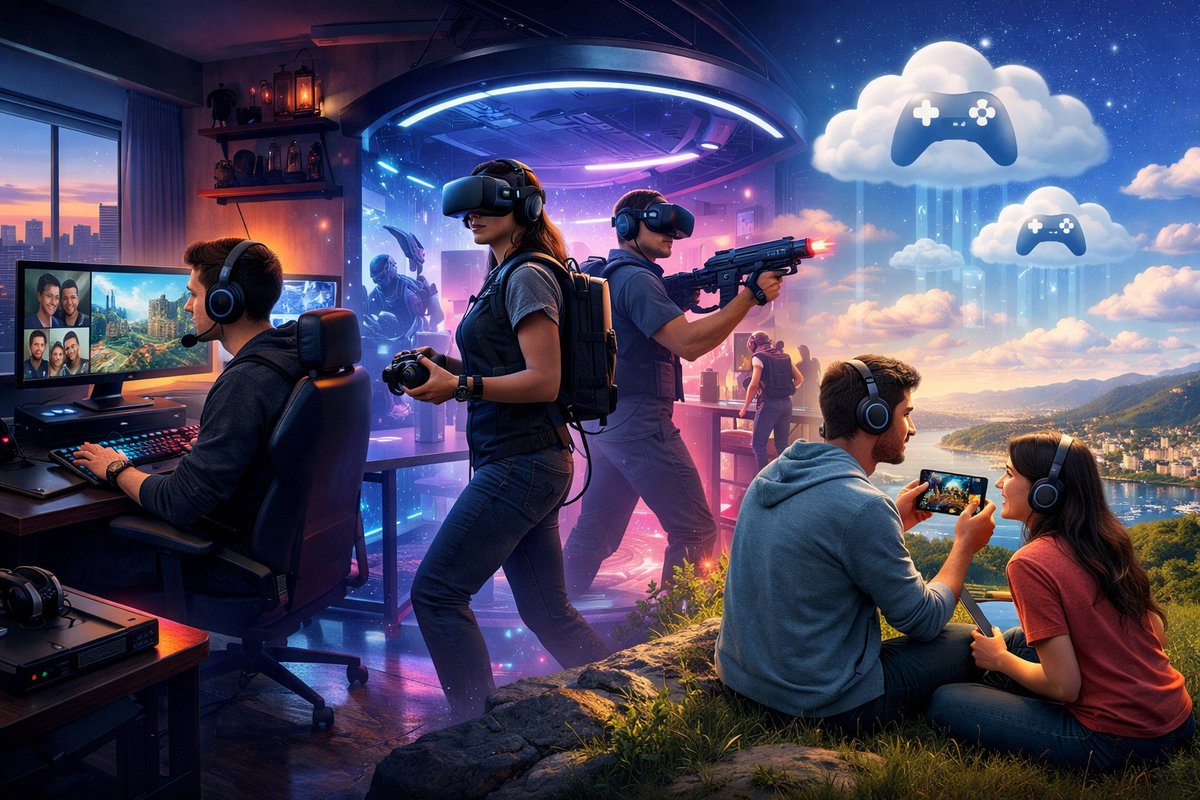

In recent years, the way we play has undergone a profound transformation. No longer confined to dedicated arcades or solitary living room consoles, gaming has spilled into hybrid spaces that merge digital interactivity with real-world environments. From modular home studios to pop-up immersive experiences in urban centers, the line between solo session and community event has blurred. This shift reflects not only technological advances but also a deeper cultural desire to connect, experiment, and explore within systems that respect privacy, sustainability, and emotional intelligence.
The modern gamer’s lair has evolved far beyond a simple TV and controller setup. Enthusiasts now curate multi-screen configurations featuring high-refresh-rate monitors side by side with ambient LED lighting and room-scale sensors for virtual reality. Ergonomic furniture crafted from recycled materials underscores a growing commitment to environmental responsibility. Cable management systems keep power draws efficient and minimal, while network hardware optimized for low latency ensures that no packet loss spoils a competitive moment. Every element is chosen not just for performance but for long-term well-being and planetary impact.
Alongside private retreats, hybrid gaming hubs are sprouting in co-working spaces, cafés, and even libraries. These venues host everything from casual LAN meetups to ticketed VR showcase nights. Visitors can reserve a pod equipped with motion-tracking sensors, haptic feedback floors, and spatial audio arrays for fully immersive storytelling. Others gather at desktop stations built around open-source software, fostering collaboration on creative mods, indie projects, and community-driven tournaments. The result is a fertile crossroads where professional developers might test a new engine beside a high-schooler organizing an impromptu speed-run contest.
Location-based entertainment venues are also redefining what it means to play in public. Temporary installations in refurbished warehouses or shipping containers invite players into mixed-reality questlines that integrate physical puzzles with digital NPC interactions. Wearable props and projection mapping heighten sensory engagement, transporting small groups into otherworldly landscapes. These pop-up experiences often incorporate sustainable design elements-modular walls repurposed from reclaimed wood, energy-efficient projectors, and shareable components that enable rapid teardown and reuse at the next site.
The ascent of cloud streaming platforms has further democratized access to cutting-edge graphics and expansive virtual worlds. Gamers can log in from thin clients in their living rooms or even on mobile devices while commuting. Cross-platform progression bridges PC, console, and handheld sessions seamlessly, allowing friends in different time zones to embark on raids or puzzle adventures together. This fluidity has sparked fresh conversation around digital sovereignty, data privacy, and network fairness-prompting some communities to host self-managed servers and encrypted voice channels as pillars of responsible play.
Social interaction remains at the heart of these hybrid ecosystems. Beyond voice chat, gamers are experimenting with emotion-recognition peripherals that adapt ambient lighting and soundtrack in real time to match player mood. Virtual meeting rooms feature spatial avatars with subtle body language cues, fostering more authentic connections than flat 2D streams. Book clubs and film watch-alongs often dovetail into multiplayer sessions, creating a year-round calendar of shared events that blur the distinction between spectator culture and participatory gaming.
At the intersection of privacy and curiosity, new design frameworks encourage reflective play. Game modes that incorporate brief mindfulness breaks, adaptive difficulty settings based on biometric feedback, and optional anonymity features empower players to explore challenging narratives free from performance pressure. Accessibility options have expanded beyond simple scaling-voice-guided navigation, haptic-only interfaces, and color-blind-friendly palettes ensure that every person can find their own pathway into interactive worlds.
Hardware innovation continues to push the envelope. Mechanical input devices with customizable switch tensions cater to different playstyles, from rapid-fire shooters to precision-based puzzle games. Wireless audio headsets with noise-cancellation and spatial audio drivers immerse players in rich soundscapes, while portable touchscreen monitors double as secondary displays or standalone handheld units. Energy-efficient GPUs and fan-quiet cooling solutions make sustained sessions more comfortable and eco-conscious, especially when paired with smart power-management profiles.
Furniture and ambiance play an equally vital role in immersive setups. Height-adjustable desks with built-in cable channels accommodate both seated and standing play, reducing the risk of fatigue. Chairs with modular lumbar supports and breathable fabrics sourced from recycled nylon emphasize ergonomic stability. Smart lighting panels and programmable LED strips allow dynamic scene setting: deep blues for exploration games, warm ambers for narrative experiences, or synchronized beat-pulses for competitive play. These environmental cues reinforce emotional resonance and sustain focus.
On the software side, low-latency networking solutions and mesh-optimized Wi-Fi systems underpin large-scale virtual events, enabling hundreds of participants to converge in the same digital arena with minimal jitter. Community-powered overlays let viewers vote on in-game events or contribute resources to live challenges. Open standard APIs facilitate interoperability between VR headsets, console controllers, and adaptive peripherals-ensuring that new devices can plug into existing loops without friction.
Looking ahead, the frontier of hybrid play will likely center on AI-driven personalization and spatial computing. Intelligent libraries of user-generated content may remix environments on the fly to suit individual tastes. Augmented reality layers could turn everyday living rooms into sprawling battlegrounds or cooperative escape rooms, dissolving the boundary between the home and the game world. Ethical frameworks for digital citizenship are already being codified, emphasizing consent, data stewardship, and shared governance across virtual societies.
Ultimately, play has become a serious enterprise-rooted in creativity, community, and conscientious design. Whether you’re fine-tuning a multi-display battle station, reserving a VR node at a downtown venue, or hosting a cloud-powered tournament in your backyard, the principles of curiosity, privacy, sustainability, and emotional well-being guide each new innovation. In these hybrid and immersive landscapes, the game is never just a pastime: it’s a canvas for collaboration, self-expression, and the collective quest to redefine what ‘play’ can mean in our connected world.