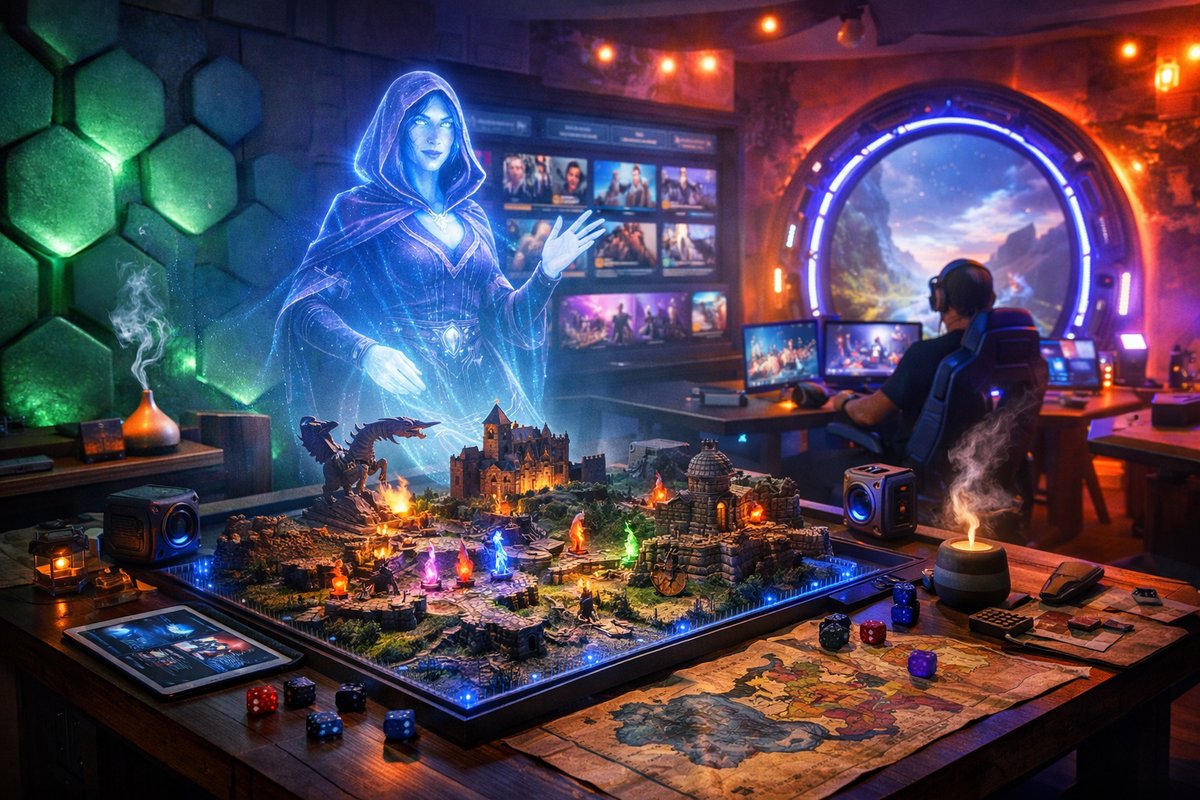

Enthusiasts once relied on a single screen, a controller and an audio headset for their game nights. Today, a wave of innovation is transforming the domestic play space into a living adventure. New tools combine artificial intelligence, haptic feedback panels, scent diffusion and cloud-based hardware to create dynamic, modular gaming environments rivaling small-scale escape rooms. Developers and hobbyists alike are reimagining furniture as a gaming surface, walls as interactive devices and ambient elements as narrative props. The result is a new frontier in at-home entertainment, where every gadget, every scent and every light cue fuels a richer, more emotionally resonant journey.
Behind this shift is a fresh generation of AI-driven narrative engines. Rather than static quests or prewritten campaigns, these systems generate story arcs in real time based on player actions and vocal prompts. One open-source engine routes player choices through a branching neural network that adjusts difficulty, theme and pacing on the fly. Users report that sessions with AI narration feel less predictable, more personalized and richer in dramatic tension than conventional modules. Soundscapes adapt too: when the AI senses a stealth scenario, it fades in subtle, ambient footsteps. During high-stakes battles, orchestral stabs swell. This audio-visual feedback loop anchors players in a reactive world that seems to watch and respond to every move.
Physical immersion has followed suit. Modular haptic panels-thin, wall-mounted devices embedded with vibration motors and force-feedback actuators-translate in-game events into tactile sensations. Imagine knocking on a virtual dungeon door and feeling a dull thud resonating through the wall. Or dodging a virtual arrow and sensing a brief ripple of pressure across your forearm. These panels connect over standard USB or Wi-Fi, and hobby kits let builders combine multiple units into custom shapes: doorways, alcoves or even faux bricked surfaces. As open-source firmware tools mature, users are customizing tactile responses tied to local multiplayer, live-stream cues or even voice commands.
Lighting technology has been reinvented too. Programmable LED strips and tile arrays now sync with game engines through simple plug-and-play bridges. A classic sword-swing might trigger a burst of warm amber, while finding a hidden cache bathes the room in cool cerulean. In DIY setups, players script ambient light sequences directly in their campaign management app, creating mood shifts without manual adjustments. Advanced kits include motion sensors: when a player crosses a threshold, a corridor effect scrolls across panels overhead. Whole rooms can transform visually in seconds, turning a living space into a haunted crypt, a starship bridge or an overgrown temple.
Scent diffusers once seemed a novelty reserved for theme parks, but compact, multi-cartridge units are now shipping to home builders. These devices clip onto shelves or furniture and release fine mists of fragrance timed to in-game triggers. Earthy pine or damp moss during a forest quest, metallic ozone during a sci-fi battle, smoky incense for mystical rites. Developers are sharing open APIs that let diffusers react to narrative beats, musical cues and even player heart-rate data from wearable trackers. As costs drop, more gamers view scent as an essential mood setter, adding an olfactory layer to story immersion.
Meanwhile, retro revival meets cloud convenience in the new wave of digital arcades. Members of niche communities subscribe to hardware-in-the-cloud services that host emulated arcade cabinets, pinball tables and vintage consoles. Full-motion video streams deliver lossless input and output, letting players feel like they’re sitting right at the controls. Best of all, friends can join the same virtual arcade floor from different living rooms, vying for high scores on a shared leaderboard. This approach eliminates bulky cabinets, keeps vintage libraries at your fingertips and fosters a sense of place across distances.
Not to be outdone, social play portals are emerging that combine video conferencing with live role-play overlays. Join a 3D virtual lounge, watch avatars gather around a central dice-rolling table, then switch to full-screen tabletop view when it’s time to move miniatures. Built-in spatial voice chat mimics whispering across the table or shouting from the next room. Some platforms even integrate audience interactions, allowing remote viewers to drop challenges, spawn random events or vote on story twists. Content creators are experimenting with pay-what-you-want ticketing models for public quest streams, turning hobby campaigns into communal spectacles.
For the DIY enthusiast, none of this requires a skyscraper budget. Starter kits for haptic panels cost under a hundred dollars, open-source AI story frameworks are free to download and a basic scent diffuser with three cartridges hovers well below mainstream hifi audio gear. Online communities share wiring diagrams and code snippets for everything from servo-powered trapdoors to pressure-sensitive floor mats. Gamers are repurposing off-the-shelf projector mounts to create table-edge AR overlays, projecting digital maps onto wood surfaces. Others are using IoT-enabled smart plugs to automate lighting zones based on in-game calendars or timers.
Behind the scenes, a handful of independent studios have embraced a modular approach to game room gear. They package workbenches for building custom controllers alongside downloadable templates for microcontroller boards. Users can plug in analog sensors-tilt switches, distance sensors, magnetometers-and map them to game functions in a visual editor. Soon, a new marketplace is expected to launch, selling preprogrammed modules that integrate with popular tabletop platforms. Early demos feature a spinnable puzzle box that unlocks a digital door in your session, and a breath-sensing mask that gauges a dragon’s fiery breath intensity.
Accessibility has also grown as a core focus. Adaptive haptic devices can be tuned for players with limited mobility, adjusting vibration strength, switching to auditory cues or using expanded tactile profiles on a desk mat. AI narration engines offer real-time text-to-speech and speech-to-text for visually impaired or hearing-impaired participants. Community-driven design challenges have produced one-handed controllers and high-contrast LED maps. As inclusive play gains traction, more manufacturers are advertising compliance with universal design standards and offering trial firmware for customization.
Sustainability has woven itself into the conversation. Recycled plastics and wood-fiber composites are common in new haptic kits. Programmable LEDs now ship in packaging made from post-consumer materials. Some scent cartridge makers are exploring plant-based fragrance oils and refill systems to cut down on single-use plastics. Energy-efficient power supplies and low-power standby modes help keep persistent installations from becoming electricity hogs. A few innovators are even prototyping solar-powered projection units for outdoor gaming gatherings.
Industry veterans observe that these trends share a unifying theme: modularity. Players want to pick and choose sensory layers-a dash of haptic, a hint of scent, a touch of AI-and assemble them around their favorite systems. This “build-your-own adventure lab” mentality is fueling cross-pollination between video gaming, tabletop role-play and immersive theater. As more studios release open SDKs, the gap between digital and physical, scripted and improvised, online and in-person grows ever thinner.
Whether you’re planning a solo campaign with AI companions, hosting a hybrid meetup with remote referees or crafting a fully automated escape room in your basement, the tools for immersive at-home gaming have never been more accessible. From cloud-hosted arcades to tactile walls, from narrative engines to scent diffusers, every element now speaks the same language of interactivity. As the ecosystem matures, expect deeper integrations, standardized protocols and ever-more creative mash-ups. The next wave of game nights might just feel like stepping into a living legend-one you built in your living room.
Prepare to level up your play space. The future of at-home adventures is not limited to screens-it’s written in vibrating panels, scented mists, programmed lightshows and AI scripts. The question is no longer what you’ll play, but how far you’ll transform your own environment to make every session truly epic.