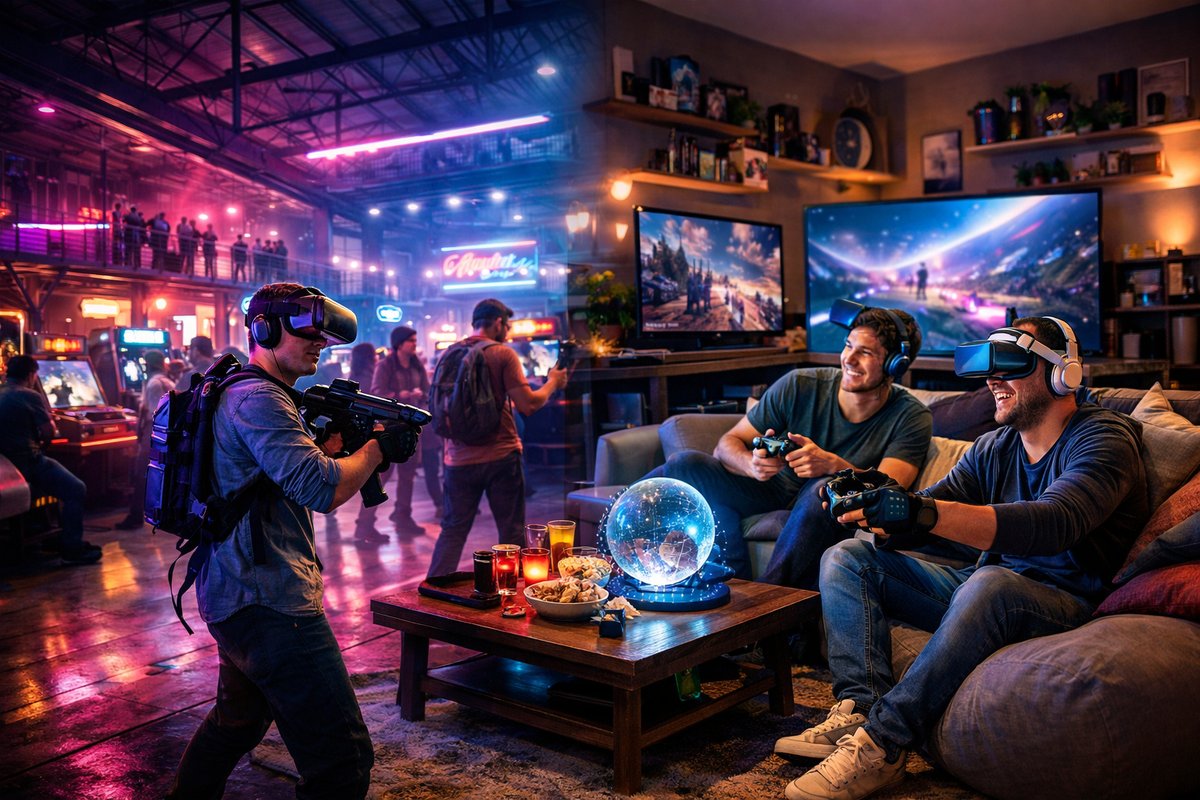

The old neon glow of an arcade cabinet has taken to the streets again, only this time it shows up in converted shipping containers, refurbished vans and wheat-paste posters on city lamp posts. Across dozens of metropolitan areas, small-scale gaming lounges and pop-up arcades are staging a revival – and they’re not just resurrecting nostalgia for retro titles. They’re forging a new ecosystem where couch-based micro-setups and communal play hubs feed off one another’s energy.
Rather than being confined to a sedentary corner of the basement, gameplay is becoming a shared, ephemeral experience. A weekend event might feature projection-mapped walls for local indie tournaments, VR zones nestled next to classic pinball, and mobile snack bars serving artisanal soda. Organizers are tapping into a surge of community spirit: recent figures from an interactive entertainment study show 67 percent of surveyed players seek in-person events to combat the isolating effects of online matches. Hybrid gaming pop-ups answer that call by offering flexible, modular spaces that can shift from casual board-game nights to high-octane race sim showdowns in minutes.
On one city block in Austin, a refurbished shipping container hosts a rotating lineup of esports viewings and retro console throwdowns. Inside, a portable sound system pumps out surround-style audio while modular stools and standing desks can be rearranged on the fly. Nearby, a local collective projects pixel art onto the container’s exterior, transforming it into a living gallery of game graphics. At dusk, colored LED strip lights trace the building’s edges, guiding curious passersby toward midnight arcade marathons.
The viral success of these micro-arenas has inspired DIY enthusiasts to upgrade their own living rooms. Home capsules-compact, self-contained gaming docks-are now appearing under stairs, in spare closets or in corner nooks. Builders salvage old bookcases and weld custom metal frames, then pack them with 4K short-throw projectors, ambient LED panels with real-time color-matching apps and low-latency wireless gaming headsets. Some hobbyists even integrate haptic feedback gloves and motion-tracking mats to simulate full-body VR combat without a cumbersome tether.
Part of the appeal lies in sustainability. By upcycling shipping pallets, reclaimed wood and surplus construction materials, pop-up operators cut costs and environmental impact. Home brewers of capsule builds share open-source blueprints online, offering step-by-step guides for turning secondhand desks into VR-ready pods. Online communities trade tips on using solar-powered battery banks to keep Wi-Fi routers alive in street-side hangouts, or configuring low-energy LED strips to sync with game audio for dynamic light shows.
The cross-pollination between public and private setups is accelerating thanks to cloud gaming platforms. Players can hop out of a container lounge after a few rounds of tank combat on big screens, then continue their session at home without missing a beat. Lobby leaderboards refresh in real time, so the community can track high scores on both the pop-up rig and the home dock. Local meet-ups host hybrid tournaments, streaming content to the container’s projector while home participants tune in through handheld devices. It’s an ecosystem built on modularity – spaces, gear and software that can be reconfigured on demand.
Emotional and cognitive benefits are surfacing alongside the technical ingenuity. Psychologists note that face-to-face play fosters real-world social cues that are absent in purely online interactions. Gamers report stronger friendships when they collaborate on physical game boards or cheer one another at live tournaments. Meanwhile, the challenge of designing a functional capsule build taps into creative problem solving: selecting materials that balance acoustics, airflow and ergonomics turns a DIY project into a tangible lesson in spatial engineering.
But challenges remain. Zoning restrictions and noise ordinances can frustrate itinerant arcades. Neighbors may lodge complaints about late-night light displays or street clutter. Organizers are responding with noise-dampening panels, sound-level monitors and by relocating to underutilized industrial lots. In tandem, city councils in some districts are pilot-testing ‘micro-retail’ permits that waive certain fees for pop-ups dedicated to cultural or educational activities – including interactive gaming.
At home, space constraints can stymie capsule ambitions. A cramped closet-pod might compromise ventilation or generate uncomfortable heat during extended sessions. Enthusiasts counter these drawbacks by installing USB-powered cooling fans, acrylic airflow panels and modular shelves that allow equipment to rest without overheating. Open-source communities debate the merits of different mesh fabrics for acoustic dampening, or the ideal screen height to reduce neck strain over marathon streams.
Looking ahead, the next wave of hybrid play could involve mobility solutions. Designers are exploring foldable pinball cabinets and collapsible motion-tracking mats that fit inside backpack carry cases. Wireless 5G routers could give pop-up arcades truly plug-and-play connectivity in remote parks or waterfront promenades. And augmented-reality overlays might soon transform plain walls into interactive portals for mixed-reality board games.
What’s clear is that play-once thought of as a solitary or purely digital pastime-is reemerging as a dynamic, location-fluid social ritual. From late-night pop-ups to personalized home capsules, gamers are stitching together communities and craft spaces that spark curiosity, creativity and camaraderie. Whether you’re teaming up for an eight-player mech brawl under neon glow or finetuning the sound-sensitive LED halo around your sofa, the future of play is modular, communal and exhilaratingly hands-on.