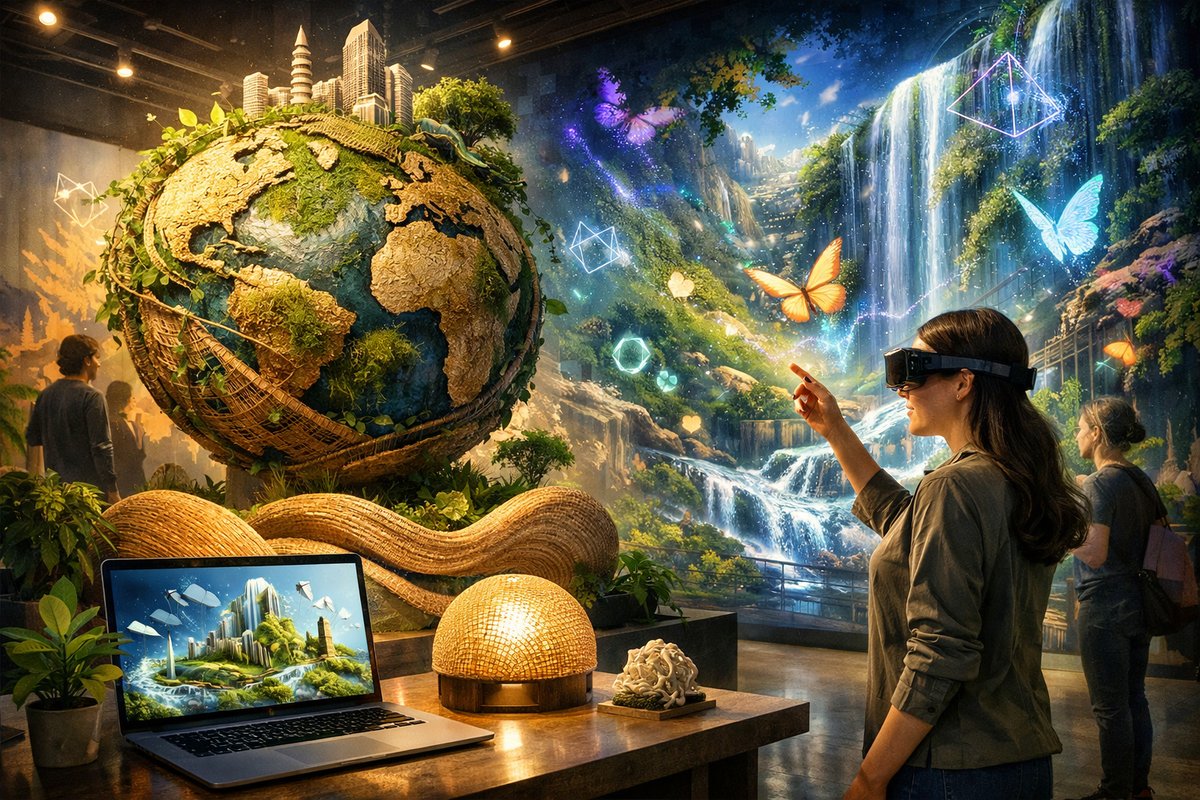

The main hall of the Global Design Showcase buzzed with anticipation as visitors streamed past sleek displays and organic installations. Under a vaulted ceiling, a trio of sculptures formed from layered mycelium blocks stood beside a wall of shifting AR projections. The juxtaposition of earthy textures and glowing code set the tone for an event intent on dissolving boundaries between analog craft and digital creation.
Curators arranged the exhibition around four pillars: sustainable materials, immersive technologies, community engagement, and practical craft. In one corner, a collection of upcycled textile panels hung like tapestries, each patchwork square sourced from discarded workwear and repurposed into vibrant patterns. Nearby, digital artists tapped styluses on tablets to generate fractal designs in real time, projecting their strokes onto a giant screen so the crowd could watch creation unfold.
Augmented-reality murals lined the perimeter walls, viewed through tablets or mobile apps configured at entry points. When a visitor trained a device on a painted feather, waves of iridescent pixels emerged, shifting colors and shapes in response to sound. This interplay of paint, code, and ambient noise invited onlookers to become active participants, blending their voices and movements into evolving digital compositions.
In the VR corner, a series of sculptural shapes hovered in zero-gravity simulation. Attendees donned headsets to sculpt virtual clay, carving forms that floated weightlessly and could be exported later as 3D-print files. The experience underscored a central theme: technology need not replace traditional mediums but can extend their reach, allowing artisans to prototype ideas at full scale without consuming raw materials.
Beyond digital innovation, the show placed equal emphasis on material ethics. A series called “Bioma” showcased pieces crafted from biodegradable resins derived from algae and discarded fruit peels. One lamp fixture combined translucent sheets of plant-based polymer into a honeycomb arrangement that glowed warmly under LED bulbs. According to the anonymous designer collective behind it, the installation demonstrated how local food waste could be transformed into functional home goods.
Sculptors also took advantage of mycelium’s natural binding properties, growing shapes in custom molds over weeks before gently drying them to a firm finish. The result was a series of hollow vessels with delicate ridges that recalled seashells or fossil imprints. Visitors could lean in to breathe the faint earthy scent of the material, a sensory reminder of the living networks beneath forest floors.
Textile artists tapped into circular-economy principles by sourcing factory offcuts and industrial scraps. A sprawling quilt made from neon fire-retardant fabric once destined for storm shelters became a luminous canopy that bathed the room in soft pink light. Side by side, panels of discarded denim stitched with glow-in-the-dark thread spoke to both resourcefulness and poetic reinvention.
On the tech frontier, an interactive dome projected motion-tracked projections onto its inner surface. Participants in lab coats donned motion sensors and watched as their hand gestures pulled cascades of color across the dome’s interior. Some lingered for minutes, entranced by the feeling of painting without paint and working at planetary scale, as if they had become artists and audience simultaneously.
Reactions from the crowd ranged from wonder to deep reflection. One visitor described the fungus-based vessels as “almost alive,” marveling at the way they seemed to breathe in light. Another attendee, a young architect, jotted notes furiously about integrating AR-enhanced murals into public spaces. Across the floor, a group of design students clustered around an open workshop station where they could test biodegradable printing filaments on desktop 3D printers.
Industry experts say the fusion of sustainability and technology in design is more than just a trend. According to a recent report by a major environmental think tank, demand for eco-friendly materials in product design has grown by 40 percent over the past two years. Architects and commercial brands are increasingly seeking certification for responsible sourcing, while clients expect transparency around manufacturing footprints.
Yet challenges remain. Biodegradable polymers often lack the mechanical strength of traditional plastics, and scaling mycelium production requires precise climate control. Augmented-reality installations depend on robust hardware and stable connectivity-factors that can drive up costs. Designers at the showcase acknowledged these hurdles, noting that collaboration between material scientists, software developers, and traditional artisans is essential to move from prototype to mass market.
Looking ahead, exhibitors hope to seed local maker networks that can adapt these methods to regional contexts. Plans are already underway for a satellite event in a coastal city, where ocean plastic could become the raw feedstock for new experimental pieces. Another proposal involves community workshops teaching schools to grow their own mycelium modules for classroom labs, demystifying living materials for the next generation of creators.
As the day ended, ambient lights dimmed and the AR walls glowed brightest. The final installation-a collaborative mural built over the course of the exhibition-came alive with overlapping layers of paint and projected imagery, representing every participant’s mark. It served as a fitting testament to an event that may have started with divergent disciplines but united under a single principle: creativity thrives when we honor both tradition and innovation, sustainability and spectacle.
-
XPPen Deco Pro Bluetooth Graphics Tablet 11x6in ...
Professional Performance: Offers 8192 levels of pressure sensitivity, 5080 LPI resolution, 60-degree tilt support, and a 200 RPS report rate for smooth drawing. -
Graphics Drawing Tablet
Explore creative graphics drawing tablets for artists and designers. Find vintage Koala Pads and DigiPros, alongside modern Vtuber assets. -
Light Up Letter Board
This acrylic dry-erase drawing tablet features 8 vibrant color modes and 6 dynamic lighting effects, making it perfect for sketching, tracing, note-taking, and ...