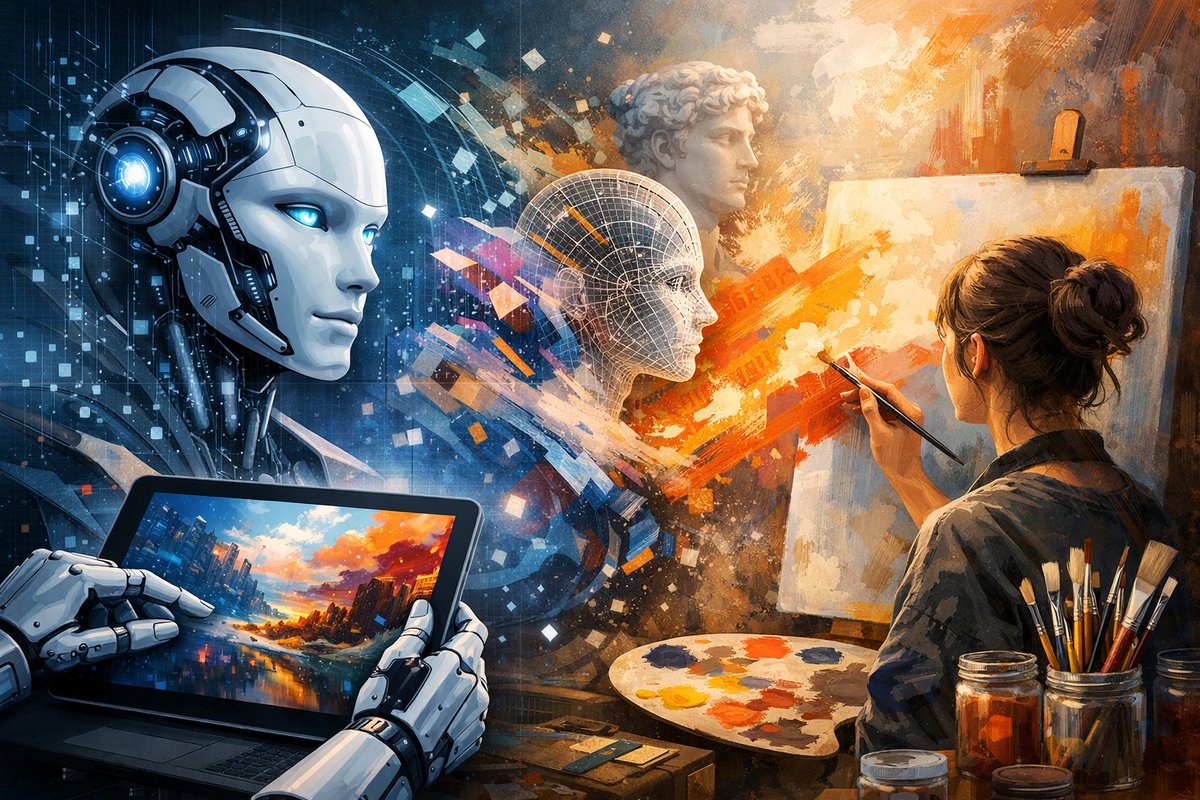

In recent years, the art and design landscape has witnessed a transformative shift fueled by the integration of artificial intelligence (AI) technologies. Far from simply automating tasks, AI tools are becoming collaborative partners in creativity, redefining how artists and designers conceive, execute, and experience their work. This intersection of machine intelligence and human craftsmanship invites a profound reconsideration of what it means to create and perceive art in the 21st century.
The dialogue between AI and traditional artistry is complex. Some practitioners embrace AI-generated elements as a means to transcend conventional limitations, harnessing algorithms to generate novel forms, patterns, or color combinations that might be difficult to conceive unaided. For example, AI can analyze vast datasets of visual styles or natural phenomena to inspire unique compositions, blending data-driven insights with personal aesthetic judgment. Meanwhile, others approach AI as a tool for refining or augmenting handcrafted work, such as using machine learning to optimize brushstroke patterns or to experiment with lighting effects in digital renderings.
This hybrid approach, marrying computational power with tactile intuition, resonates deeply with a growing movement toward interdisciplinary practices. Artists trained in classical techniques are increasingly collaborating with software developers, data scientists, and engineers to create immersive installations or interactive designs that respond dynamically to audiences. The resulting works often challenge viewers’ expectations by juxtaposing organic textures with digital precision, or by integrating responsive elements that evolve in real time.
Beyond technique, the philosophical implications of AI-assisted creation are significant. Questions arise about authorship, originality, and the nature of artistic intent. When an AI system contributes substantially to the final piece, who holds creative ownership? Some argue that AI serves as an extension of the artist’s vision, akin to a sophisticated brush or chisel, while others contend that it introduces an autonomous creative agent, complicating traditional attribution.
Moreover, this emerging paradigm invites reflection on the emotional resonance of art. Can algorithmically generated imagery evoke the same depth of feeling as work born purely from human experience? Early evidence suggests that viewers respond not only to the aesthetic qualities of AI-influenced art but also to the narrative surrounding its creation-the interplay between human and machine becomes part of the story, enriching the engagement.
Environmental consciousness is another dimension shaping contemporary art and design practices with AI. Computational tools can optimize resource usage, reduce waste, and simulate ecological systems, enabling creators to design with sustainability in mind. By modeling materials’ behavior or predicting environmental impact, AI facilitates more responsible choices without sacrificing artistic ambition.
Education and accessibility also stand to benefit from these advances. AI-powered platforms can democratize art-making by providing personalized guidance, adaptive tutorials, or virtual studios accessible from anywhere. This opens new pathways for aspiring creators worldwide, fostering diversity and inclusion in creative fields historically limited by access barriers.
Looking ahead, the evolution of AI in art and design will likely deepen, with advancements in generative adversarial networks, natural language processing, and augmented reality blending seamlessly into creative workflows. Artists will continue to explore the tensions and harmonies between human sensibility and digital logic, producing works that challenge and expand our understanding of beauty, meaning, and innovation.
The convergence of AI and handcrafted art signals not an end to traditional skills but a renaissance-an opportunity to rethink creativity as a collaborative, evolving process. This hybrid frontier invites all curious minds to engage with the possibilities and responsibilities of shaping culture through new modes of expression, honoring both the timeless and the cutting-edge.
-
UGEE S640 Graphics Drawing Tablet, Digital Draw Art Pad with Pen ...
Drawing digital pen 8192 levels of pressure sensitivity with virtually no latency, 60°tilt control for a more natural line and a true feeling of drawing. Learn ... -
UGEE, Graphic Drawing Tablet, 6.3x4 inches, Pen with Stylus
XPPen Latest 10"x6.25" Drawing Tablet, XP Deco Graphic Tablet with Pen, 16384 Levels Pressure/60° Tilt Function/8 Shortcut Keys, Digital Drawing Pad Art ... -
Amazon.com: Corel PaintShop Pro 2023 Pro | Perpetual License
Amazon.com: Corel PaintShop Pro 2023 Pro | Photo Editing & Graphic Design Software | Features Supported by AI | Perpetual License | 1 Device | PC Key Card ... -
Corel PaintShop Pro 2021 | Photo Editing & Graphic Design Software
Buy Corel PaintShop Pro 2021 | Photo Editing & Graphic Design Software | AI Powered Features [PC Disc] at Walmart.com. -
LVYUAN Kids Study Desk and Chair Set Height Adjustable Children ...
LVYUAN Kids Study Desk and Chair Set Height Adjustable Children School Study Drawing Desk Chair with LED Lamp, Tilt Desktop, Storage Drawer, ...