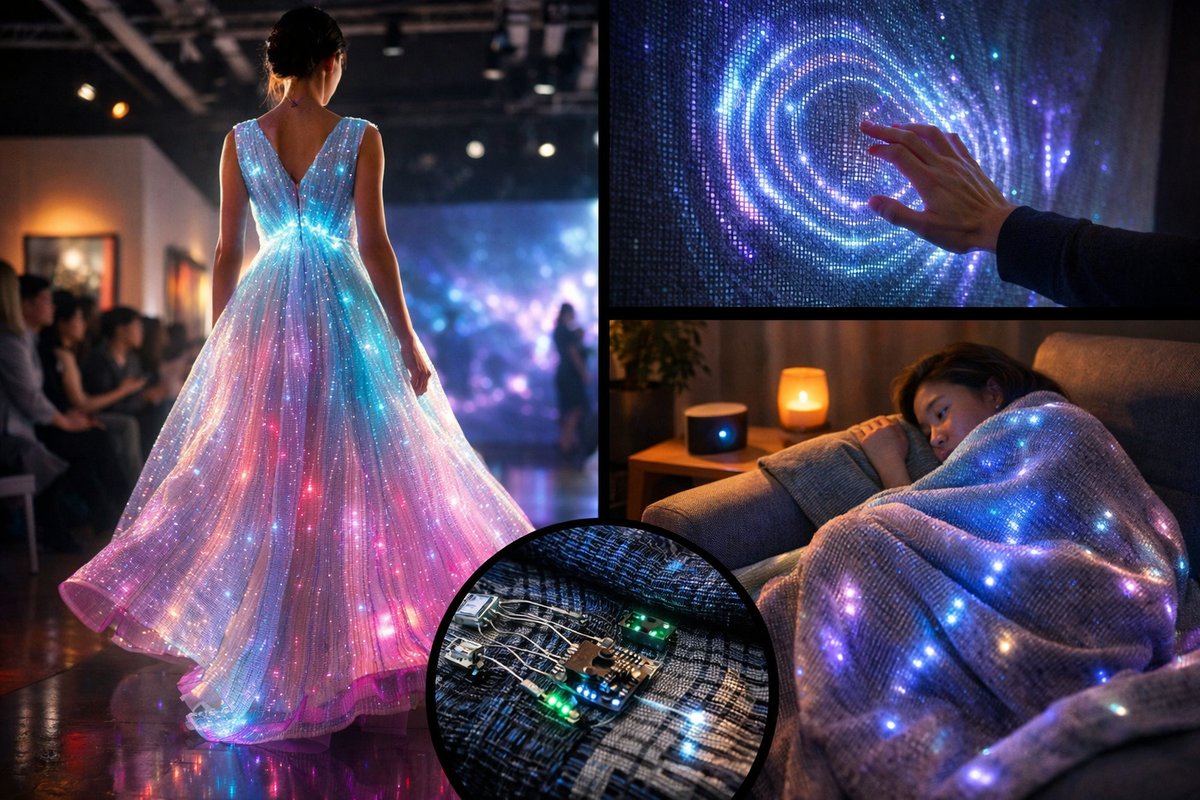

A recent showcase at a downtown art space revealed a collection of luminous dresses that gently shift color as models move across the floor. Silk blends threaded with optical fibers cast rippling bands of cyan and magenta, while hidden microcontroller modules track motion and trigger cascading light patterns. The result is less a simple garment and more a dynamic sculpture-one that blurs the line between fashion, design, and immersive art.
This movement is part of a broader exploration of “soft circuits” and smart fabrics, where traditional weavers collaborate with engineers to embed addressable LEDs, fiber-optic strands, and conductive threads directly into cloth. At a Tokyo maker convention last spring, visitors encountered interactive shawls that hummed in response to footsteps, and metro riders in Berlin glimpsed bus shelter advertisements printed on fabric canvases that came alive at dusk. In each case, the common thread is the marriage of light and textile to spark curiosity and emotional resonance.
Key to these innovations is the optical fiber yarn itself. Unlike rigid cables, these fine strands can be woven or knitted alongside traditional fibers, creating nearly invisible conduits for light. Powered by compact LED driver boards tucked into pockets or collars, the fibers carry red, green, and blue light from addressable LED chips to the fabric’s surface. Designers can choreograph millions of color combinations and sequencing effects, transforming a static textile into a programmable display.
Sustainability has become a central concern. Many artists now source recycled PET as the base for optical fibers, turning discarded water bottles into glowing threads. Solar-charging battery packs hidden within garment linings ensure that installations in outdoor plazas or eco-design pavilions can run all evening without drawing from the grid. In Rotterdam’s Fiber Factory fair, one standout piece was a bench cushion that absorbed daylight and slowly radiated a warm glow after sunset-an ode to regenerative design.
Building these pieces calls for a blend of craftsmanship and technical know-how. Weavers experiment with 3D knitting machines to embed channels for fiber routes, while hand-looming techniques allow for intentional gaps where light can escape more intensely. Microcontroller boards-often credit-card sized-serve as the brain. Artists program them using open-source platforms, mapping sensor inputs such as accelerometers or microphones to lighting outputs. Conductive threads sewn through seams carry power to discrete LED segments, preserving both flexibility and washability.
Power management remains a challenge. Lightweight lithium-polymer battery packs offer high energy density, but must be carefully insulated to prevent overheating against skin. Many practitioners employ quick-disconnect connectors to remove electronics before laundering. Waterproof coatings on conductive paths and fiber endpoints extend longevity through repeated use and cleaning cycles, a necessity for wearable art destined for festival touring or stage performances.
The technology isn’t limited to clothing. Interior designers are adopting illuminated wall hangings and upholstery panels that respond to ambient cues-shifting from cool blues in the afternoon to cozy ambers as evening falls. Restaurants have begun piloting table runners that pulse in time with background music, creating a subtle sensory layer that deepens immersion. Even therapists are exploring glowing blankets infused with gentle vibration motors and LEDs, aiming to support relaxation and mindfulness practices.
Clearly, the emotional appeal of living light fabrics stems from their ability to surprise and delight. Viewers can’t help but reach out to a backlit sleeve or trace a glowing line on a wall carpet. The dynamic interplay between material touch and color evokes an almost synesthetic response-an invitation to engage not just visually, but physically and emotionally.
In some ways, these developments echo the earlier era of drone light shows or projection-mapped sculptures, yet they offer a more intimate scale. The light source travels with the wearer or drapes over the sofa, granting ownership of the glow in everyday contexts. Rather than gazing up at distant drones or static murals, users carry the art with them, experiencing shifts in hue with each heartbeat or footstep.
Workshops at recent design festivals have underscored the DIY potential. Amateur makers gathered around soldering stations to splice fiber-optic bundles, code basic pulse sequences, and weave simple LED grids into scarves. Organizers stressed open-source blueprints for both hardware and software, fostering a community of learners eager to push boundaries. This hands-on culture has helped demystify electronics and encouraged collaboration between textile designers, coders, and sound artists.
Looking ahead, the next frontier may lie in multi-sensory integration. Imagine wall tapestries that glow in response to the moisture in the air, or garments that shift from matte pastels to electric neon when exposed to sound frequencies beyond human hearing. Researchers at advanced materials labs are experimenting with color-changing pigments that react to UV light and body temperature, further expanding the palette beyond LEDs and optical fibers.
As technology converges with centuries-old weaving traditions, a new lexicon of material expression is emerging. These luminous textiles hold promise not only for theatrical spectacles and high-end fashion, but for everyday spaces that crave warmth, interactivity, and a sense of wonder. In a world saturated with screens, the gentle glow woven into cloth feels refreshingly tactile-revealing that sometimes the brightest innovations come stitched between the threads.