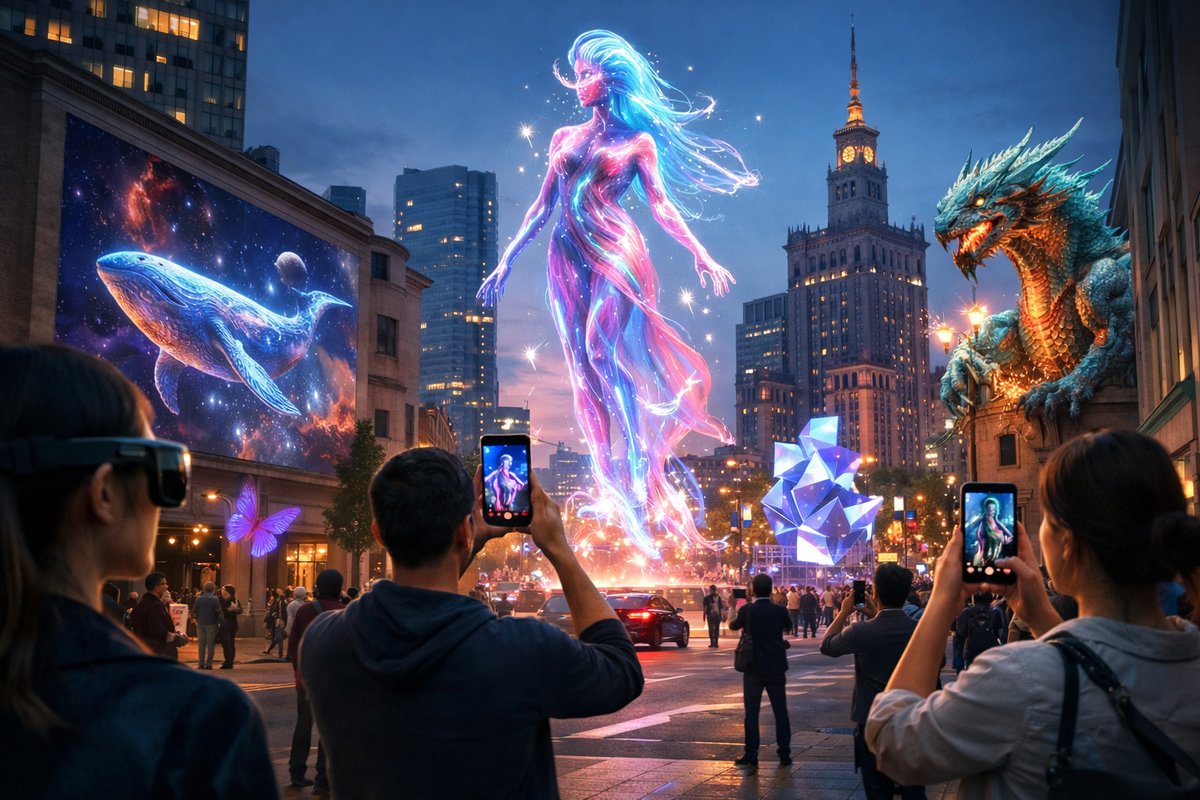

Urban sidewalks are transforming into invisible galleries. With nothing more than a smartphone or headset, pedestrians can discover digital sculptures hovering over fountain squares, interactive murals projected onto blank walls, and ephemeral animations that appear only at sunset. Across continents, city arts councils and independent collectives are commissioning AR art as a way to animate public space without construction, scaffolding or permanent fixtures.
In Seoul, a recent project invited passerby to activate animated koi fish swimming along a canal simply by pointing their phone cameras at the water’s edge. In Rio de Janeiro, a community-driven AR mural celebrates indigenous folklore with layered illustrations that shift as viewers walk past. Meanwhile, an open-source platform launched in Barcelona enables local artists to upload 3D artworks that automatically “pin” to designated street corners, turning the entire neighborhood into a crowdsourced exhibition.
This digital approach to public art offers several compelling advantages. First, it drastically reduces costs associated with transportation, installation, and maintenance. Instead of shipping heavy sculptures or repainting brick facades every few years, cities can refresh AR content in minutes. Second, it opens up new modes of interactivity: soundscapes triggered by movement, collaborative drawing surfaces where dozens of people can contribute in real time, or AR games that guide visitors on art hunts through hidden alleys.
“AR art democratizes the urban canvas,” says a representative from a Berlin-based collective that staged a monthlong AR trail through industrial districts. “We’re no longer waiting for permission to paint a wall or worrying about vandalism insurance. As long as people have their devices, the art exists.”
Yet this shift raises fresh questions. What happens when anyone can place content anywhere? Could a proliferation of unmoderated AR tags clutter public spaces just as much as unauthorized graffiti? Some cities are creating regulatory frameworks: designated AR zones where content must be preapproved, limits on file sizes to prevent lag, and user reporting tools to flag inappropriate imagery.
Technological hurdles remain as well. While smartphone cameras have become increasingly powerful, AR experiences still strain battery life and data plans. In response, local libraries and cultural centers are offering loaner AR headsets preloaded with guided tours, and municipalities are installing free 5G hotspots in downtown plazas. Artists are also exploring hybrid models: combining AR with solar-powered physical markers that signal where content will appear, reducing the need for constant online connectivity.
The environmental impact of digital art is also under scrutiny. Streaming 3D assets day and night consumes energy, and more data-heavy experiences rely on far-off servers. As sustainability champions point out, the carbon footprint of an hour-long AR installation can rival that of a large-scale projection mapping show-unless artists optimize file sizes and leverage edge computing networks closer to users.
Despite these challenges, AR public art is expanding at an unprecedented pace. Last spring’s digital art festival in Melbourne featured an entire waterfront transformed by AR projections of migrating birds and virtual wind chimes. In Cape Town, youth workshops taught teenagers how to design their own AR posters addressing local social issues, from coastal preservation to community gardens. And in Detroit, an initiative called “Memory Layers” lets residents attach personal narratives to vacant lots via voice-activated AR kiosks, turning decay into a living archive.
This surge of interest has prompted engineering teams to develop new tools. Open-source software libraries now enable artists with minimal coding experience to import 3D models, define geolocation triggers, and assign interactive hotspots. Likewise, collaborations between architects and AR designers are spawning “phygital” pavilions-temporary structures embedded with sensors that respond to proximity, blending tangible building materials with digital animation.
The emotional power of AR art cannot be overlooked. Unlike a static plaque or a mounted sculpture, a digital installation can adapt to weather conditions, time of day, or even viewers’ heart rates. One trail in Copenhagen features floating lanterns that brighten or dim based on real-time air quality data, inviting reflection on urban pollution. Another project in Vancouver invites users to “plant” virtual trees, which grow over weeks to symbolize acts of environmental stewardship.
Community engagement is at the heart of many AR programs. In Lisbon, elders gathered at community centers to share stories of neighborhood changes; younger participants translated those tales into 3D animations visible on smartphones. These intergenerational workshops foster social bonds, as well as digital literacy, transforming onlookers into co-creators.
Critics caution that AR art could exacerbate digital divides. Not everyone owns a high-end smartphone or has reliable mobile data. To address equity concerns, several municipal art agencies are distributing low-cost AR viewers, similar to card-board VR kits, at youth clubs and senior centers. Others are syncing AR exhibits with large outdoor displays or projections, ensuring those without devices can still partake in the experience.
Looking ahead, experts predict further integration of AR in urban planning and cultural heritage preservation. Imagine visiting a ruined temple site and seeing faded frescoes digitally restored in situ, or strolling past an old factory with virtual workers reenacting its manufacturing past. Such layered realities offer new modes of historical interpretation and urban storytelling.
However, as with any emerging medium, the balance between creativity and oversight remains delicate. Municipal regulations must evolve to safeguard cultural heritage and public safety, while staying flexible enough to encourage experimentation. At the same time, artists and technologists bear responsibility for minimizing energy use, protecting user privacy, and ensuring that digital art remains accessible to all.
Invisible galleries are no longer a distant dream-they’re materializing in cities from São Paulo to Stockholm. By blending code with creativity, AR art is inviting everyone to walk new pathways of imagination. And as these digital installations proliferate, they may well redefine our very notion of what it means to own a piece of public space-and to leave a lasting impression on the urban canvas.