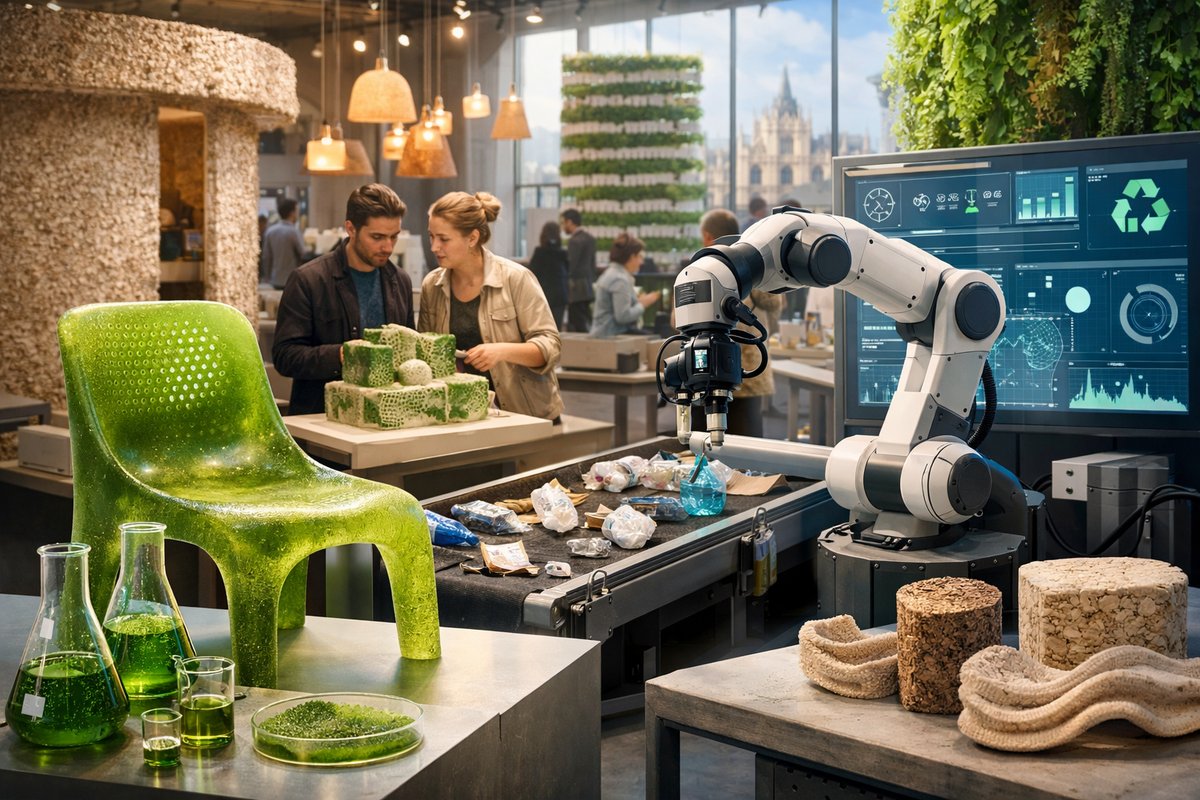

In a city renowned for its design heritage, Milan Design Week has become the crucible for the next wave of material innovation. Pavilion halls echoed with conversations about circularity, biodegradability, and the marriage of traditional craftsmanship with digital tools. Against the backdrop of increasing environmental urgency, young studios and established ateliers alike are challenging assumptions about what furniture, fixtures, and building elements can be made of – and what happens when they reach the end of their lifecycle.
One standout presentation came from a collective of sustainable architects who revealed a lounge chair molded from algae-based bioplastic panels. Harvested from local aquaculture farms, the algae pellets were processed into a resin that blends seamlessly with reclaimed wood. The result is a chair that looks contemporary yet carries a subtle, organic grain. When photographed under natural light, the material appears to shift from pale green to soft amber, prompting viewers to question whether they’re looking at plant matter or engineered polymer.
Behind the project is a cross-disciplinary team that includes material scientists, product designers, and environmental engineers. They describe their approach as “biology-informed design”: rather than forcing nature to fit preexisting molds, they let living systems guide the aesthetic, structural, and performance criteria. Early tests indicate that the algae panels decompose within six months under industrial composting conditions, drastically reducing landfill accumulation compared to standard plastics.
Elsewhere on the exhibition floor, a modular housing prototype captured headlines for integrating recycled plastic aggregate in 3D-printed concrete. Each interlocking block contains up to 15 percent shredded polymer from discarded fishing nets and consumer packaging. Design firm TerraForma demonstrated how these lightweight blocks can be assembled without mortar, slotted together like giant puzzle pieces. The aim is to accelerate construction timelines, lower material transport emissions, and offer a demountable structure that can be repurposed or recycled in situ.
The architectural team pointed out that worldwide plastic waste is nearing 400 million metric tons per year, while traditional concrete production accounts for about 8 percent of global carbon emissions. By diverting plastic into building components, they hope to tackle both issues simultaneously. In collaboration with a European research university, they are field-testing a prototype shelter in a coastal region prone to flooding, where rapid deployment and later dismantling are essential.
A parallel trend highlights the role of digital and generative design tools in minimizing material waste from the outset. Software platforms powered by artificial intelligence now analyze stress patterns, load distributions, and thermal performance to generate organic, lattice-like structures that use 30 to 50 percent less material than solid equivalents. In many cases, the optimized geometry can only be realized through additive manufacturing or CNC milling, signaling a radical departure from mass-produced uniformity.
One startup showcased a generative façade system that dynamically adapts its porosity based on solar exposure data. Tiny apertures expand or contract via shape-memory alloys, responding in real time to changing light and temperature conditions. Proponents argue this could cut a building’s overall energy consumption by as much as 40 percent. Critics, however, warn that the complexity of integrating responsive systems into existing regulatory frameworks and maintenance pipelines remains a significant hurdle.
In gallery corridors dedicated to product lighting, designers experimented with biodegradable composites infused with photoluminescent pigments. After a full day of exposure to natural or artificial light, these surfaces glow faintly at night, offering soft, ambient illumination without electricity consumption. The glowing chairs and side tables become unexpected sources of wayfinding in dim spaces, inviting both amusement and reflection on energy alternatives.
At the intersection of physical and virtual, several collectives presented augmented-reality overlays that allow viewers to project digital layers onto products. By pointing a smartphone at a recycled textile curtain, users see animated sequences of the fabric’s production journey – from discarded garments to reclaimed fibers to woven panels. This transparency is intended to build trust and emotional connection with sustainable products, turning material provenance into a storytelling device.
The rise of AR and digital twins also offers new marketing channels, but raises questions about screen fatigue and the authenticity of experience. Some critics worry that overlaying too much data can detract from tactile qualities or overwhelm visitors with information. Proponents counter that well-designed interfaces can serve as interactive manuals, guiding installation and maintenance without bulky printed guides.
Meanwhile, galleries and museums are responding by commissioning site-specific installations that fuse renewable energy with sculptural form. Solar-powered kinetic sculptures spin in breeze-exposed courtyards, while indoor exhibits harness small-scale wind turbines embedded within fabric walls. These pieces blur the line between art and infrastructure, emphasizing that sustainability can be both poetic and functional.
Public interest in eco-conscious interiors is also on the rise. Homeowners are seeking furniture built from reclaimed timber, low-VOC finishes, and upholstery made from plant-based textiles. Interiors publications report a 70 percent spike in reader searches for “zero-waste home decor” in the past year, indicating that consumers are eager to align their purchasing habits with environmental values.
Yet the shift toward sustainable art and design is not without obstacles. Supply chain transparency remains patchy, making it hard for small studios to verify the origins of every component. Certification bodies struggle to adapt standards to novel materials like mushroom leather or bacterial cellulose. And until sustainable options reach price points comparable with conventional alternatives, widespread adoption may remain slow.
Still, the momentum at Milan Design Week suggests that material experimentation and digital innovation will continue to accelerate. Designers are not simply chasing novelty; they are redefining the relationship between form, function, and environmental responsibility. In doing so, they invite us to reconsider the objects that shape our daily lives, from chairs that compost themselves to facades that breathe with the sun.
As the industry moves forward, collaboration across disciplines and geographies will be key. Material labs must work hand in hand with craft workshops, AI developers, and policy makers to scale prototypes into lasting solutions. Hobbyists and home designers can play a role too, by choosing tools and supplies that reflect circular principles. After all, a sustainable future is built not only by headline-grabbing installations but also by the everyday decisions we make in studios and living rooms alike.
In the end, the latest wave of art and design innovation demonstrates that creativity can be a powerful force for ecological reform. By elevating waste to raw material, code to construction manual, and data to dramaturgy, today’s designers are sketching the outlines of a more resilient built environment. The challenge now is to carry these breakthroughs beyond trade fair pavilions into the world at large.