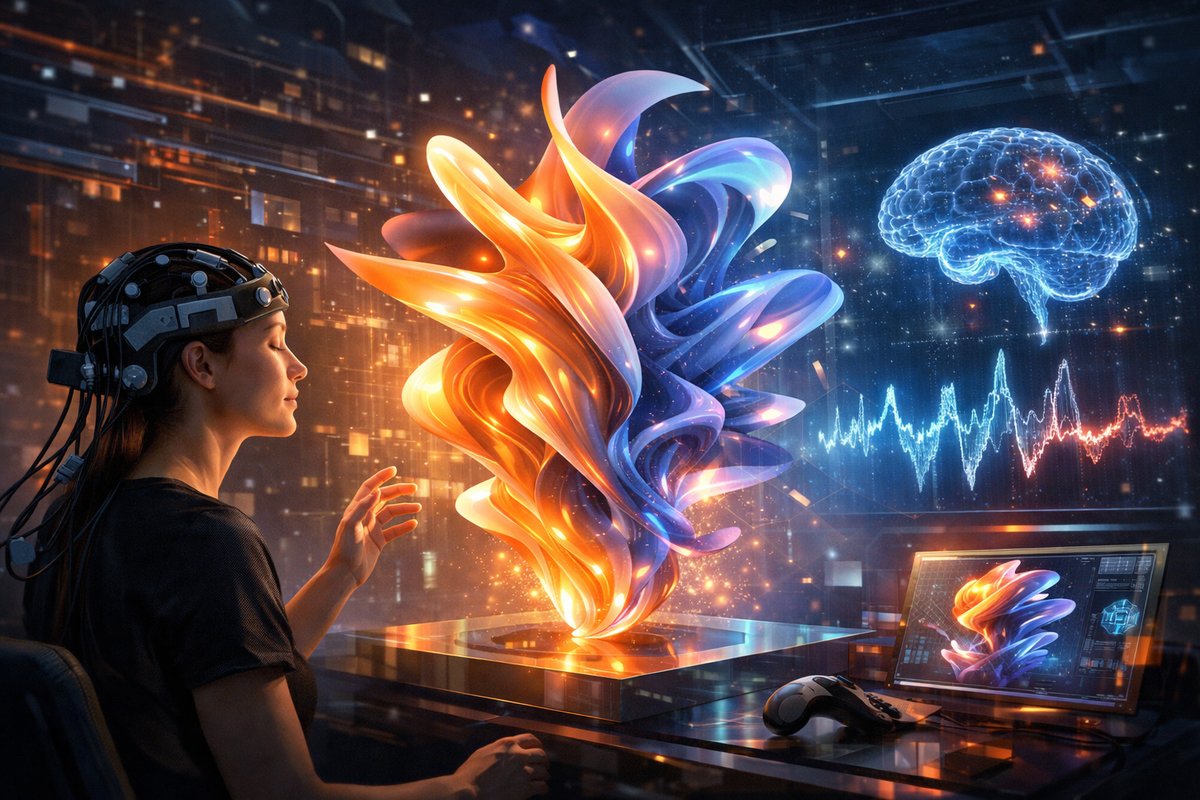

In a dimly lit gallery tucked beneath a former industrial warehouse, visitors recently found themselves at the center of an unprecedented experiment in creative technology. Each person donned a lightweight EEG neurofeedback headset and settled before a high-definition display of an abstract form floating in a digital void. As they relaxed, focused, or allowed their minds to wander, the sculpture on screen subtly undulated, blossomed, and retracted in real time. What once felt like a silent dialogue between viewer and image soon revealed itself as a direct conversation with the visitor’s own neural rhythms.
This emerging practice of brain-computer interface sculpture builds on decades of research in neurofeedback and immersive media. At the core of the process is an array of sensors that measure tiny electrical signals produced by the scalp during shifts in attention, relaxation, stress, or excitement. Custom software ingests these readings and uses algorithms to map specific frequency bands onto parameters in a 3D modeling environment. Increase in alpha waves, for example, might expand curved surfaces; a spike in beta activity could ripple the surface with sharper angles.
Artists working in this medium often begin by calibrating the headset to an individual user. A guided sequence of images, sounds, or breathing exercises helps the software learn baseline neural patterns, differentiating mental states like calm focus, active problem-solving, and emotional arousal. Once the system is trained, simple gestures of thought become powerful sculpting tools. A moment of curiosity might spawn a spiraling tower, while a wave of introspection could flatten peaks into smooth plains. The relationship between mind and material remains a dialogue rather than a one-way command.
Behind the scenes, many creators rely on open-source platforms to stitch together hardware and visualization. Libraries built for EEG devices such as OpenBCI or other consumer-grade headsets feed data into scripting environments, which in turn control real-time 3D software like Blender or Unity. Some developers have even built custom plugins that interpret distinct neural signatures and translate them into artistic brush strokes, volumetric growth patterns, or color-shifting textures. The modularity of these tools means that each artist’s practice can be thoroughly customized to reflect unique creative goals.
For sculptor-technologist Lara, this hybrid process has become deeply personal. She describes each session as a guided self-portrait carved in code. “I used to sketch on paper,” she explains, “but now I’m literally shaping my mental landscape. When I calm my mind, the sculpture floats like a lake; when my thoughts race, it splinters like glass. It’s both terrifying and exhilarating.” Her latest series, unveiled during an international digital arts biennale, included interactive VR headsets that allowed museum-goers to explore each brain-generated form from within.
Audiences encountering these works often report a sense of uncanny connection. Watching a sculpture shift in response to one’s own hidden mental processes can feel both intimate and disorienting. Some visitors describe heightened self-awareness as they see anxiety etched in tight angles or calm reflected in smooth curves. Others find playful delight in experimenting: “What happens if I imagine a wave?” one attendee asked, concentrating until the form surged in gentle arcs. These experiments highlight not only the creative potential of brain-driven sculpture but also the porous boundary between inner life and external artifact.
Technical challenges abound. Raw EEG signals are notoriously noisy, influenced by muscle twitches, blinking, and even ambient electrical interference. Filtering out these artifacts without sacrificing expressive nuance requires careful tuning and often bespoke signal-processing pipelines. Artists must balance the precision of neural mapping with the desire for unpredictability-if the system is too sensitive, every blink or yawn could distort the form. If it’s too rigid, the artwork may feel disconnected from the fluctuating rhythms of thought that inspired it.
Ethical questions also emerge around the collection and interpretation of brain data. Although most creators insist that only transient, anonymized readings are stored, the idea of recording neural patterns raises privacy concerns. Could future iterations of this technology decode more sensitive states, such as deeply personal memories or subconscious biases? Many in the field advocate for transparent protocols, clear consent processes, and open-source code to ensure that the driving force behind each sculpture remains artistic freedom rather than commercial exploitation.
Beyond virtual displays, a growing number of practitioners are translating brain-driven forms into tangible objects. High-resolution 3D printers render digital shapes in materials ranging from biodegradable plastics to recycled metal powders. The resulting sculptures bear the subtle imperfections of both thought and machinery-layer lines reveal the printing process, while unexpected bulges hint at moments of neural intensity. For some, the physical object becomes a talisman of introspection, a way to hold a fleeting mental state in one’s hands.
Collaborative mind-sculpting projects are also gaining momentum. In one instance, pairs of participants sat side by side, wearing synchronized headsets and sharing a single virtual canvas. Their simultaneous brain waves were blended algorithmically to generate a co-authored structure that shifted in shape and color according to the interplay of their neural signatures. The final piece, displayed in a public plaza, invited passersby to walk around a monument that literally embodied shared attention and empathy.
Looking forward, advances in wearable sensing could make brain-driven sculpture more portable and accessible. Lightweight, wireless EEG headsets are slowly shedding the reputation of medical oddities and carving out a place among mainstream creative tools. Open hardware communities are designing minimalist boards that cost a fraction of a high-end research device. As these developments lower barriers to entry, hobbyists and student artists may soon experiment with sculpting their own thoughts, bringing intimate glimpses of mental life into dorm rooms, community centers, and local galleries.
The meditative aspect of interacting with one’s own neural form also hints at therapeutic applications. Early trials in art therapy have begun integrating brain-computer sculpting exercises to help individuals visualize and cope with anxiety, improve focus, or explore emotional narratives. By externalizing hidden patterns of activity, participants gain fresh perspectives on their inner dynamics. Therapists caution, however, that the novelty of the interface should never replace human guidance; the technology remains a complementary tool rather than a standalone solution.
Ultimately, brain-computer interface sculpture sits at a crossroads of science, design, and philosophy. It asks fundamental questions: Can beauty emerge from raw data? What does an unfiltered expression of thought look like? How do we bridge the poetic gap between subjective experience and objective form? Each shift of a virtual curve reminds us that creativity is not confined to hand and eye alone-it can spring directly from the silent currents of the mind.
As more artists and developers enter this space, a vibrant ecosystem of tools, platforms, and exhibitions continues to flourish. From low-cost EEG kits offered at community tech workshops to high-profile museum installations that tour multiple cities, the practice is expanding beyond niche laboratories. At its best, brain-driven sculpture cultivates empathy, curiosity, and wonder, inviting viewers and creators alike to explore what it means to shape-and be shaped by-our own thoughts.
-
Muse S Athena: The Brain Sensing Headband - Opal (Light Grey)
... Headphones & Speakers ... Real-Time Neurofeedback: Athena combines EEG and fNIRS technology with 7 advanced sensors to provide real-time neurofeedback. -
Versus neurofeedback headset and Ten20 Conductive Paste Gel ...
Versus neurofeedback headset and Ten20 Conductive Paste Gel EEG Headset ; Returns. Accepted within 14 days. Buyer pays return shipping. If you use an eBay ...