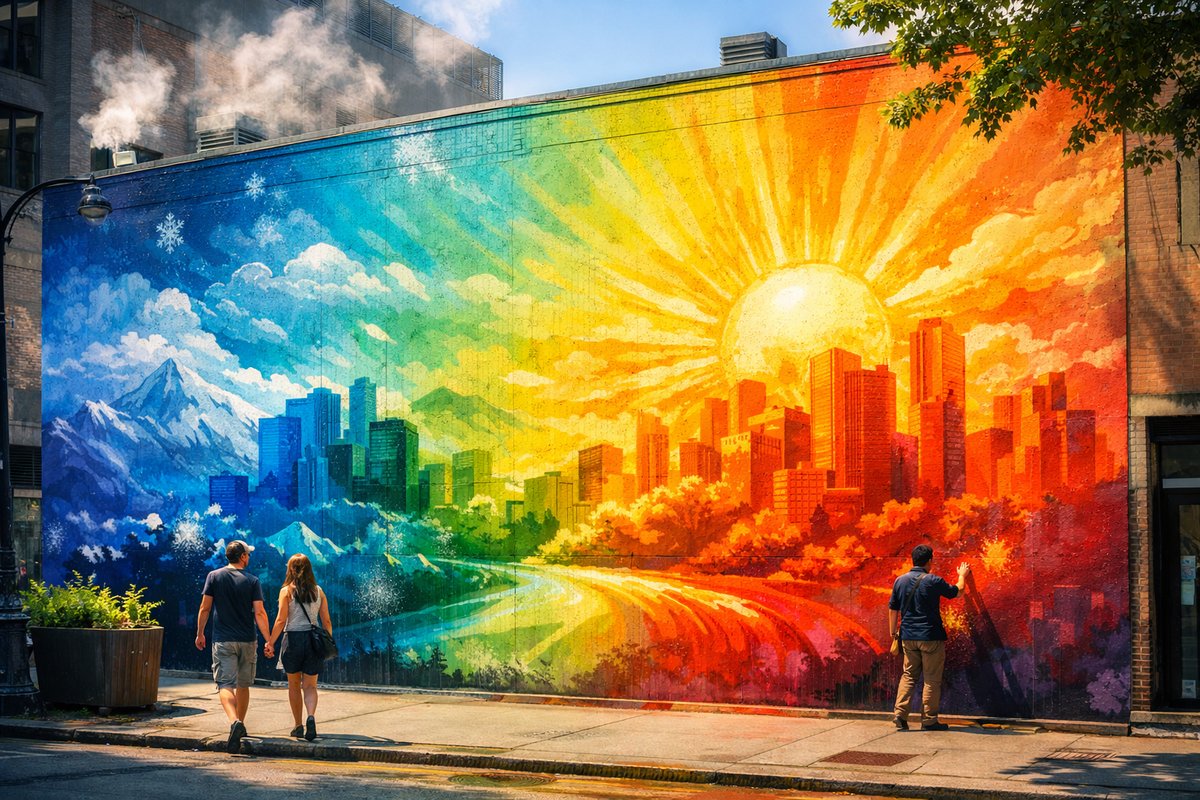

Thermochromic murals are redefining the relationship between art, community, and the urban environment. Imagine stepping down a familiar city block only to discover a wall that ripples from deep indigo to glowing amber as the afternoon sun intensifies. These color-shifting masterpieces rely on pigments that change state at defined temperatures, turning otherwise inert surfaces into living maps of thermal variation. In neighborhoods where heat islands are an accelerating concern, thermochromic art offers not just aesthetic delight but also a visceral lesson in the rhythms of the built environment.
One of the most celebrated projects to date has taken root on a formerly drab façade in Chicago’s South Loop district. Local artists collaborated with urban planners to install a 100-foot mural composed of layered thermochromic paints. Early mornings reveal a cool slate-gray panorama, punctuated by faint outlines of city landmarks. By midday, warmer pigments begin to erupt in oranges and reds, tracing pedestrian foot traffic and HVAC outflows from nearby buildings. As dusk approaches and temperatures drop, the mural gently returns to its muted base, offering a subtle reminder of the day’s energy footprint.
The science behind these thermal transformations is rooted in microencapsulation. Thermochromic pigments contain microscopic capsules filled with leuco dyes or liquid crystals that switch molecular structures when heated. Leuco dyes typically offer a binary shift-colorless below a threshold and vividly tinted above it-while liquid crystals produce gradual gradients across a spectrum. Artists working with liquid crystal variants can design murals that move through multiple hues, creating watercolor-like transitions that seem to breathe across concrete and brick.
Beyond their visual ingenuity, thermochromic murals carry potent social commentary. Urban heat islands-areas where dense construction and sparse greenery elevate temperatures by several degrees-pose risks to health, energy consumption, and air quality. By making shifting heat patterns visible on a human scale, these murals turn data into tangible experience. Community workshops often accompany installations, equipping residents with infrared thermometers and teaching them to document hotspots in playgrounds, parking lots, and bus stops. The result is a collaborative atlas of microclimates, fueling grassroots advocacy for shaded pathways, green roofs, and reflective building materials.
Photochromic paint-another emerging technology-adds a complementary layer of interactivity. These pigments react to ultraviolet light, shifting from transparent to tinted as UV intensity rises. In combination with thermochromic layers, a single wall can respond to both heat and sunlight. Morning commuters might glimpse a rose-pink horizon as UV levels climb, followed by a midday burst of sunshine yellow once temperatures hit the pigment’s activation point. In cities with extreme seasonal swings, this dual system yields distinct dayparts: spring’s pastel dawns, summer’s fiery zenith, autumn’s mellow sunsets and winter’s muted twilight.
Bringing a thermochromic mural from concept to completion involves technical precision and creative vision. Artists start with thermal imaging surveys, using infrared cameras to map existing heat patterns across facades. That data informs pigment selection: walls exposed to relentless sun require higher-threshold pigments to prevent constant activation, while cooler shaded areas need more sensitive formulas. Layers of acrylic medium carry the microcapsules, ensuring adhesion and weather resistance. A final sealant protects against abrasion and moisture, preserving color-shifting performance through seasonal changes.
For those inspired to experiment at home or in community spaces, a basic toolkit can kickstart your first thermal mural. Begin with a small section of a fence panel or plywood sheet. Purchase a thermochromic pigment powder kit and mix it into clear acrylic binder as directed. Test activation points by gently warming swatches with a hairdryer or tapping the surface to simulate body heat. Mask off stencil patterns with painter’s tape and apply multiple thin coats for even coverage. Once dry, use an infrared thermometer to confirm that color shifts occur at your chosen temperature range.
Sustainability and safety are vital considerations in every phase. Opt for water-based acrylic mediums over solvent-heavy alternatives, and choose non-toxic pigment formulations verified by independent lab testing. During application, wear a properly fitted respirator mask and disposable nitrile gloves to prevent skin and respiratory contact. Dispose of leftover paint responsibly-many municipalities accept water-based art materials at household hazardous waste facilities. Partnering with local environmental groups or schools can turn your mural project into a broader lesson in green art practices.
Looking ahead, architects and designers are exploring how thermochromic surfaces might scale up to entire building facades or public plazas. Proposals envision cantilevered panels that shift color to signal changing wind patterns, or bus shelters whose roofs glow cool blue when pedestrians step inside on sweltering days. Imagine wayfinding signage that shifts from warm hues on cold mornings to cool tones in the afternoon, intuitively guiding blind or visually impaired users through thermal contrasts they can feel. As smart cities embrace real-time climate data, interactive chromatic installations could become dynamic interfaces between infrastructure and inhabitants.
Thermochromic murals represent a convergence of art, science, and civic engagement. They transform walls into storytellers, charting invisible flows of heat and light that shape daily life. At their core, these interactive canvases remind us that cities are living organisms-ever-changing ecosystems where temperature, human activity, and design intersect. Through pigment innovation and collaborative spirit, artists are inviting everyone to join in the exploration, one hue at a time.