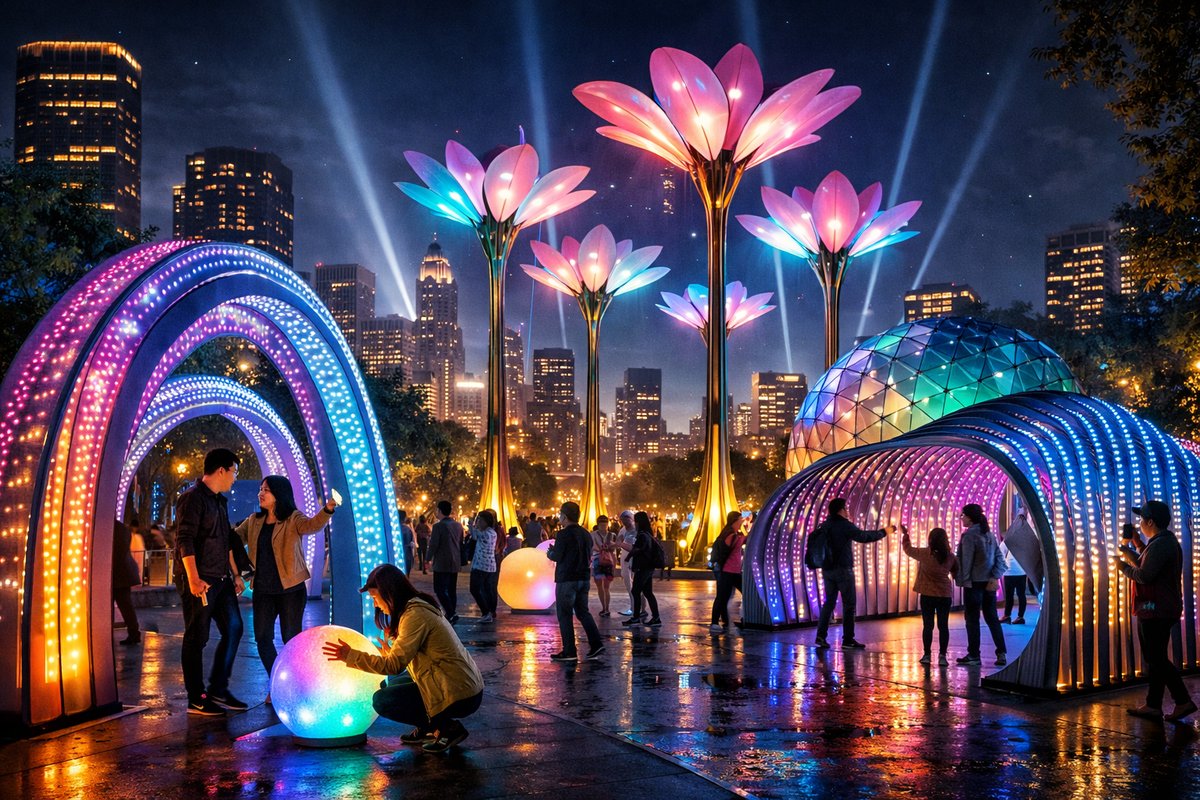

The urban landscape is evolving rapidly as artists and designers explore new ways to engage the public beyond traditional static installations. Among the most captivating innovations reshaping city spaces today are interactive light sculptures-artworks that respond to human presence, environmental conditions, or even social data in real time. By merging technology with artistic vision, these luminous creations invite passersby not just to observe but to participate, transforming everyday environments into sites of wonder and dialogue.
Interactive light sculptures harness a variety of technologies including sensors, programmable LEDs, and smart materials to create dynamic displays that change color, intensity, or form depending on inputs like movement, sound, or weather. For example, a sculpture might brighten and shift hues as more people gather nearby, encouraging communal interaction and shared experience. Others incorporate environmental data such as air quality or temperature, using visual cues to raise awareness about local ecological conditions.
This fusion of art, technology, and sustainability reflects a growing trend in design that prioritizes not only aesthetic appeal but also emotional and social resonance. Unlike traditional monuments or murals, these installations are not static; they evolve with their surroundings and audience, making each encounter unique and ephemeral. This fluidity fosters a deeper connection between city dwellers and their environment, encouraging mindfulness and collective responsibility.
Cities have embraced interactive light sculptures as tools for urban regeneration and placemaking. By illuminating neglected or underused spaces, these artworks attract visitors and create safer, more vibrant public realms. For instance, a once-dim underpass can be transformed into a glowing tunnel that reacts to footsteps or bicycle traffic, turning routine commutes into playful journeys. In addition, such installations often become landmarks or community hubs, hosting events or inspiring local storytelling.
The creative process behind these sculptures is inherently collaborative, drawing expertise from fields as diverse as engineering, environmental science, psychology, and community activism. Artists work alongside programmers, urban planners, and residents to ensure that the final piece resonates culturally and contextually. This interdisciplinarity enriches the design, embedding layers of meaning that invite contemplation on topics ranging from climate change to social connectivity.
Notably, the sustainability of these artworks is a core consideration. Many projects utilize energy-efficient LEDs powered by solar panels or kinetic energy harvested from visitor interactions. Materials are chosen for durability and recyclability, and installations are designed for easy maintenance and adaptability. This reflects a commitment to environmental stewardship that aligns with broader movements in eco-responsive design, where art and nature coexist symbiotically.
Interactive light sculptures also open intriguing philosophical questions about the nature of art itself. They challenge the notion of the artwork as a fixed object, instead presenting it as a living system that evolves through dialogue with its audience. This participatory dimension democratizes artistic experience, dissolving barriers between creator and viewer and fostering a sense of co-creation.
Globally, examples abound. In various metropolises, light sculptures have illuminated waterfronts, plazas, and parks, often incorporating local cultural motifs or historical narratives. These projects have demonstrated measurable impacts on community wellbeing, tourism, and economic vitality, underscoring art’s potential as a catalyst for urban innovation.
Looking ahead, the integration of emerging technologies such as augmented reality (AR), artificial intelligence (AI), and biomimicry promises to expand the possibilities of interactive light sculptures further. Imagine installations that adapt not only to immediate stimuli but also learn from patterns over time or mimic natural phenomena to inspire awe and ecological awareness.
For urban residents, the rise of interactive light sculptures offers more than visual delight; it invites active participation in shaping the character and meaning of their shared spaces. In this convergence of creativity and curiosity, art becomes a living dialogue-brightening the night, sparking imagination, and illuminating pathways toward more connected and sustainable cities.
-
WS2812b 300Pixels 5M Individually Addressable LED Pixel Strip ...
Amazon.com: KWMSTPLT WS2812b 300Pixels 5M Individually Addressable LED Pixel Strip Programmable Full Dream Color SMD 5050 RGB Strip Rope Light DC 5V ... -
Green LongLife 8080109 Programmable RGB Multi-color 16.4 FT ...
Buy Green LongLife 8080109 Programmable RGB Multi-color 16.4 FT LED Light Strip Kit at Walmart ... Led Strip Lights, 100ft Light Strips with App Control Remote, ... -
5 Pack HC-SR501 Pir Motion IR Sensor Body Module Infrared for ...
Use: It can automatically and quickly open various types of incandescent, fluorescent lamps, buzzer, automatic doors, electric fans,automatic washing machine ... -
10Pcs AM312 Mini Human Sensor Module IR Pyroelectric Infrared ...
Buy 10Pcs AM312 Mini Human Sensor Module IR Pyroelectric Infrared PIR Motion Sensor Detector Modules DC 2.7V to 12V at Walmart.com. -
Mainstays 5 Lumen Solar Powered Outdoor LED Landscape Post ...
LiUMX Solar Deck Lights with Color Changing LED | Weatherproof Outdoor Lighting for Steps, Stairs & Pathways | Solar Powered Fence Post Lights for Patio ...