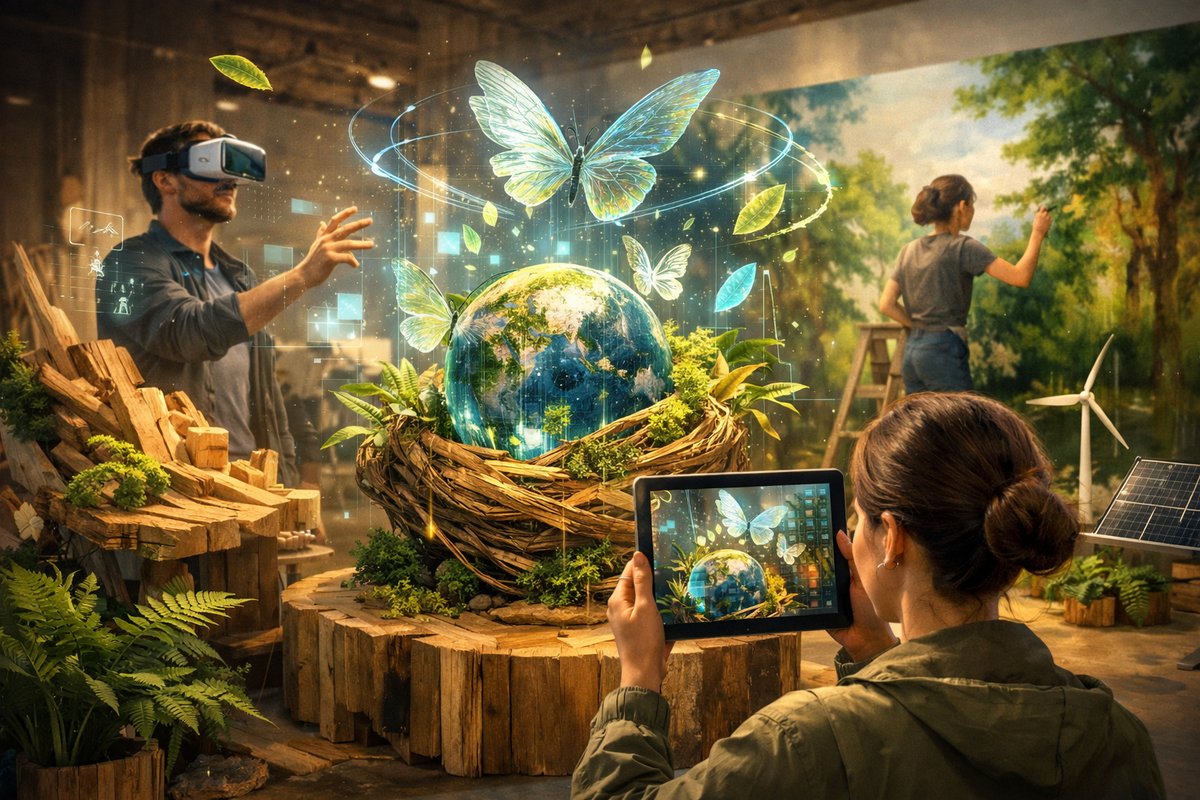

The landscape of art and design is undergoing a remarkable transformation, driven by two pivotal forces: the integration of augmented reality (AR) and a renewed commitment to sustainability. This convergence is not only pushing the boundaries of visual expression but also challenging the traditional paradigms of creation and engagement. In an era where digital innovation and environmental responsibility are paramount, artists and designers are pioneering new methods to captivate audiences and address pressing ecological concerns.
Augmented reality has moved beyond novelty to become a powerful tool in artistic practice. By overlaying digital information onto physical environments, AR enables immersive experiences that engage viewers on multiple sensory levels. Exhibitions that once relied solely on static displays now invite audiences to interact dynamically with artworks through smartphones or AR glasses. This technology fosters a participatory culture where the boundary between creator and observer blurs, cultivating a more intimate and personalized connection to art.
One notable trend is the use of AR to animate traditionally static media such as paintings, sculptures, and installations. For instance, murals on urban walls can come alive with motion graphics that tell stories or reveal hidden layers of meaning when viewed through an AR app. Sculptural works can incorporate virtual elements that expand their form and narrative beyond physical constraints. This interplay between tangible and virtual elements enriches the viewer’s experience, making art more accessible and engaging, especially for younger, tech-savvy audiences.
Simultaneously, the art and design community is increasingly focused on sustainability, recognizing the environmental impact of materials and processes. This awareness has sparked innovation in sourcing eco-friendly materials, reducing waste, and repurposing discarded objects into artworks. Recycled and upcycled materials are gaining prominence, from reclaimed wood and metals to biodegradable polymers and natural dyes. These choices reflect a holistic approach that values not only aesthetic outcomes but also ethical and ecological considerations.
The marriage of AR and sustainable materials exemplifies a forward-thinking ethos. For example, some installations incorporate solar-powered AR components, ensuring that the technological aspects do not rely on conventional energy sources. Others use biodegradable substrates for projections or embed sensors in recycled materials to trigger interactive digital responses. Such projects demonstrate that technology and sustainability can synergize to create art that is both innovative and responsible.
This dual focus also encourages dialogue around consumer culture, impermanence, and the role of technology in shaping human experience. By integrating digital elements with environmentally conscious practices, artists critique mass production and ephemeral trends, proposing instead works that are adaptable, meaningful, and mindful of their footprint. The artworks become platforms for reflection on how society values creation and consumption.
Educational institutions and galleries are responding to these shifts by offering workshops and exhibitions dedicated to AR and sustainable art. These initiatives cultivate interdisciplinary skills, blending coding, design, material science, and environmental studies. Such programs empower emerging artists to navigate the complexities of contemporary practice and contribute to a more conscious cultural landscape.
Moreover, digital platforms and social media amplify the reach of AR-enhanced and eco-conscious artworks, allowing creators to connect with global audiences without the need for physical transportation or large-scale production. This digital dissemination aligns with sustainability goals by minimizing carbon emissions associated with traditional art fairs and exhibitions.
The future of art and design thus appears to be one where imagination is augmented by technology and grounded in ecological stewardship. This paradigm invites both creators and audiences to reconsider the meaning of art in a connected, resource-conscious world. It is a call to embrace innovation with empathy, curiosity, and responsibility, ensuring that creative expression continues to inspire and provoke while honoring the planet we inhabit.
-
Diydeg AR Glasses, 4K HD 3D IMAX Wearable VR Headset Smart ...
Amazon.com: Diydeg AR Glasses, 4K HD 3D IMAX Wearable VR Headset Smart Glasses for Video Display, Myopia Friendly Portable Augmented Reality for Watch, ... -
Deco Essentials VR Viewer for Mobile Games, Movies ... - Walmart
Buy Deco Essentials VR Viewer for Mobile Games, Movies, and Augmented Reality | for 3.5"-6" Android & iPhones | Adjustable Straps and Lens | Audio Ports ... -
iSunMoon 6 Pack Outdoor Solar Powered LED Gutter Light Fence ...
Rain Resistant. · Approximately 2.5 inches by 5 inches in diameter, 1x AA 1200mAh Rechargeable Battery(include) · The independently operating gutter solar lights ... -
Mainstays Solar Powered Black Classic Column LED Path Light and ...
LED Solar Ground Lights Outdoor with Auto Induction, IP65 Waterproof Garden Path Lighting for Yard Lawn Patio Pathway Landscape, Dusk to Dawn Solar Powered ... -
BERWDUXA 200 Inch Projection Screen Large Foldable Movie ...
Buy BERWDUXA 200 Inch Projection Screen Large Foldable Movie Screen 300 250 180 150 Inch Outdoor Portable Projector Screen Washable for Home Backyard Office ...