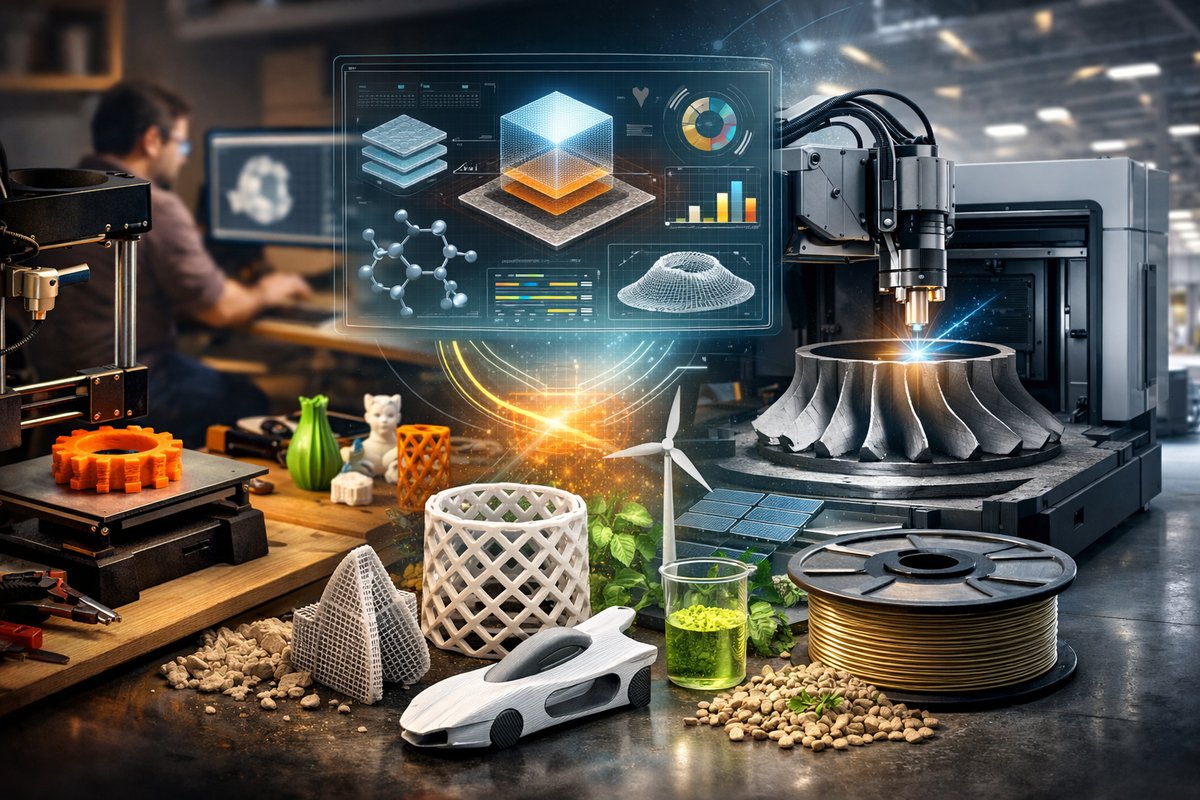

The journey from a digital file to a tangible object has never been more accessible or versatile. Recent breakthroughs in both hardware and software are turning barriers into entry points, guiding creators-whether tinkerers at home or engineers in a lab-toward faster iteration, cleaner workflows, and leaner budgets. By embracing new slicing algorithms, adaptive support strategies, recycled materials, and integrated post-processing, the 3D printing community is demonstrating that precision and affordability can flourish side by side.
Adaptive Slicing and AI-Driven Preparation
Traditional slicing divides a model into uniform layers, but adaptive slicing dynamically adjusts layer heights based on surface geometry. When gentle curves demand finer detail, layer thickness shrinks; on flatter planes, it expands to save time. Coupled with AI-driven support generation, this approach minimizes both material use and print failures. Advanced slicer engines now analyze stress points and overhangs, placing supports only where necessary and even optimizing their shape for fast removal. The result is a smoother surface finish and fewer wasted hours spent on cleaning up excessive scaffolding.
Another leap forward comes from on-the-fly simulation. Before a single filament droplet lands, the software conducts virtual stress tests and thermomechanical analyses, predicting warping, layer adhesion, and cooling behavior. This preflight check empowers users to tweak print parameters-nozzle temperature, fan speed, extrusion multiplier-with surgical precision, all while cutting trial-and-error cycles by up to 60 percent.
Material Innovations: Beyond Basic Filament
The filament shelf has expanded well past standard PLA and ABS. Recycled PETG blends offer mechanical reliability at a lower cost and with reduced environmental impact. Composite filaments infused with wood fibers, metal particles, or carbon-fiber strands bring texture and stiffness that rival traditional production materials. On the resin side, bio-based formulations derived from plant oils are making stereolithography more eco-friendly, while low-viscosity blends enable high-speed resin printers to push layer times below two seconds.
Metal powder printing has also matured. Binder jetting and laser-powder bed fusion systems once reserved for aerospace giants are now accessible through service bureaus or open-source desktop versions. New post-sintering processes refine density and surface finish without dramatic price hikes. Combined with adaptive path planning-where multiple laser heads or powder recoaters work in parallel-these machines are churning out small-batch metal parts with lead times measured in days, not weeks.
Streamlined Workflows for Consistency
Consistency is the secret sauce of cost efficiency. Automated bed leveling and filament run-out sensors have become standard on modern FDM machines, eliminating common mishaps and reducing aborted prints. Some rigs even feature built-in vision systems that scan each layer for defects, pausing the process and notifying the operator if something drifts out of spec.
Batch printing strategies can double or triple throughput by arranging dozens of small components on a build plate for a single melt or cure cycle. Smart packing algorithms automatically nest parts to maximize available space, avoiding wasteful gaps. Once printing is done, integrated enclosures with HEPA filtration manage fumes, while heated chambers prevent warping from rapid temperature swings.
Post-Processing: Polishing the Prototype
A printed object is rarely finished straight off the build plate. Chemical vapor smoothing systems for certain thermoplastics can erase layer lines, delivering a glossy, injection-mold look. Compact wash-and-cure stations streamline resin part prep, rinsing away excess resin before applying consistent UV exposure for final strength. Bead blasting stations and ultrasonic cleaners are now scaled for desktop use, offering precision cleanup without soaking a workshop in media dust or wash solvents.
Some hobbyists are even adopting small plasma cutters to etch or engrave printed surfaces, adding decorative textures that would be labor-intensive by hand. Laser engravers integrated into hybrid workstations can cut supports automatically or add serial numbers and QR codes directly onto parts before they leave the machine.
Cost-Saving Strategies for Every Budget
Whether running a community makerspace or a one-person studio, there are practical steps to keep expenses down. Using filament spools with transparent origin tracking lets you track material costs per part. Filament recyclers shred failed prints and purge waste into new filament spools, closing the loop and slashing material bills. Closed-loop resin systems measure exact quantities per job, ensuring you only pour what you need.
Open-source firmware and aftermarket upgrades can boost older machines with features like auto-calibration and remote monitoring via Wi-Fi or Ethernet. A networked dashboard lets multiple operators queue prints, track progress, and even receive real-time error alerts on a smartphone. This kind of digital oversight prevents orphaned prints and forgotten post-processing steps-the silent budget drains in many small labs.
Sustainability in Every Layer
Environmental impact has become a guiding principle for many in the community. Certified biodegradable resins and plant-based filaments reduce dependence on petrochemicals. Agricultural by-products, like hemp hurds and rice husk composites, are turning waste streams into creative raw materials. At the industrial scale, powder recycling loops reclaim metal or polymer powders from support material and overspray, all while maintaining required particle size distributions.
Powered by energy-efficient drives, modern printers cut electricity consumption by up to 40 percent compared to earlier models. Some facilities offset residual usage with on-site solar arrays or dynamic energy management systems that run high-power tasks when rates are lowest.
Looking Ahead: Decentralized Microfabrication
The horizon holds tantalizing possibilities. Volumetric resin printers, which project light into rotating volumes of cured material, promise blisteringly fast builds without layer seams. Multi-laser metal sintering machines are on track to hit sub-100-micron resolutions in powder form, opening doors to micromechanical parts once impossible outside a semiconductor clean room.
Digital marketplaces for 3D printable designs are evolving into distributed factories, where local hubs print orders on demand, slashing shipping footprints and lead times. Additive and subtractive hybrid machines will tackle one-off tooling, molds, and finished goods in a single workflow, redefining what small-batch manufacturing can achieve.
No matter the scale, the rule remains the same: start with a clear design intent, choose the right combination of materials and process parameters, and leverage the latest tools to refine each layer. When technical know-how meets imaginative ambition, every print becomes a stepping stone to innovation. As the technology matures, the once-lofty dream of decentralized, affordable production is shifting from vision to everyday reality.